
 Wine Advisor



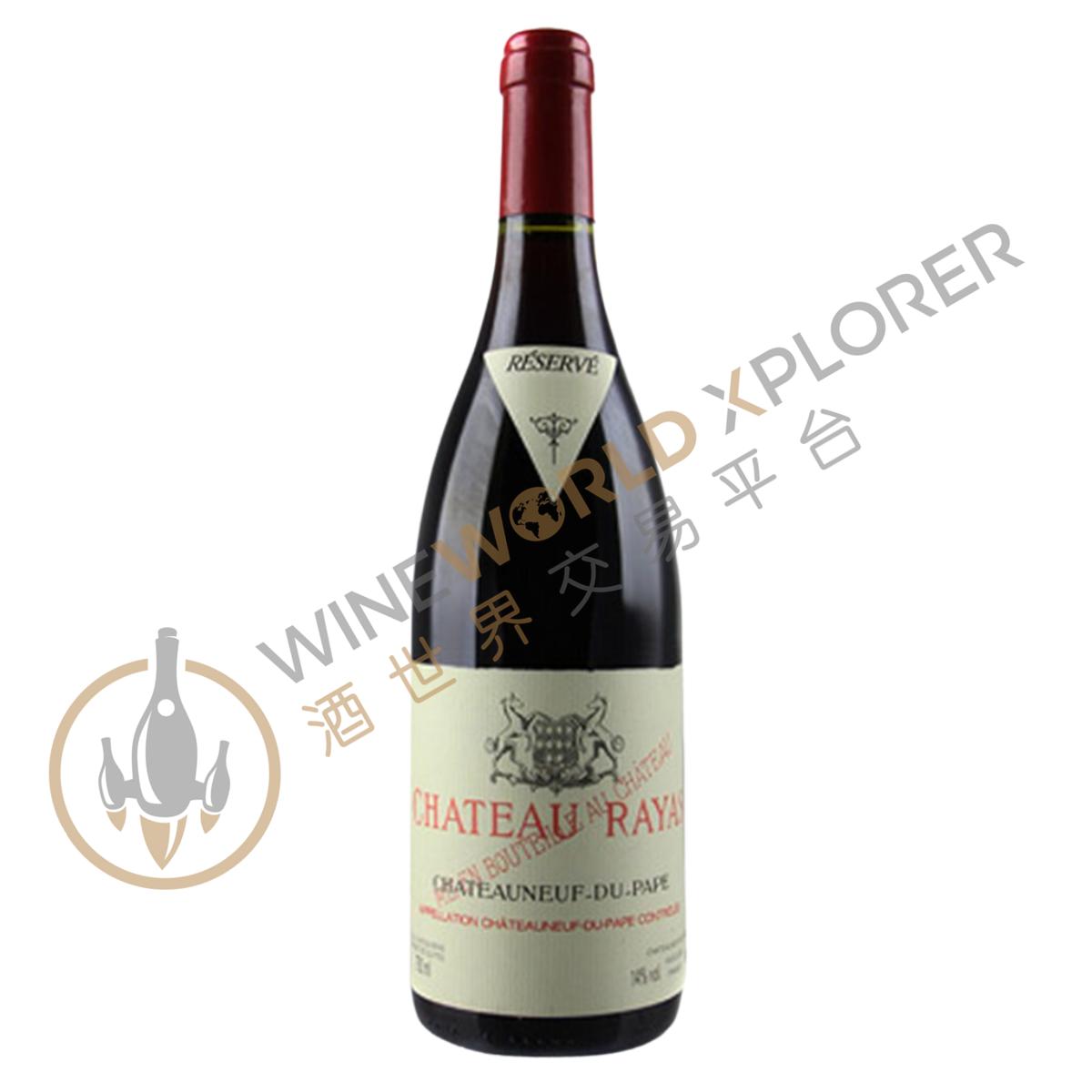
Rayas, Chateauneuf du Pape Reserve 2010
 View analysis


Description
Tasting notes

Reviewed by: Robert M. Parker, Jr.
The three component parts of the 2010 Rayas Chateauneuf du Pape show it to be a deeply colored vintage with terrific fruit intensity of licorice, raspberries and sweet, jammy cherries. Medium to full-bodied and ripe with 15+% natural alcohol and sweet, soft tannins, this ethereal 2010 is reminiscent of the 2005 although the tannins in the 2010 are more silky. (Not yet released) One of the world's most mysterious estates is Chateau Rayas. This small 30-acre estate is owned by the Reynaud family, which dates back to the late 19th century,. The estate has always had an image of secrecy and seclusion. Following the death of Jacques Reynaud in 1997, his nephew, Emmanuel took over, and he continues to produce wines that go from strength to strength. A cool climate property in a hot zone, Rayas is tucked away in a forest with its vineyards basically one parcel of sandy soil. Emmanuel Reynaud, who is also the proprietor of the outstanding Vacqueyras estate called Domaine des Tours, has the same eccentric idiosyncracies as his uncle. It is not as difficult to get an appointment to visit Rayas as many people think, and I highly recommend it as it is always a fascinating place to visit. After 25 years, I never cease to be amazed by what emerges from these decrepit, old, haphazard cellars that look like a biohazard room in a video game. They don't win the top prize for the dirtiest cellars in Chateauneuf du Pape (that goes to Henri Bonneau), but Rayas is a close second. Modern-day oenology graduates would be horrified by -working conditions,- but the magic elixirs to emerge from these ancient barrels, demi-muids and foudres are wondrous. On this trip, I tasted through the component parts of the 2010s, another top vintage for Rayas. Production was tiny, and the harvest was extremely late. In fact, Emmanuel Reynaud told me that 2011 would be at least ten days in advance of 2010. The 2009s, which have all been bottled, have turned out to be spectacular, and I tend to think the 2009 Rayas could turn out to be the greatest wine made by Emmanuel, even eclipsing the 2007. Importer: Martine's Wines, Novato, CA; tel. (415) 883-0400
Reviewed by: Josh Raynolds
Vivid ruby. An explosively perfumed bouquet displays red and dark berry preserves, potpourri, licorice and smoky minerals. Broad and fleshy, offering deeply concentrated black raspberry and bitter cherry flavors and a strong note of floral pastilles. Chewy tannins give grip to a powerful, alluringly sweet, endless finish. Shows as much density as I can recall from a young Rayas and is clearly built for the long haul.
Reviewed by: Josh Raynolds
Tasted in components. #1: Heady, spicy and red fruit-driven, with excellent clarity and nerve. There's something Burgundian about this, and I mean great Burgundy. #2: Wildly aromatic, offering deep cherry and red berry compote qualities and hints of garrigue and licorice. Deep but lively, with serious finishing punch. #3, from the best section of the vineyard: Shows an array of red and dark berry qualities, along with exotic spice and candied floral qualities. Very spicy and focused on the finish. The ultimate blend should be a classic Rayas, with energetic red fruits, flowers and spices.
Reviewed by: Nicolas Greinacher
The 2010 Châteauneuf-du-Pape Réserve knocks it out of the park with rosewater, kirsch, garrigue, tobacco, white pepper, melted licorice and a flicker of ivy. On the full-bodied palate, rich flavor concentration is masterfully balanced by vibrant freshness, resulting in a sensation of complete harmony. What’s so striking about this Rayas is how it lays bare all its strength without flexing a single muscle. The detailed, finesse-driven finish lingers for over two minutes, confirming the 2010 as one of the finest vintages ever produced here. This particular bottle was opened four hours in advance, without decanting. For those eager to experience this unique Rayas ahead of my suggested drinking window, I strongly recommend this approach, as decanting may cause it to close down. For readers disciplined enough to wait a few more years, the magic starts in 2030.
About the Producer
Back in 1880, General Albert Reynaud bought Chateau Rayas in the Rhone Valley. It is now run by Emmanuel Reynaud. The Reynaud family has owned the estate for over 120 years. For four generations, the Reynaud family has worked hard to transform the estate from a small, unknown winery to a leading Rhone Valley winery. When Château Rayas was first purchased by Albert Reynaud, it had a small, unassuming vineyard on sandy, north-facing soils that were not well insulated or sunlit. Today the estate has 25 hectares of vineyards and the vines are on average 35 years old. The success of the estate is due to the persistence and innovation of its owners. Originally, the tradition in the Chateauneuf-du-Pape region was to make wine from a mix of grape varieties, but Mr Albert Renaud took a different approach and abandoned the tradition of using a mix of grapes in Chateauneuf-du-Pape to make wine from local Grenache grapes and a small amount of Syrah. The result is a top-notch Chateauneuf-du-Pape red wine (Chateau Rayas, Chateauneuf-du-Pape) that overcomes all its shortcomings. Châteauneuf-du-Pape is matured in old barrels for 2-3 years before being released to the market and is produced in very low yields, at a price that is the best in the Châteauneuf-du-Pape region. It is highly regarded by the public: the 1996 vintage was awarded 98 points by the Wine Spectator in 2006, the highest score in the appellation that year. The 2005 and 2003 vintages were also rated 98 and 95 points respectively by Parker. Château Rayas sells its wines under the name "Château Rayas", but also under the names "Château de Fonsalette" and "Pignan". Pignan Chateauneuf du Pape. The wines of Chateauneuf du Pape are comparable to those of Château de Fonsalette. The red wines of Château de Rothschild are smooth and elegant, while the white wines are fresh and have a long lasting aroma. The red wines of Château Fonsalie are full-bodied and ripe, while the white wines have aromas of nectarine and apricot. In the Renault family, which is aimed at the top end of the market, the Pinot is the second wine of Château Rijas and has a similar style to the main Rijas, with a medium body, attractive black cherry and fig flavours and a sweet taste.
1988(2)1990(3)1994(1)1995(1)1996(1)1998(1)1999(3)2000(3)2001(3)2003(3)2004(3)2005(1)2006(5)2007(6)2008(4)2009(6)
Package Size
