
 Wine Advisor



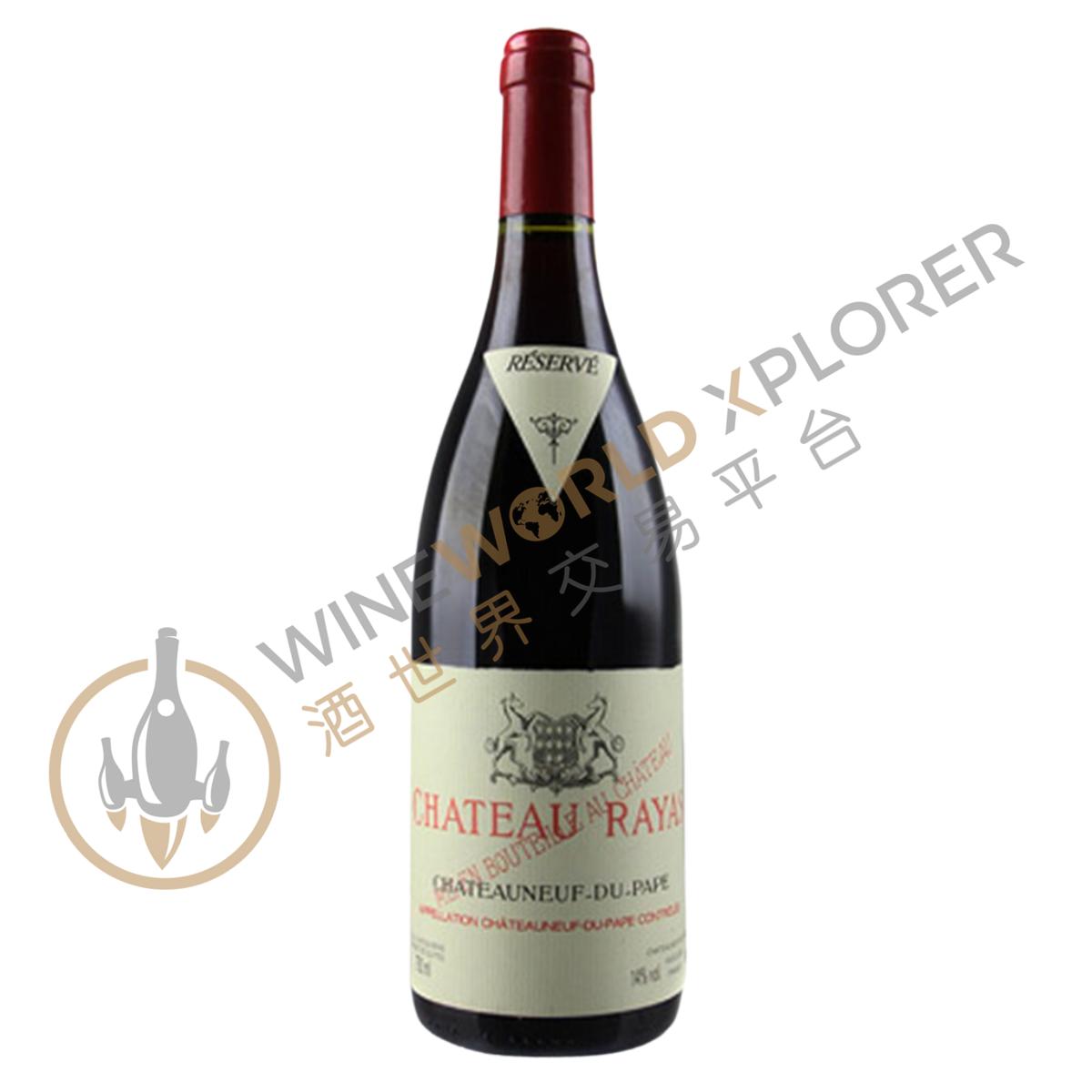
Rayas, Chateauneuf du Pape Reserve 2008
 View analysis


Description
Tasting notes

Reviewed by: Josh Raynolds
Vivid red. Pure, expressive aromas of red and dark berries, potpourri, licorice and rose. Juicy, spicy and fresh, with sexy raspberry and cherry flavors accentuated by smoky minerality. Intense and light on its feet, finishing very long and aromatic, augmented by firm mineral cut and very impressive clarity.
Reviewed by: Josh Raynolds
Component #1: Fresh red berries and rose on the nose, with a hint of licorice. Sweet strawberry and raspberry flavors show a silky texture and subtle smokiness. Very pure in a pinot way, with good finishing lift and cut. Component #2: Deeper dark berry and cherry aromas are complemented by a note of cocoa powder. Deeper and chewier than the first barrel, finishing with strong grip and lingering sweetness. Component #3: Wildly pungent aromas of cherry skin and botanical herbs with a touch of black pepper. Bitter cherry and cassis flavors soften in the middle palate, gaining sweetness and a floral quality. Reynaud called this barrel the skeleton of Rayas. The ultimate blend should be one of the standouts of the vintage.
Reviewed by: Robert M. Parker, Jr.
Tasting through the three separate lots that will make up the 2008 Rayas Chateauneuf du Pape suggests this is going to be another very good vintage for the property. These wines rarely have a lot of color (a recent exception being the 2007), but the 2008 exhibits classic sandy, loamy soil, kirsch, licorice, and a notion of tobacco leaf notes. Surprisingly fleshy, upfront, and precocious for a young Rayas, it has the requisite fruit concentration to merit an outstanding rating. It is one of the outstanding successes of the vintage. (Not yet released) 2007 may be Emmanuel Reynaud’s greatest vintage since he took over the management of this estate when his uncle, Jacques Reynaud, died in 1997. Importer: Martine’s Wines, Novato, CA; tel. (415) 883-0400
Reviewed by: Robert M. Parker, Jr.
The lighter-styled 2008 Rayas Chateauneuf du Pape is reminiscent of vintages such as 2004 and 2000. Its medium ruby color is followed by classic aromas of licorice, black cherries, earth and herbs. Medium-bodied and round with soft tannins and no hard edges, it should drink well for 10-15 years. Rayas has one of the most unusual terroirs in Chateauneuf du Pape with sandy soils and a more northerly oriented exposure. To understand these wines, one must realize that this is a cool-climate terroir in a warm appellation. Emmanuel Reynaud, the nephew of the late Jacques Reynaud, has now been the sole winemaker and administrator here for 13 vintages and he appears to have settled in comfortably. His 2009s have turned out well in this challenging, drought plagued vintage. The white wines are always intriguing. In some vintages they are absolutely spectacular as well as long-lived and in others they are somewhat bizarre with a tendency to oxidize. 2009 appears to be a top-flight year for the whites. I tasted the 2009 reds from an assortment of small barrels, demi-muids and foudres and putting together a score range takes some degree of extrapolation based on seeing all these different component parts. Importer: Martine’s Wines, Novato, CA; tel. (415) 883-0400
Reviewed by: Robert M. Parker, Jr.
A much lighter style of wine, but showing far better now that it has had some time in bottle, is Emmanuel Reynaud’s 2008 Rayas Chateauneuf du Pape. Medium ruby, with a classic nose of kirsch liqueur intermixed with Provencal herbs, sandy, loamy soil notes, some licorice and steak tartare, this wine is fleshy, medium to full-bodied, round, generous, and surprisingly seductive and luscious. I wouldn’t be surprised if many tasters prefer this over the bigger, richer, more structured and potentially far greater 2007, at least for the next 4-5 years. This is a sensational effort and one of the finest wines of the vintage, the most challenging year in Chateauneuf du Pape since the historical deluge in 2002. The current releases of Fonsalette include the 2007 and 2008 Cotes du Rhone, as the 2009s will not be released until next year, and the 2010s the year after. Importer: Martine’s Wines, Novato, CA; tel. (415) 883-0400
About the Producer
Back in 1880, General Albert Reynaud bought Chateau Rayas in the Rhone Valley. It is now run by Emmanuel Reynaud. The Reynaud family has owned the estate for over 120 years. For four generations, the Reynaud family has worked hard to transform the estate from a small, unknown winery to a leading Rhone Valley winery. When Château Rayas was first purchased by Albert Reynaud, it had a small, unassuming vineyard on sandy, north-facing soils that were not well insulated or sunlit. Today the estate has 25 hectares of vineyards and the vines are on average 35 years old. The success of the estate is due to the persistence and innovation of its owners. Originally, the tradition in the Chateauneuf-du-Pape region was to make wine from a mix of grape varieties, but Mr Albert Renaud took a different approach and abandoned the tradition of using a mix of grapes in Chateauneuf-du-Pape to make wine from local Grenache grapes and a small amount of Syrah. The result is a top-notch Chateauneuf-du-Pape red wine (Chateau Rayas, Chateauneuf-du-Pape) that overcomes all its shortcomings. Châteauneuf-du-Pape is matured in old barrels for 2-3 years before being released to the market and is produced in very low yields, at a price that is the best in the Châteauneuf-du-Pape region. It is highly regarded by the public: the 1996 vintage was awarded 98 points by the Wine Spectator in 2006, the highest score in the appellation that year. The 2005 and 2003 vintages were also rated 98 and 95 points respectively by Parker. Château Rayas sells its wines under the name "Château Rayas", but also under the names "Château de Fonsalette" and "Pignan". Pignan Chateauneuf du Pape. The wines of Chateauneuf du Pape are comparable to those of Château de Fonsalette. The red wines of Château de Rothschild are smooth and elegant, while the white wines are fresh and have a long lasting aroma. The red wines of Château Fonsalie are full-bodied and ripe, while the white wines have aromas of nectarine and apricot. In the Renault family, which is aimed at the top end of the market, the Pinot is the second wine of Château Rijas and has a similar style to the main Rijas, with a medium body, attractive black cherry and fig flavours and a sweet taste.
1988(2)1990(3)1994(1)1995(1)1996(1)1998(1)1999(3)2000(3)2001(3)2003(3)2004(3)2005(1)2006(5)2007(6)
Package Size
