
 Wine Advisor



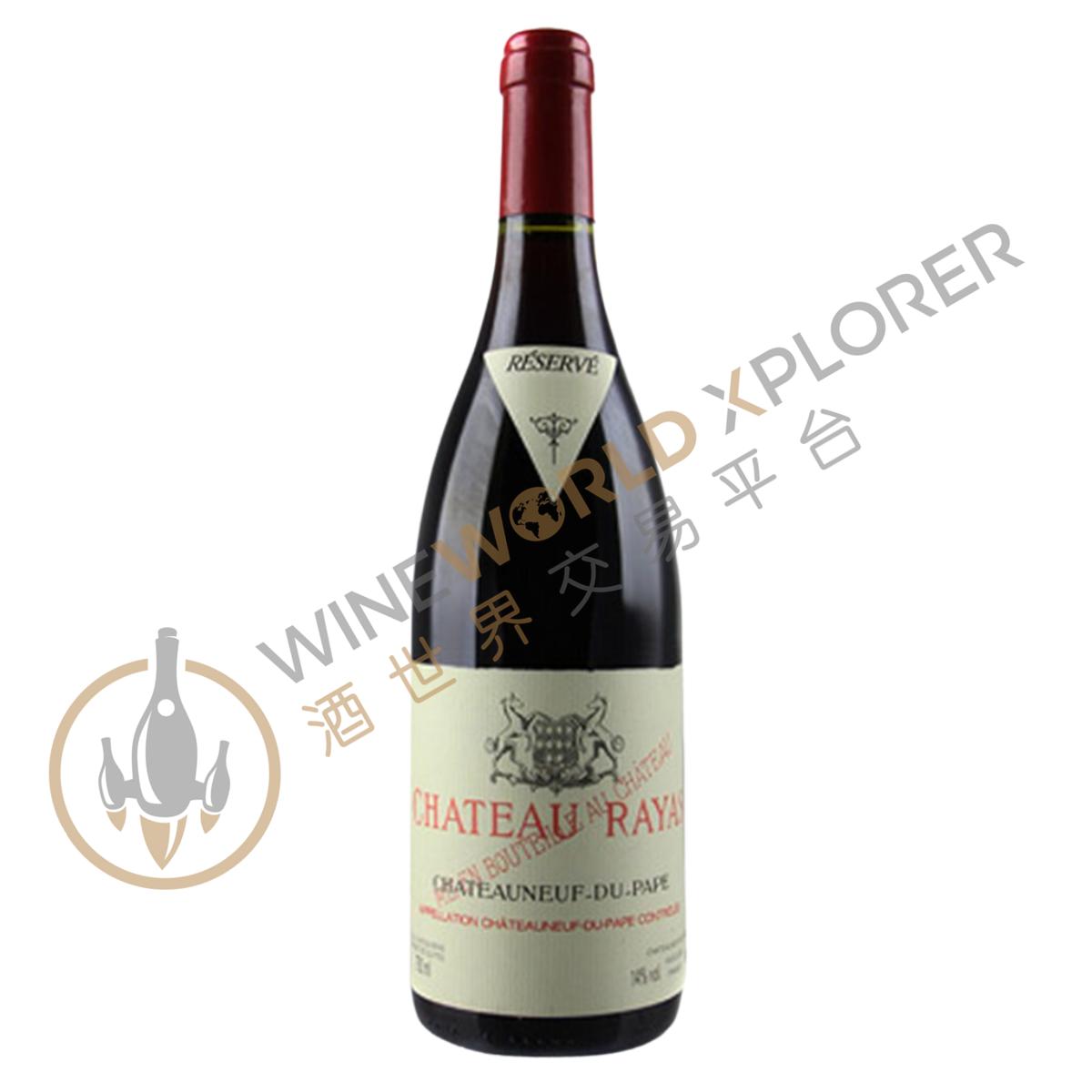
Rayas, Chateauneuf du Pape Reserve 1995
 View analysis


Description
Tasting notes

Reviewed by: Robert M. Parker, Jr.
A tiny crop of only 12-15 hectoliters per hectare, and less than 1,000 cases have made this one of the rarest, most difficult to obtain Rayas vintages. While the 1995 is evolving beautifully, it is not yet ready for prime time drinking. The color remains a dense ruby with purple nuances. The wine has that degree of over-ripeness allied to opulence, and a sumptuous texture that make this wine so striking. Notes of kirsch liqueur, black raspberries, minerals, spice, and flowers can be found in this exceptionally full-bodied, powerful, layered wine. Despite its massiveness, there is a sense of elegance, delineation, and balance. The abundant tannin has become sweeter and better integrated. This is certainly a complete and long-lived Rayas and should be uncommonly ageworthy. Anticipated maturity: 2005-2020
Reviewed by: Robert M. Parker, Jr.
The outrageously profound 1995 Rayas Chateauneuf du Pape is a glorious example of what heights Grenache can achieve. Made from yields of 12-15 hectoliters per hectare, the tiny quantities produced in 1995 will make this wine even more difficult than usual to find. It does not possess the unrestrained opulence and over ripeness of the 1990. To me it tastes like a hypothetical blend of the 1978, 1989, and 1990. The color is a dense, rich purple, and the nose offers up unmistakable scents of kirsch, cassis, and roasted peanuts. Full-bodied, with magnificent concentration yet striking definition, this is a Rayas that offers all the power and hedonistic richness of the great vintages, but manages to infuse the wine's massive richness with a sense of elegance and focus. I do not know what the 1978 tasted like at nine months, but there is a structure, inner strength, and intensity to this 1995 that might equal the legendary 1978. It is a super-concentrated, gorgeously made, seamless wine that will propel Rayas freaks into fits of ecstasy. It will need five to six years of cellaring (the acidity level is surprising given its high extract and richness). Expect the 1995 Rayas to age well for two decades. Last tasted 6/96.
Reviewed by: Robert M. Parker, Jr.
The outrageously profound 1995 Rayas Chateauneuf du Pape is a glorious example of what heights Grenache can achieve. Made from yields of 12-15 hectoliters per hectare, the tiny quantities produced in 1995 will make this wine even more difficult to find. It does not possess the unrestrained opulence and over-ripeness of the 1990. To me it tastes like a hypothetical blend of the 1978, 1989, and 1990. The color is a dense, rich purple, and the nose offers up unmistakable scents of kirsch, cassis, and roasted peanuts. Full-bodied, with magnificent concentration yet striking definition, this is a Rayas that offers all the power and hedonistic richness of the great vintages, but manages to infuse the wine's massive richness with a sense of elegance and focus. I do not know what the 1978 tasted like at 9 months, but there is a structure, inner-strength, and intensity to this 1995 that might equal the legendary 1978. It is a super-concentrated, gorgeously made, seamless wine that will propel Rayas freaks into fits of ecstasy. It will need 5-6 years of cellaring after its release (the acidity level is surprising given its high extract and richness). Expect the 1995 Rayas to age well for two decades. This wine was tasted between June 1 and June 16, 1996. The inimitable Jacques Reynaud turned in a great performance with the 1995 vintage. Reynaud's success in 1995 is not difficult to understand. Always the last to harvest, 1995 favored those producers who waited out the mid-September rains and subsequently benefitted from 4-5 weeks of spectacular Indian summer-like weather. Everything I tasted from the 1995 vintage in the Rayas cellars was spectacular. Importer: Martine's Wines, San Rafael, CA; tel. (415) 485-1800
Reviewed by: Robert M. Parker, Jr.
I have had the 1995 Rayas Chateauneuf du Pape four times since it was bottled, and can state unequivocally that it is the quintessential Rayas. The wine is extraordinarily concentrated, with an unbelievable concentration of ripe black raspberry, cherry, and kirsch flavors that are not dissimilar from a great vintage (i.e., 1947, 1950, 1982) of the famed Pomerol, Chateau Lafleur. It possesses an old vine intensity, multiple layers of richness, and admirable structure, as well as surprisingly fine acidity. This is a phenomenally compelling, but backward Rayas that is more concentrated than the 1990, and, yes, as ageworthy as the surreal 1978. Owners should resist drinking it for another 4-5 years; it will last for 20-30 years. This is among the most awesome young wines I have tasted this year. Importers: Martine's Wines, San Rafael, CA; tel. (415) 485-1800, and Alain Junguenet, Wines of France, Mountainside, NJ; tel. (908) 654-6173
Reviewed by: Robert M. Parker, Jr.
The 1995 is spectacular. When Emmanuel Reynaud said it was evolving quickly, in essence repudiating this vintage, I immediately drank two bottles of this glorious elixir. It does not reveal the over-ripeness of the 1990, bringing to mind a hypothetical blend of the great 1989 and 1978. Deeply-colored and still young, with black currant/creme de cassis-like characteristics, huge body, yet great structure and delineation, this is a classic Rayas that is totally different than the 1990. It should continue to improve in the bottle and may merit an even higher score. While it can be drunk now, it will be even better with 3-4 years of cellaring. Anticipated maturity: 2007-2020. Importers: Alain Junguenet, Wines of France, Mountainside, NJ; tel. (908) 654-6173 and Martine’s Wines, Novato, CA; tel. (415) 883-0400
Reviewed by: Neal Martin
Tasted blind at The Arches in London. Having scant experience of this esteemed wine, I have to thank my friend in Tokyo for proffering a bottle at the American Club in Tokyo. It is certainly a lovely Chateauneuf-du-Pape with a warm, inviting yet well defined nose of creme de cassis, dark cherries, kirsch and a touch of liquorices. The palate is medium- rather than full-bodied with svelte tannins, great harmony, velvety smooth texture. Opulent red-berried fruits, again that kirsch note just in the background, good persistency towards the finish that caresses rather than lacquers the mouth. Superb, but it will certainly improve. Drink now-2020. Tasted February 2009.
About the Producer
Back in 1880, General Albert Reynaud bought Chateau Rayas in the Rhone Valley. It is now run by Emmanuel Reynaud. The Reynaud family has owned the estate for over 120 years. For four generations, the Reynaud family has worked hard to transform the estate from a small, unknown winery to a leading Rhone Valley winery. When Château Rayas was first purchased by Albert Reynaud, it had a small, unassuming vineyard on sandy, north-facing soils that were not well insulated or sunlit. Today the estate has 25 hectares of vineyards and the vines are on average 35 years old. The success of the estate is due to the persistence and innovation of its owners. Originally, the tradition in the Chateauneuf-du-Pape region was to make wine from a mix of grape varieties, but Mr Albert Renaud took a different approach and abandoned the tradition of using a mix of grapes in Chateauneuf-du-Pape to make wine from local Grenache grapes and a small amount of Syrah. The result is a top-notch Chateauneuf-du-Pape red wine (Chateau Rayas, Chateauneuf-du-Pape) that overcomes all its shortcomings. Châteauneuf-du-Pape is matured in old barrels for 2-3 years before being released to the market and is produced in very low yields, at a price that is the best in the Châteauneuf-du-Pape region. It is highly regarded by the public: the 1996 vintage was awarded 98 points by the Wine Spectator in 2006, the highest score in the appellation that year. The 2005 and 2003 vintages were also rated 98 and 95 points respectively by Parker. Château Rayas sells its wines under the name "Château Rayas", but also under the names "Château de Fonsalette" and "Pignan". Pignan Chateauneuf du Pape. The wines of Chateauneuf du Pape are comparable to those of Château de Fonsalette. The red wines of Château de Rothschild are smooth and elegant, while the white wines are fresh and have a long lasting aroma. The red wines of Château Fonsalie are full-bodied and ripe, while the white wines have aromas of nectarine and apricot. In the Renault family, which is aimed at the top end of the market, the Pinot is the second wine of Château Rijas and has a similar style to the main Rijas, with a medium body, attractive black cherry and fig flavours and a sweet taste.
