
 Wine Advisor



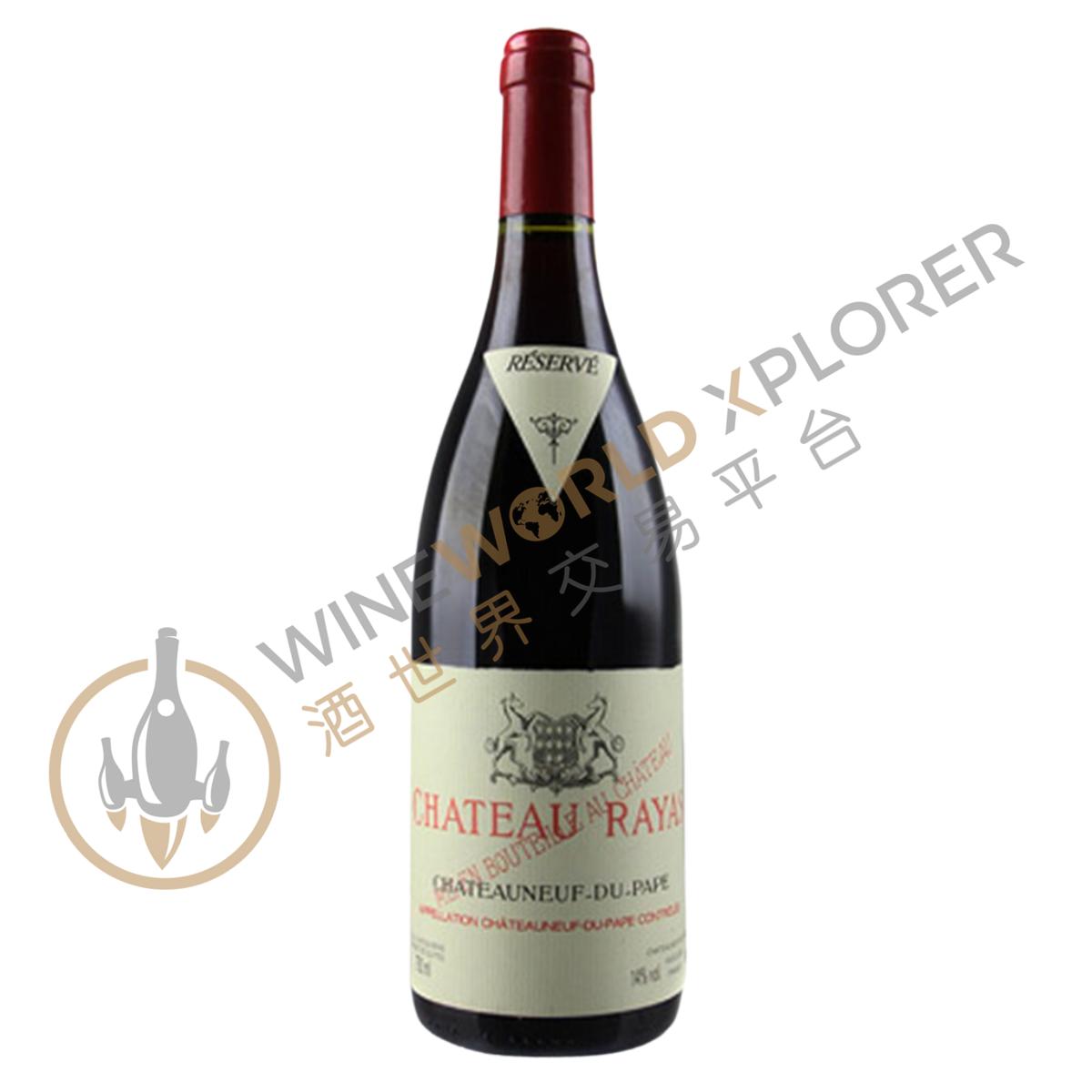
Rayas, Chateauneuf du Pape Reserve 2004
 View analysis


Description
Tasting notes

Reviewed by: Robert M. Parker, Jr.
The deep ruby 2004 Rayas Chateauneuf du Pape is a structured wine that seems to have closed down from the component part tasting last year. It is medium-bodied with sweet, ripe black cherry and raspberry notes, some crushed rocks, and that distinctive minerality that Rayas seems to provide. The wine reveals more structure this year, and therefore seems to need 2-4 years of bottle age and should keep for 15-16. Stylistically, it is more than just a coincidence that it resembles the 1994, which has turned out very well and is beginning to drink beautifully in the classic Rayas style. The 2005s at this renowned estate, both the Cotes du Rhones from the Fonselette estate and the Chateauneuf du Papes, are cool-climate style wines with some austerity but admirable delicacy and lightness. I didn’t think they were among the vintage’s strongest efforts, but they are certainly very much in keeping with the style of past Jacques Reynaud wines. Importer: Martine’s Wines, Novato, CA; tel. (415) 883-0400
Reviewed by: Robert M. Parker, Jr.
The different components that will go into the 2004 Rayas Chateauneuf du Pape were tasted and rated between 91 and 94, so it looks like a wine that should turn out well. It doesn’t seem to have the power and richness of the 2003, but it is complex and aromatic, revealing loads of kirsch and raspberry fruit. Medium to full-bodied as well as beautifully knit, it should drink well for 10-15 years. Importer: Martine’s Wines, Novato, CA; tel. (415) 883-0400
About the Producer
Back in 1880, General Albert Reynaud bought Chateau Rayas in the Rhone Valley. It is now run by Emmanuel Reynaud. The Reynaud family has owned the estate for over 120 years. For four generations, the Reynaud family has worked hard to transform the estate from a small, unknown winery to a leading Rhone Valley winery. When Château Rayas was first purchased by Albert Reynaud, it had a small, unassuming vineyard on sandy, north-facing soils that were not well insulated or sunlit. Today the estate has 25 hectares of vineyards and the vines are on average 35 years old. The success of the estate is due to the persistence and innovation of its owners. Originally, the tradition in the Chateauneuf-du-Pape region was to make wine from a mix of grape varieties, but Mr Albert Renaud took a different approach and abandoned the tradition of using a mix of grapes in Chateauneuf-du-Pape to make wine from local Grenache grapes and a small amount of Syrah. The result is a top-notch Chateauneuf-du-Pape red wine (Chateau Rayas, Chateauneuf-du-Pape) that overcomes all its shortcomings. Châteauneuf-du-Pape is matured in old barrels for 2-3 years before being released to the market and is produced in very low yields, at a price that is the best in the Châteauneuf-du-Pape region. It is highly regarded by the public: the 1996 vintage was awarded 98 points by the Wine Spectator in 2006, the highest score in the appellation that year. The 2005 and 2003 vintages were also rated 98 and 95 points respectively by Parker. Château Rayas sells its wines under the name "Château Rayas", but also under the names "Château de Fonsalette" and "Pignan". Pignan Chateauneuf du Pape. The wines of Chateauneuf du Pape are comparable to those of Château de Fonsalette. The red wines of Château de Rothschild are smooth and elegant, while the white wines are fresh and have a long lasting aroma. The red wines of Château Fonsalie are full-bodied and ripe, while the white wines have aromas of nectarine and apricot. In the Renault family, which is aimed at the top end of the market, the Pinot is the second wine of Château Rijas and has a similar style to the main Rijas, with a medium body, attractive black cherry and fig flavours and a sweet taste.
