
 Wine Advisor



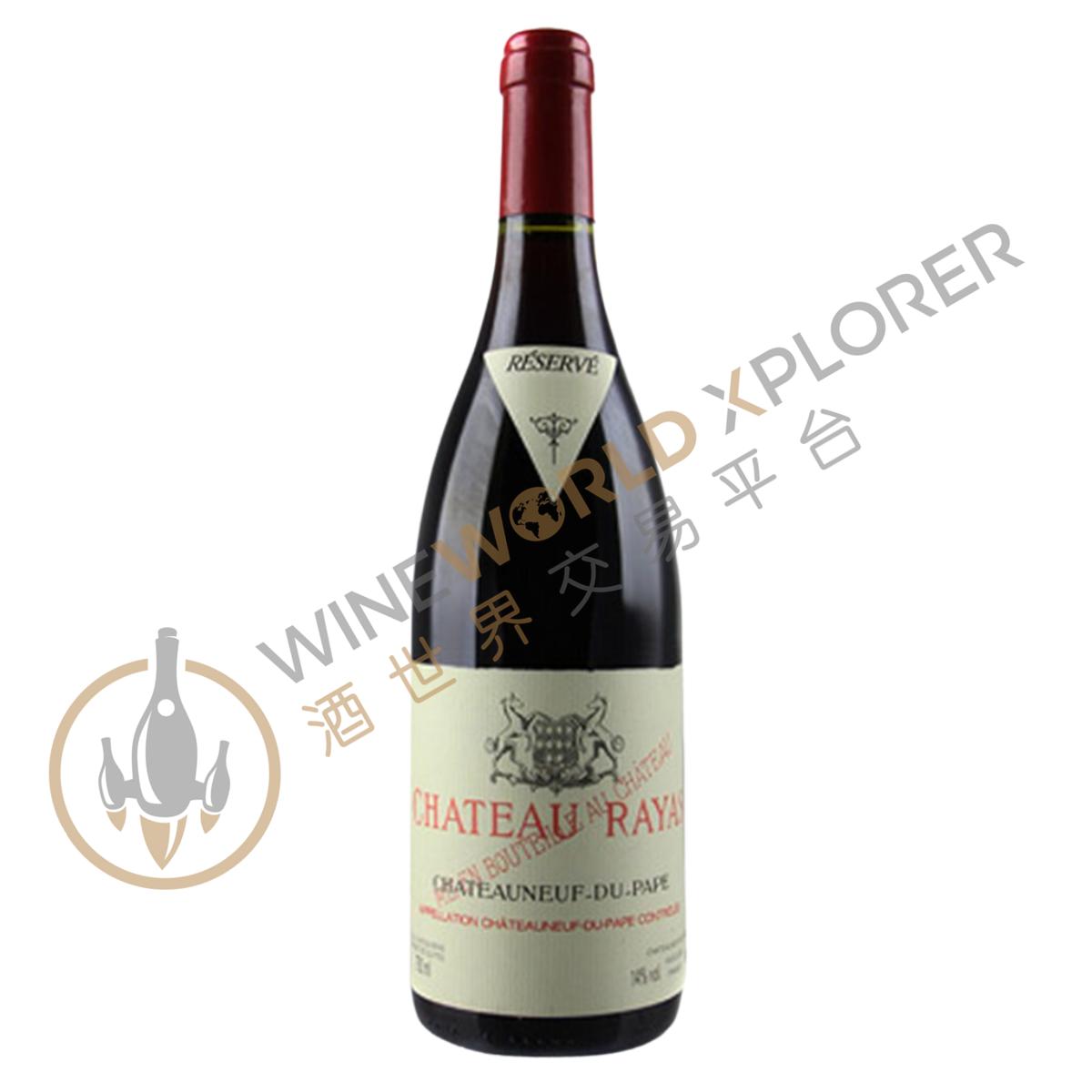
Rayas, Chateauneuf du Pape Reserve 2006
 View analysis


Description
Tasting notes

Reviewed by: Robert M. Parker, Jr.
The elegant 2006 Rayas Chateauneuf du Pape is not as powerful as the 2005 or 2007, but it offers a deep ruby color as well as opulent, fleshy, kirsch and black raspberry characteristics along with hints of spring flowers and loamy soil. A sexy, showy, beautifully balanced, silky effort, it is already approachable, and should drink well for two decades., After going through a transitional period after Jacques Reynaud died in 1997, it is safe to say that his nephew, Emmanuel Reynaud, has returned this venerable estate to its previous level of high quality. While Chateauneuf du Pape is a warm appellation, Rayas is situated in a cool micro-climate, and is undoubtedly not an easy property to maintain. It is also known for its sandy soils, which are in total contrast to the rock-strewn plateau a half mile to the east, west, and south. Two utterly profound Rayas Chateauneuf du Papes have been produced recently, the 2005 and 2007. 2007 is a superb vintage at Chateau Rayas Importer: Martine’s Wines, Novato, CA; tel. (415) 883-0400
Reviewed by: Robert M. Parker, Jr.
Tasting through all three components that go into the 2006 Rayas Chateauneuf du Pape, I rated them between 92-95 and 92-94, so this is going to be a top-notch Rayas that will eclipse some of the earlier vintages that Emmanuel Reynaud made, such as the 1998, 1999, and 2000. The wine should be noted for its glorious concoction of kirsch liqueur, black raspberries, resiny notes, and flowers. Beautifully pure, full-bodied, opulent, and fleshy, with low acidity but ripe tannin, the wine is voluptuous, rich, and undeniably sexy and showy at present. I think this wine has such great balance that it is going to be deceptively delicious when released, but will aged effortlessly because of that balance for 15-20 years. This great estate has been going through a transitional period, with some replanting in their vineyards, and of course the enormous challenge of replacing the legendary proprietor and winemaker, the late Jacques Reynaud, who passed away in the winter of 1997. Replaced by his nephew Emmanuel Reynaud, who had worked closely with his uncle, the early vintages, as I reported on in this publication, were good but hardly exciting. Reason to be concerned about the direction in which the estate was going was a legitimate worry. The 1998, 1999, and 2000 vintages were vintages where Rayas was well behind the pack of top producers in Chateauneuf du Pape. However, with that said, the tasting I did with Emmanuel Reynaud in late August was the best tasting I have done with him in a decade, and while it may be premature to say that Rayas is back to the greatness of Jacques Reynaud, Emmanuel has made some fabulous wines that are going to be released over the next several years. Importer: Martine’s Wines, Novato, CA; tel. (415) 883-0400
Reviewed by: Josh Raynolds
Medium red. Vibrant strawberry, raspberry, anise and floral aromas could fill a room. Juicy and sharply delineated, offering sweet red berry and cherry preserve flavors with compelling accents of licorice, sassafras, lavender and smoky minerals. Extremely elegant wine with outstanding finishing cut and persistence. Not many grand cru Burgundies could match this for finesse.
Reviewed by: Josh Raynolds
Component #1, from a variety of sites: Fresh raspberry and cherry on the nose, with sweet red and dark fruit preserve flavors. Even sweeter on the finish, with a jolt of lavender pastille. Component #2, from older vines: Dense cherry and candied violet aromas. Fleshy in texture, with deep, sweet cherry fruit. Became more tannic with air but stayed sweet. Component #3, from stony soil: Exotic raspberry and Asian spice aromas. Sweet, weighty and improbably elegant, with vivid red fruit flavors and outstanding finishing clarity. Remarkable. Has the potential to be a great vintage for this wine.
Reviewed by: Neal Martin
Finally, there was the 2006 Châteauneuf-du-Pape from Château Rayas. This rather overshadowed the preceding Burgundy with its flattering scents of crushed strawberry, ripe clementines and incense, light leathery notes emerging with time. The palate is elegant and refined, one of the most transparent Rayas reds that I have encountered, leading to a persistent, licorice-tinged finish. This is a wonderful, refined Rayas, probably at its peak.
Reviewed by: Neal Martin
The 2006 Châteauneuf-du-Pape Réserve bursts from the glass with kirsch and black plum, sharing some glycerine notes with the 2011. Time reveals touches of sloe and violet. The palate is medium-bodied with exceptionally pure red fruit plus inflections of blood orange and clove. As I wrote before, there is a beguiling complexity to this Rayas, and it is just beginning to drink perfectly now. Tasted at the Rayas dinner at La Trompette in London.
About the Producer
Back in 1880, General Albert Reynaud bought Chateau Rayas in the Rhone Valley. It is now run by Emmanuel Reynaud. The Reynaud family has owned the estate for over 120 years. For four generations, the Reynaud family has worked hard to transform the estate from a small, unknown winery to a leading Rhone Valley winery. When Château Rayas was first purchased by Albert Reynaud, it had a small, unassuming vineyard on sandy, north-facing soils that were not well insulated or sunlit. Today the estate has 25 hectares of vineyards and the vines are on average 35 years old. The success of the estate is due to the persistence and innovation of its owners. Originally, the tradition in the Chateauneuf-du-Pape region was to make wine from a mix of grape varieties, but Mr Albert Renaud took a different approach and abandoned the tradition of using a mix of grapes in Chateauneuf-du-Pape to make wine from local Grenache grapes and a small amount of Syrah. The result is a top-notch Chateauneuf-du-Pape red wine (Chateau Rayas, Chateauneuf-du-Pape) that overcomes all its shortcomings. Châteauneuf-du-Pape is matured in old barrels for 2-3 years before being released to the market and is produced in very low yields, at a price that is the best in the Châteauneuf-du-Pape region. It is highly regarded by the public: the 1996 vintage was awarded 98 points by the Wine Spectator in 2006, the highest score in the appellation that year. The 2005 and 2003 vintages were also rated 98 and 95 points respectively by Parker. Château Rayas sells its wines under the name "Château Rayas", but also under the names "Château de Fonsalette" and "Pignan". Pignan Chateauneuf du Pape. The wines of Chateauneuf du Pape are comparable to those of Château de Fonsalette. The red wines of Château de Rothschild are smooth and elegant, while the white wines are fresh and have a long lasting aroma. The red wines of Château Fonsalie are full-bodied and ripe, while the white wines have aromas of nectarine and apricot. In the Renault family, which is aimed at the top end of the market, the Pinot is the second wine of Château Rijas and has a similar style to the main Rijas, with a medium body, attractive black cherry and fig flavours and a sweet taste.
1988(2)1990(3)1994(1)1995(1)1996(1)1998(1)1999(3)2000(3)2001(3)2003(3)2004(3)2005(1)
Package Size
