
 Wine Advisor



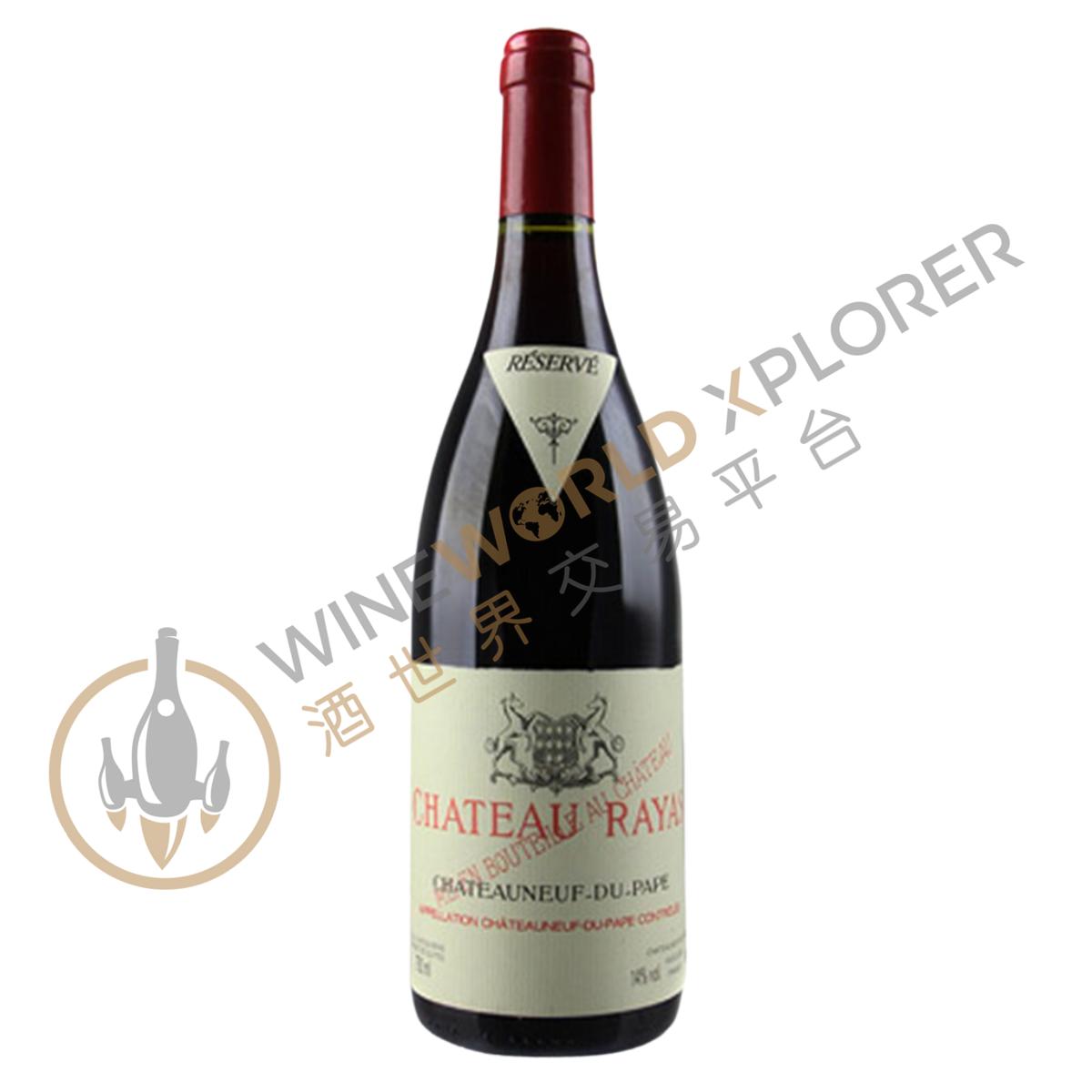
Rayas, Chateauneuf du Pape Reserve 1989
 View analysis


Description
Tasting notes

Reviewed by: Robert M. Parker, Jr.
The 1989 Rayas is finally beginning to live up to its immense potential. The color is a dense ruby/purple. The aromatics, which have consistently been tight and reserved, are beginning to reveal some of the framboise and black cherry liqueur-like scents for which this hallowed estate is known. Extremely full-bodied, powerful, and rich, with lots of tannin, muscle, and extract, the colossal-sized, tightly-knit 1989 is bursting at its seams. It requires another 3-5 years of cellaring. This is a prodigious Rayas that is just beginning to strut its stuff. Anticipated maturity: 2005-2025.
Reviewed by: Robert M. Parker, Jr.
While not as obviously massive as the 1990, the 1989 Rayas may turn out to be a more classically proportioned example of this wine, similar to the 1978. The 1989 reveals a dark ruby/purple color, as well as Rayas' tell-tale aromatics of roasted fruits, kirsch, earth, and smoke. More noticeably structured, this is a highly-extracted, thick Rayas for drinking over the next 20+ years. Although it may not rival the 1990 for power, extract, and weight, this is an exquisite Rayas, and clearly one of the finest three wines made at the estate in the last 30 years. Imported by Martine's Wines, San Rafael, CA; tel. (415) 485-1800, Wines of France, Alain Junguenet, Mountainside, NJ; tel. (908) 654-6173, and Ideal Wines, Medford, MA; tel. (617) 395-3300
Reviewed by: Robert M. Parker, Jr.
While not as obviously massive as the 1990, the 1989 Rayas may turn out to be a more classically proportioned example of this wine, similar to the 1978. The 1989 reveals a dark ruby/purple color, as well as Rayas's telltale aromatics of roasted fruits, kirsch, earth, and smoke. More noticeably structured, this is a highly extracted, thick Rayas for drinking over the next 20 + years. Although it may not rival the 1990 for power, extract, and weight, this is an exquisite Rayas, and clearly one of the finest wines made at the estate in the last 30 years. Last tasted 9/96.
Reviewed by: Neal Martin
The 1989 Chateau Rayas is an absolute peach. Deep in colour, it has an intense, flamboyant yet beautifully controlled bouquet that oozes sensuality from every pore: blackcurrant pastilles, dark plum, hint of Alpine forest and bacon fat. It is extraordinarily pure and yet it transports you straight to the region, something that magical wines have a propensity to do. The palate is structured and focused, a Chateauneuf-du-Pape with palpable presence and class, building gently in the mouth towards a youthful, strident finish that suggests it will last another couple of decades... easily. This is a wine to lose yourself in. Tasted August 2013.
Reviewed by: Robert M. Parker, Jr.
No tasting note.
Reviewed by: Robert M. Parker, Jr.
A wine that continues to catch up to the 1990 (and probably has greater longevity) is the 1989. A dense-colored Rayas, but not as thick-looking as the 1990, this dark ruby-colored wine exhibits plenty of roasted herb notes intermixed with scents of tobacco, sweet creme de cassis, and kirsch. Full-bodied, highly-extracted, powerful, and tannic (resembling 1995 more than 1990), it is shedding its cloak of tannin and beginning to approach full maturity. Importers: Alain Junguenet, Wines of France, Mountainside, NJ; tel. (908) 654-6173 and Martine’s Wines, Novato, CA; tel. (415) 883-0400
About the Producer
Back in 1880, General Albert Reynaud bought Chateau Rayas in the Rhone Valley. It is now run by Emmanuel Reynaud. The Reynaud family has owned the estate for over 120 years. For four generations, the Reynaud family has worked hard to transform the estate from a small, unknown winery to a leading Rhone Valley winery. When Château Rayas was first purchased by Albert Reynaud, it had a small, unassuming vineyard on sandy, north-facing soils that were not well insulated or sunlit. Today the estate has 25 hectares of vineyards and the vines are on average 35 years old. The success of the estate is due to the persistence and innovation of its owners. Originally, the tradition in the Chateauneuf-du-Pape region was to make wine from a mix of grape varieties, but Mr Albert Renaud took a different approach and abandoned the tradition of using a mix of grapes in Chateauneuf-du-Pape to make wine from local Grenache grapes and a small amount of Syrah. The result is a top-notch Chateauneuf-du-Pape red wine (Chateau Rayas, Chateauneuf-du-Pape) that overcomes all its shortcomings. Châteauneuf-du-Pape is matured in old barrels for 2-3 years before being released to the market and is produced in very low yields, at a price that is the best in the Châteauneuf-du-Pape region. It is highly regarded by the public: the 1996 vintage was awarded 98 points by the Wine Spectator in 2006, the highest score in the appellation that year. The 2005 and 2003 vintages were also rated 98 and 95 points respectively by Parker. Château Rayas sells its wines under the name "Château Rayas", but also under the names "Château de Fonsalette" and "Pignan". Pignan Chateauneuf du Pape. The wines of Chateauneuf du Pape are comparable to those of Château de Fonsalette. The red wines of Château de Rothschild are smooth and elegant, while the white wines are fresh and have a long lasting aroma. The red wines of Château Fonsalie are full-bodied and ripe, while the white wines have aromas of nectarine and apricot. In the Renault family, which is aimed at the top end of the market, the Pinot is the second wine of Château Rijas and has a similar style to the main Rijas, with a medium body, attractive black cherry and fig flavours and a sweet taste.
