
 Wine Advisor



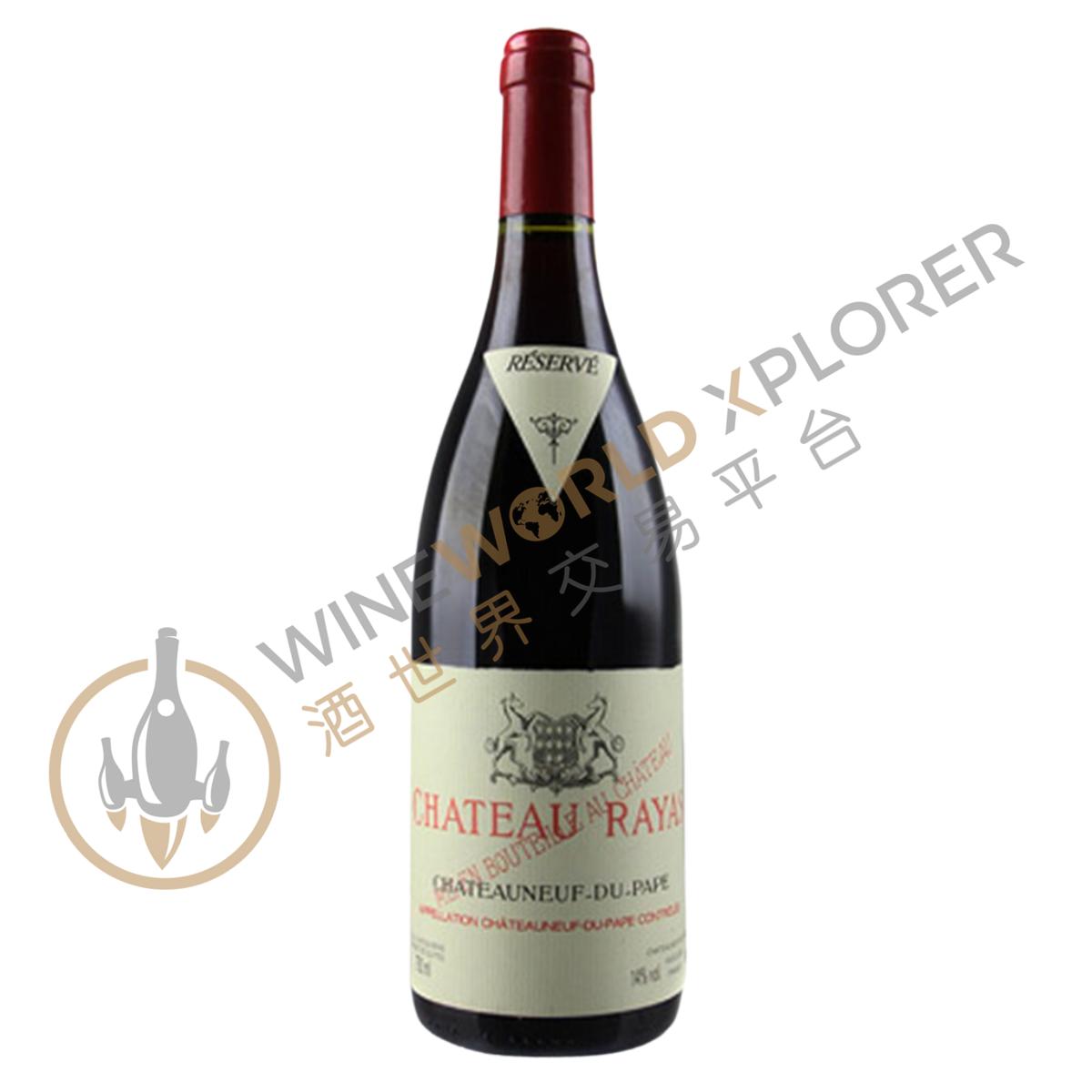
Rayas, Chateauneuf du Pape Reserve 2003
 View analysis


Description
Tasting notes

Reviewed by: Robert M. Parker, Jr.
Tasting through the three foudres that will be blended together for the 2003 Rayas Chateauneuf du Pape suggested that this is the finest Rayas Emmanuel Reynaud has yet fashioned. The harvest, which began on September 5th, may have been the earliest ever at this estate. It continued through the end of the month as Reynaud felt there was no hurry, and each parcel was dramatically different in maturity because of the extraordinary drought and heat. This deep ruby-colored Rayas may have the finest color saturation since the 1995. A pure, vivid, persistent bouquet of black raspberries and kirsch liqueur is followed by a full-bodied Chateauneuf with loads of glycerin, 15% alcohol (the same as the watery 2002), high tannin, loads of phenolic ripeness, and plenty of dry extract as well as intensity. This beauty is a reassuringly top-flight effort from this hallowed estate. My instincts suggest it will be a relatively structured Rayas with more power, tannin, and intensity than the 2001, 2000, 1999, or 1998. I do not believe it will attain the heights of the profound 1995, but it is not far off that vintage’s style. Anticipated maturity: 2009-2020+. I suppose you could say that after the death of Jacques Reynaud in 1997, every Rayas lover (and I’ve got to be close to the top of that list) has been waiting to see, with mixed emotions as well as some concern, what will happen at this estate now that Reynaud’s nephew, Emmanuel, has taken over the winemaking. Reynaud’s sister is still on the premises, and Emmanuel worked with Jacques for a number of years. The vintages that he has had complete control of to date include 1998, 1999, 2000, 2001, and 2002. The 2000 should have been better, the 1998 is not as profound a wine as this vintage offered for Chateauneuf du Pape, but the 2001 has turned out well, and I believe the 2003 is the most successful vintage Emmanuel Reynaud has yet produced. There are some stunning raw materials in these damp, dark cellars filled with many different shaped barrels and foudres ... in addition to the eccentric ghost of Jacques Reynaud. Importer: Martine’s Wines, Novato, CA; tel. (415) 883-0400
Reviewed by: Robert M. Parker, Jr.
The 2003 Rayas Chateauneuf du Pape has gone from strength to strength and now looks to be the finest vintage since the monumental 1995. Deep ruby to the rim with that classic Rayas nose of flowers, kirsch liqueur, black raspberries, crushed rocks, and minerals, the wine is dense and concentrated, with a broad, savory mouthfeel, sweet yet silky tannin, fabulous persistence, and a blockbuster finish that just goes on and on. This is a reassuringly profound Rayas that seems to suggest that Emmanuel Reynaud has finally figured out this cold-climate terroir in a warm climate appellation. This wine should be given 3-4 years of bottle age, and drunk over the following 20+ years. Importer: Martine’s Wines, Novato, CA; tel. (415) 883-0400
About the Producer
Back in 1880, General Albert Reynaud bought Chateau Rayas in the Rhone Valley. It is now run by Emmanuel Reynaud. The Reynaud family has owned the estate for over 120 years. For four generations, the Reynaud family has worked hard to transform the estate from a small, unknown winery to a leading Rhone Valley winery. When Château Rayas was first purchased by Albert Reynaud, it had a small, unassuming vineyard on sandy, north-facing soils that were not well insulated or sunlit. Today the estate has 25 hectares of vineyards and the vines are on average 35 years old. The success of the estate is due to the persistence and innovation of its owners. Originally, the tradition in the Chateauneuf-du-Pape region was to make wine from a mix of grape varieties, but Mr Albert Renaud took a different approach and abandoned the tradition of using a mix of grapes in Chateauneuf-du-Pape to make wine from local Grenache grapes and a small amount of Syrah. The result is a top-notch Chateauneuf-du-Pape red wine (Chateau Rayas, Chateauneuf-du-Pape) that overcomes all its shortcomings. Châteauneuf-du-Pape is matured in old barrels for 2-3 years before being released to the market and is produced in very low yields, at a price that is the best in the Châteauneuf-du-Pape region. It is highly regarded by the public: the 1996 vintage was awarded 98 points by the Wine Spectator in 2006, the highest score in the appellation that year. The 2005 and 2003 vintages were also rated 98 and 95 points respectively by Parker. Château Rayas sells its wines under the name "Château Rayas", but also under the names "Château de Fonsalette" and "Pignan". Pignan Chateauneuf du Pape. The wines of Chateauneuf du Pape are comparable to those of Château de Fonsalette. The red wines of Château de Rothschild are smooth and elegant, while the white wines are fresh and have a long lasting aroma. The red wines of Château Fonsalie are full-bodied and ripe, while the white wines have aromas of nectarine and apricot. In the Renault family, which is aimed at the top end of the market, the Pinot is the second wine of Château Rijas and has a similar style to the main Rijas, with a medium body, attractive black cherry and fig flavours and a sweet taste.
1988(2)1990(3)1994(1)1995(1)1996(1)1998(1)1999(3)2000(3)2001(3)
Package Size
