
 Wine Advisor



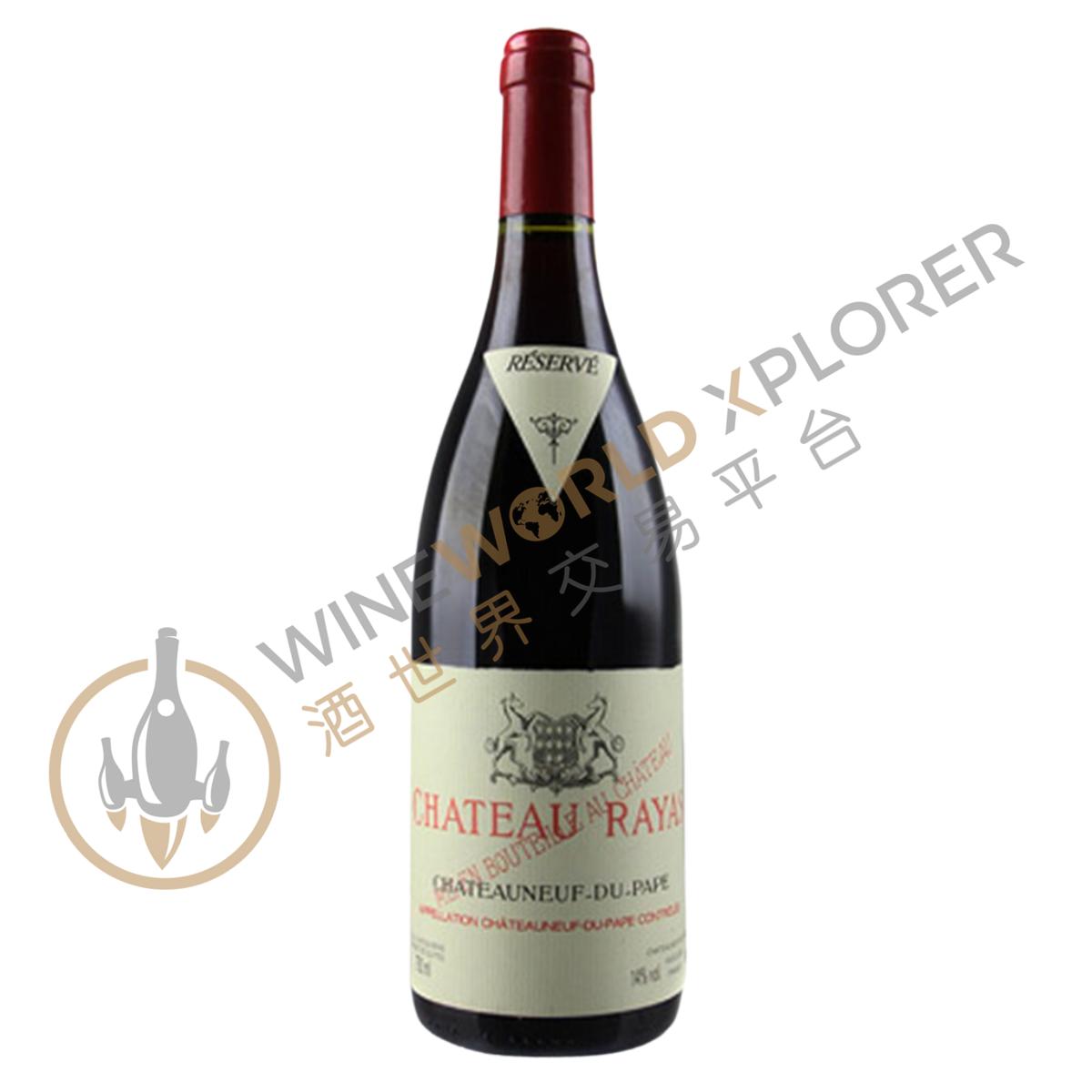
Rayas, Chateauneuf du Pape Reserve 2000
 View analysis


Description
Tasting notes

Reviewed by: Robert M. Parker, Jr.
The 2000 Rayas Chateauneuf du Pape, which Emmanuel Reynaud believes is better than 1998, came in at a whopping 15.2% alcohol. It is reminiscent of a hypothetical blend of the 1998 and 1999, with a medium to light ruby color, and a sumptuous bouquet of kirsch liqueur, spice box, and licorice. Full-bodied and fleshy, with low acidity, it is a sweet (from high glycerin and alcohol), seductive, intoxicating offering with no hard edges and a rich, fleshy mouthfeel. While it will be hard to resist, I feel the 1998 still has more structure. Anticipated maturity for the 2000: 2005-2016. A disclaimer is in order concerning the following tasting notes. While the bottled 2000s were easy to taste, the 2001 barrel tastings at Rayas were challenging because there was no electricity in the cellars. Rayas was one of many estates where electricity had been cut off by the floods of September 8 and 9. Hence, the tasting was conducted by flashlight ... a first in my 25 years of experience. It was hard to get a grasp of the barrel samples' colors when viewed by flashlight, but they appeared to be light to medium ruby. However, darkly pigmented wines are rarely produced at this domaine. There have been some deep-colored vintages of Rayas (1995, 1990, and 1989), but most are surprisingly weak in color, yet intense in flavor. Importers: Alain Junguenet, Wines of France, Mountainside, NJ; tel. (908) 654-6173 and Martine's Wines, Novato, CA; tel. (415) 883-0400
Reviewed by: Robert M. Parker, Jr.
I was very impressed with the 2000 Rayas Chateauneuf du Pape. It totally conceals the 15.5% alcohol, and was produced from a tiny crop. One-third of the cuvee had just finished fermenting dry, which gives you an idea of its power and richness. It is a sexy, aromatic style of Rayas with a deceptively light medium ruby color as well as sweet, candied, black cherry fruit intermixed with black raspberries and spice. Opulent, with a boatload of glycerin, full body, a velvety texture, abundant glycerin, and fine length, it should turn out to be sweet and jammy, but it is still early in the game. Anticipated maturity: 2004-2018. Importers: Alain Junguenet, Wines of France, Mountainside, NJ; tel. (908) 654-6173 and Martine's Wines, Novato, CA; tel. (415) 883-0400
Reviewed by: Robert M. Parker, Jr.
The 2000 has been a severe disappointment in three out of four bottles tasted. Three of the bottles were diluted, vegetal, and evolved. The best bottle emerged from a tasting at the estate. The tasting note on that bottle follows. The 2000 Rayas Chateauneuf du Pape, which Emmanuel Reynaud believes is better than 1998, came in at a whopping 15.2% alcohol. It is reminiscent of a hypothetical blend of the 1998 and 1999, with a medium to light ruby color, and a sumptuous bouquet of kirsch liqueur, spice box, and licorice. Full-bodied and fleshy, with low acidity, it is a sweet (from high glycerin and alcohol), seductive, intoxicating offering with no hard edges and a rich, fleshy mouthfeel. While it will be hard to resist, I feel the 1998 still has more structure. Anticipated maturity for the 2000: 2005-2016. To reiterate, the other three bottles tasted stateside were strikingly rust/ruby in color as well as herbaceous/vegetal. Importers: Alain Junguenet, Wines of France, Mountainside, NJ; tel. (908) 654-6173 and Martine’s Wines, Novato, CA; tel. (415) 883-0400
About the Producer
Back in 1880, General Albert Reynaud bought Chateau Rayas in the Rhone Valley. It is now run by Emmanuel Reynaud. The Reynaud family has owned the estate for over 120 years. For four generations, the Reynaud family has worked hard to transform the estate from a small, unknown winery to a leading Rhone Valley winery. When Château Rayas was first purchased by Albert Reynaud, it had a small, unassuming vineyard on sandy, north-facing soils that were not well insulated or sunlit. Today the estate has 25 hectares of vineyards and the vines are on average 35 years old. The success of the estate is due to the persistence and innovation of its owners. Originally, the tradition in the Chateauneuf-du-Pape region was to make wine from a mix of grape varieties, but Mr Albert Renaud took a different approach and abandoned the tradition of using a mix of grapes in Chateauneuf-du-Pape to make wine from local Grenache grapes and a small amount of Syrah. The result is a top-notch Chateauneuf-du-Pape red wine (Chateau Rayas, Chateauneuf-du-Pape) that overcomes all its shortcomings. Châteauneuf-du-Pape is matured in old barrels for 2-3 years before being released to the market and is produced in very low yields, at a price that is the best in the Châteauneuf-du-Pape region. It is highly regarded by the public: the 1996 vintage was awarded 98 points by the Wine Spectator in 2006, the highest score in the appellation that year. The 2005 and 2003 vintages were also rated 98 and 95 points respectively by Parker. Château Rayas sells its wines under the name "Château Rayas", but also under the names "Château de Fonsalette" and "Pignan". Pignan Chateauneuf du Pape. The wines of Chateauneuf du Pape are comparable to those of Château de Fonsalette. The red wines of Château de Rothschild are smooth and elegant, while the white wines are fresh and have a long lasting aroma. The red wines of Château Fonsalie are full-bodied and ripe, while the white wines have aromas of nectarine and apricot. In the Renault family, which is aimed at the top end of the market, the Pinot is the second wine of Château Rijas and has a similar style to the main Rijas, with a medium body, attractive black cherry and fig flavours and a sweet taste.
1988(2)1990(3)1994(1)1995(1)1996(1)1998(1)1999(3)
Package Size
