
 Wine Advisor



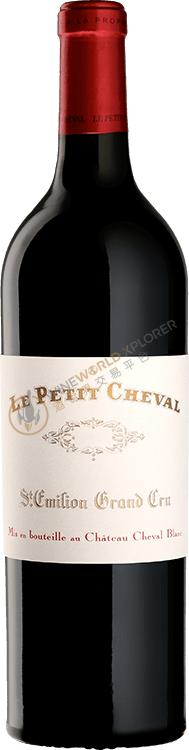
Le Petit Cheval 2008
 View analysis


Description
Tasting notes

Reviewed by: Robert M. Parker, Jr.
The 2008 Le Petit Cheval (65% Cabernet Franc and the rest Merlot) is a light, but not a wimpy wine. It is more cedary and evolved, with spice box, tobacco leaf, licorice, and red and black fruits in a medium-bodied, classic style that should drink nicely for 10-12 years.
Reviewed by: Neal Martin
Tasted ex-chateau and single blind in Southwold. This is broody and animally on the nose, touches of undergrowth and dark brambly fruit. Tarry notes developing. The palate is medium-bodied with chewy tannins, a touch of piquancy but there seems to be some heavy-handed oak on the finish. Perhaps this will improve with further bottle age? Tasted January 2012.
Reviewed by: Robert M. Parker, Jr.
The finest second wine yet made at Cheval Blanc, the 2008 Le Petit Cheval is a blend of 60% Merlot and 40% Cabernet Franc. Elegant, soft, and richly fruity, it offers up hints of wood spice, forest floor, flowers, and black fruits. With sweet tannin as well as good texture, it will be delicious young, yet evolve for 12-15 years.
Reviewed by: Neal Martin
A blend of 65% Cabernet Franc and 35% Merlot, this has a seductive, almost sandy bouquet inflecting the vibrant red-berried fruit with fine definition. The palate is quite tannic thanks to the Cabernet Franc, a little disjointed at the moment with touches of cedar, tar and dried herbs. It comes across as masculine and savoury finish. Give this a couple of years to fully integrate. Drink 2012-2020. Tasted October 2010.
Reviewed by: Neal Martin
En primeur barrel sample. A blend of 60% Merlot and 40% Cabernet Franc – this has a very well defined nose with red cherry, pomegranate and a touch of redcurrant. Light but very fresh. The palate is very fresh, very well balanced, extremely elegant and so lovely to drink that you almost want it to skip the elevage. Fine tannins, beautiful second wine. Tasted April 2009.
Reviewed by: Neal Martin
The 2008 Petit Cheval has a composed bouquet with blackberry, desiccated orange peel, brown spices and a touch of cedar. The new oak here is judiciously used and allows the terroir to express itself. The palate is medium-bodied with plush tannin, well judged acidity and gentle grip in the mouth. There is just the right amount of sappiness here, the finish classic in style; saline and begging you back for another sip. Excellent. Tasted blind at Farr Vintners’ 10-Year On tasting.
About the Producer
This wine comes from the Saint-Emilion region on the right bank of Bordeaux, France. It is worth mentioning that, in view of the excellent quality and uniformity of the grapes, Château Cheval Blanc did not brew the second-brand wine in 2015. Except for a small part of wine for internal use that is not for sale, the remaining grapes are all used for wine production. Brew the real wine. The winery implements a rigorous and meticulous brewing process to minimize the use of chemicals to produce fresh, elegant, delicate and balanced wines. After the grapes are crushed, they are placed in small tanks with a capacity of 450 kg, after which the must flows into the fermenters by gravity flow (Gravity Flow). Depending on the weight of the must after crushing and the plot of origin, the winemaker will choose a different fermenter and only fill 3/4 of it. After 12 hours of alcoholic fermentation, the workers perform skinning three times a day. According to the daily tasting by the technical team and the cellar supervisor and the measurement data of the liquid hydrometer, the workers will gradually reduce the number of skins in the late fermentation period. After the alcoholic fermentation is complete, the wine is soaked in the skins for several days in temperature-controlled fermenters at 28-30°C to make the tannins more supple and the structure smoother. Afterwards, the wine liquid is transferred to a fermenter at 20°C for 3 weeks to several months of malolactic fermentation (Malolactic Fermentation) to soften the acidity and stabilize the structure. After all the fermentation processes are completed, the wine is transferred to new oak barrels and aged in an underground cellar with a constant temperature of 14°C for 16-18 months. The winemaker will change barrels at this stage, using inert gas to transfer the 210 liters of wine to adjacent oak barrels to minimize oxidation and maintain the balance of the wine. After aging in barrels for three months, the winemaker tastes the wine in each oak barrel, and then mixes the wine to prepare the current year's Cheval Blanc red wine.
1996(1)1999(1)2000(1)2001(1)2002(1)2003(3)2005(3)2007(2)
Package Size
12 x 75cl
