
 Wine Advisor



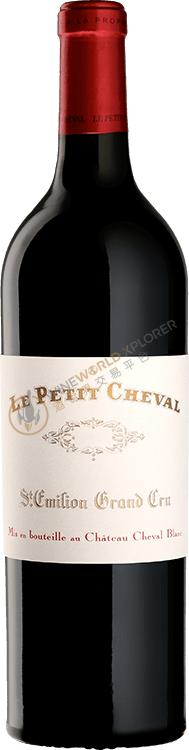
Le Petit Cheval 1999
 View analysis


Description
Tasting notes

Reviewed by: Neal Martin
The 1999 Le Petit Cheval has quite a high-toned, iodine-tinged bouquet with more blue fruit than expected. The palate has a fine grip and good backbone, and features cedar- and graphite-infused black fruit. I admire the density here. Impressive for a 20-year-old second wine, with a touch of clove and allspice toward the finish. Perfect to pop the cork now – and this is, dare I say, just about as good as the Grand Vin! Tasted from an ex-château bottle at the estate.
About the Producer
This wine comes from the Saint-Emilion region on the right bank of Bordeaux, France. It is worth mentioning that, in view of the excellent quality and uniformity of the grapes, Château Cheval Blanc did not brew the second-brand wine in 2015. Except for a small part of wine for internal use that is not for sale, the remaining grapes are all used for wine production. Brew the real wine. The winery implements a rigorous and meticulous brewing process to minimize the use of chemicals to produce fresh, elegant, delicate and balanced wines. After the grapes are crushed, they are placed in small tanks with a capacity of 450 kg, after which the must flows into the fermenters by gravity flow (Gravity Flow). Depending on the weight of the must after crushing and the plot of origin, the winemaker will choose a different fermenter and only fill 3/4 of it. After 12 hours of alcoholic fermentation, the workers perform skinning three times a day. According to the daily tasting by the technical team and the cellar supervisor and the measurement data of the liquid hydrometer, the workers will gradually reduce the number of skins in the late fermentation period. After the alcoholic fermentation is complete, the wine is soaked in the skins for several days in temperature-controlled fermenters at 28-30°C to make the tannins more supple and the structure smoother. Afterwards, the wine liquid is transferred to a fermenter at 20°C for 3 weeks to several months of malolactic fermentation (Malolactic Fermentation) to soften the acidity and stabilize the structure. After all the fermentation processes are completed, the wine is transferred to new oak barrels and aged in an underground cellar with a constant temperature of 14°C for 16-18 months. The winemaker will change barrels at this stage, using inert gas to transfer the 210 liters of wine to adjacent oak barrels to minimize oxidation and maintain the balance of the wine. After aging in barrels for three months, the winemaker tastes the wine in each oak barrel, and then mixes the wine to prepare the current year's Cheval Blanc red wine.
1996(1)
Package Size
