
 Wine Advisor



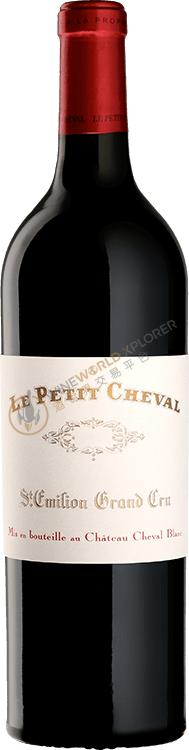
Le Petit Cheval 2010
 View analysis


Description
Tasting notes

Reviewed by: Ian d'Agata
(75% merlot and 25% cabernet franc) Bright ruby. Spicy, floral notes of ripe blackberry and blackcurrant. Bright and fresh on entry, showing mineral and black fruit flavors, then a little hollow in the mid-palate. Finishes smooth and persistent. This Petit Cheval has a little more merlot than usual in the blend, as this year most of the estate's cabernet franc went into Cheval Blanc. This second wine represents a selection of 20% of the total production in 2010, with another 20% sold off in bulk.
Reviewed by: Neal Martin
The 2010 Le Petit Cheval has a fragrant and well-defined bouquet with perfumed red cherries, boysenberry and mint aromas, focused, lively and full of vim and vigour. The oak is very well integrated. The palate is medium-bodied with supple tannins, a fine bead of acidity, slightly powdery in texture with a meaty, rather dry and ferrous finish. I wonder where this will go? Tasted blind at Farr Vintners 10-Year On Bordeaux horizontal.
Reviewed by: Stephen Tanzer
(75% merlot and 25% cabernet franc): Good deep ruby-red. Very ripe aromas of cassis, violet and chocolate enlivened by fresh herbs. Wonderfully full for a second wine, with lovely mineral lift to the flavors of black fruits, menthol and chocolate. But not quite the nobility of tannins or length for 90 points.
Reviewed by: Neal Martin
Tasted blind at the Southwold Bordeaux 2010 tasting. The superb Le Petit Cheval boasts layers of toasty black fruit on the nose with dark plum, macerated dark cherries and a faint touch of the sea. The palate is well balanced with fine tannins. This is very cohesive with well-integrated oak, classic in style on the finish that is long and sophisticated. Tasted January 2014.
Reviewed by: Robert M. Parker, Jr.
The strength of the selection process at Cheval Blanc has only increased, and the 2010 Le Petit Cheval (75% Merlot and 25% Cabernet Franc) will rival their 2009 as the finest second wine ever made at Cheval Blanc. I know it is hard for readers to believe, but it is better than many of the vintages of Cheval Blanc in the 1960s and 1970s. Dense plum/purple, with notes of mocha, black cherries, and forest, this spicy wine displays no real evidence of wood, but plenty of plum, seductive fruit, a fleshy texture, and a tremendous finish. Not a hard edge can be found in this seamlessly built wine, which should be drunk over the next 10-15 years.
Reviewed by: Neal Martin
A blend of 75% Merlot and 25% Cabernet Franc, this represents around 20% of the production. This has a very tight nose at first that needs time to open up: dark berries, loganberry, wild hedgerow and just a hint of Chinese tea. Good definition. The palate is medium-bodied with good definition and structure, the Cabernet Franc imparting a slight bell pepper tang towards the linear finish. Good focus, very smooth and just a little dry towards the finish. Fine. Drink 2013-2020. Tasted March 2011.
Reviewed by: Neal Martin
Representing just 20% of the production, the Le Petit Cheval has a fragrant bouquet with tertiary, blackberry notes, sous-bois and tobacco. It has fine transparency and lift. The palate is medium-bodied with quite an austere, but very well balanced, opening. It is almost like a Left Bank wine with its earthy, foursquare finish. Yet it has wonderful freshness and vitality and should aged well for 10-15 years. Tasted November 2012.
Reviewed by: Robert M. Parker, Jr.
The best second wine I have ever tasted from Cheval Blanc is the 2010 Le Petit Cheval. This wine is essentially three-fourths Merlot and the rest Cabernet Franc. Rivaling the brilliant 2009, thirty percent of the production from this monstrously sized estate made it into this wine, which offers up plenty of white chocolate, cassis and mulberry as well as a hint of roasted herbs. With fleshy, round flavors, full-bodied texture and an amazing finish, this is no second wine, and considerably better than some of the Cheval Blancs of the 1960s and 1970s! Drink it over the next 15 or so years.
Reviewed by: Lisa Perrotti-Brown
Deep garnet colored, the 2010 Le Petit Cheval sashays out of the glass with expressive notes of warm black cherries, boysenberries and preserved plums plus wafts of mocha and cigar box. Full-bodied, the palate has firm, ripe, rounded tannins and oodles of freshness supporting the generous baked berries and earthy layers, finishing long and perfumed.
Reviewed by: Neal Martin
The 2010 Le Petit Cheval has a fragrant and well-defined bouquet with perfumed red cherries, boysenberry and mint aromas, focused, lively and full of vim and vigour. The oak is very well integrated. The palate is medium-bodied with supple tannins, a fine bead of acidity, slightly powdery in texture with a meaty, rather dry and ferrous finish. I wonder where this will go? Tasted blind at Farr Vintners 10-Year On Bordeaux horizontal.
Reviewed by: Robert M. Parker, Jr.
Deep garnet colored, the 2010 Le Petit Cheval sashays out of the glass with expressive notes of warm black cherries, boysenberries and preserved plums plus wafts of mocha and cigar box. Full-bodied, the palate has firm, ripe, rounded tannins and oodles of freshness supporting the generous baked berries and earthy layers, finishing long and perfumed.
Reviewed by: James Suckling
The second wine of Cheval shows such glorious yet subtle fruit with chocolate, dark berries such as blackberries, and a light spice character. A walnut undertone. It's soft and silky with wonderful balance and beauty. It goes on for minutes. Hard not to drink now.
About the Producer
This wine comes from the Saint-Emilion region on the right bank of Bordeaux, France. It is worth mentioning that, in view of the excellent quality and uniformity of the grapes, Château Cheval Blanc did not brew the second-brand wine in 2015. Except for a small part of wine for internal use that is not for sale, the remaining grapes are all used for wine production. Brew the real wine. The winery implements a rigorous and meticulous brewing process to minimize the use of chemicals to produce fresh, elegant, delicate and balanced wines. After the grapes are crushed, they are placed in small tanks with a capacity of 450 kg, after which the must flows into the fermenters by gravity flow (Gravity Flow). Depending on the weight of the must after crushing and the plot of origin, the winemaker will choose a different fermenter and only fill 3/4 of it. After 12 hours of alcoholic fermentation, the workers perform skinning three times a day. According to the daily tasting by the technical team and the cellar supervisor and the measurement data of the liquid hydrometer, the workers will gradually reduce the number of skins in the late fermentation period. After the alcoholic fermentation is complete, the wine is soaked in the skins for several days in temperature-controlled fermenters at 28-30°C to make the tannins more supple and the structure smoother. Afterwards, the wine liquid is transferred to a fermenter at 20°C for 3 weeks to several months of malolactic fermentation (Malolactic Fermentation) to soften the acidity and stabilize the structure. After all the fermentation processes are completed, the wine is transferred to new oak barrels and aged in an underground cellar with a constant temperature of 14°C for 16-18 months. The winemaker will change barrels at this stage, using inert gas to transfer the 210 liters of wine to adjacent oak barrels to minimize oxidation and maintain the balance of the wine. After aging in barrels for three months, the winemaker tastes the wine in each oak barrel, and then mixes the wine to prepare the current year's Cheval Blanc red wine.
