
 Wine Advisor



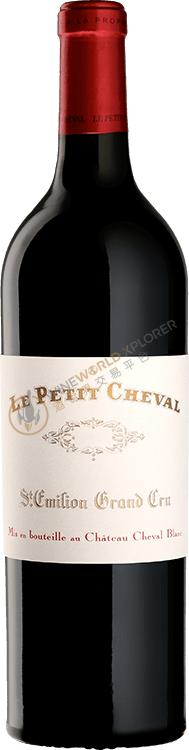
Le Petit Cheval 2013
 View analysis


Description
Tasting notes

Reviewed by: Neal Martin
The Petit Cheval 2013 is a blend of 79% Merlot and 21% Cabernet Franc. It has a higher-toned bouquet than its peers, subtle marine influences coming through with aeration. The palate is medium-bodied with quite bold tannins. Where this wine stumbles it towards the finish that seems very blunt and hard, and consequently the astringency lingers after the wine has exited. Tasted April 2014.
Reviewed by: Robert M. Parker, Jr.
The 2013 Le Petit Cheval is composed of 79% Merlot and 21% Cabernet Franc. This light-bodied, elegant second wine is okay, but not exciting. It should drink well for 7-8 years. Cheval Blanc began their harvest on September 26 and, because of the tropical humidity and disease pressure, finished quickly.
Reviewed by: Neal Martin
The 2013 Le Petit Cheval, actually a blend of 85% Merlot and 15% Cabernet Franc (yes I know, different to the primeur blends quoted!), has a light red berry, strawberry and briary-scented bouquet that is brisk and fresh. The palate is medium-bodied with crisp tannin, light but balanced with a chalky finish. Drink now and over the next 4-5 years. Just 16,000 bottles were produced.
Reviewed by: Antonio Galloni
The 2013 Petit Cheval is supple and easygoing. A wine with plenty of near and medium-term potential, the 2013 graces the palate with dark red cherry, plum, smoke and spices. Overall, the 2013 is a pretty, nicely textured wine, but there are elements of slight forwardness and evolution in the flavors that suggest the wine is best enjoyed upon release. The blend is 79% Merlot and 21% Cabernet Franc.
Reviewed by: Ian d'Agata
(75% merlot and 25 cabernet franc): Vivid ruby-red. Complex, scented nose is very cabernet franc-dominated, offering delicately spicy blackcurrant, truffle, mint and leafy aromas. Juicy, silky and sweet, with highly nuanced flavors of aromatic herbs and flowers. Not especially dense but wonderfully expressive today, finishing with a firm but polished tannic spine. Pierre Lurton told me that this estate went after only their really ripe cabernet franc and therefore had no issues with dilution. One of the best second wines of the year, this is more successful than many grands vins in 2013. Very well done.
Reviewed by: James Suckling
A fresh, clean glass with hazelnut, chocolate and berry. Medium body with fine tannins and a crisp finish. Light and pretty. Lots of cabernet franc character even though it's more than two-thirds merlot. Yummy second wine of Cheval.
Reviewed by: James Suckling
A very delicious red with plum, chocolate and orange peel character. Medium body, light tannins and a fresh finish. Salty lemon. Drink now.
About the Producer
This wine comes from the Saint-Emilion region on the right bank of Bordeaux, France. It is worth mentioning that, in view of the excellent quality and uniformity of the grapes, Château Cheval Blanc did not brew the second-brand wine in 2015. Except for a small part of wine for internal use that is not for sale, the remaining grapes are all used for wine production. Brew the real wine. The winery implements a rigorous and meticulous brewing process to minimize the use of chemicals to produce fresh, elegant, delicate and balanced wines. After the grapes are crushed, they are placed in small tanks with a capacity of 450 kg, after which the must flows into the fermenters by gravity flow (Gravity Flow). Depending on the weight of the must after crushing and the plot of origin, the winemaker will choose a different fermenter and only fill 3/4 of it. After 12 hours of alcoholic fermentation, the workers perform skinning three times a day. According to the daily tasting by the technical team and the cellar supervisor and the measurement data of the liquid hydrometer, the workers will gradually reduce the number of skins in the late fermentation period. After the alcoholic fermentation is complete, the wine is soaked in the skins for several days in temperature-controlled fermenters at 28-30°C to make the tannins more supple and the structure smoother. Afterwards, the wine liquid is transferred to a fermenter at 20°C for 3 weeks to several months of malolactic fermentation (Malolactic Fermentation) to soften the acidity and stabilize the structure. After all the fermentation processes are completed, the wine is transferred to new oak barrels and aged in an underground cellar with a constant temperature of 14°C for 16-18 months. The winemaker will change barrels at this stage, using inert gas to transfer the 210 liters of wine to adjacent oak barrels to minimize oxidation and maintain the balance of the wine. After aging in barrels for three months, the winemaker tastes the wine in each oak barrel, and then mixes the wine to prepare the current year's Cheval Blanc red wine.
