
 Wine Advisor



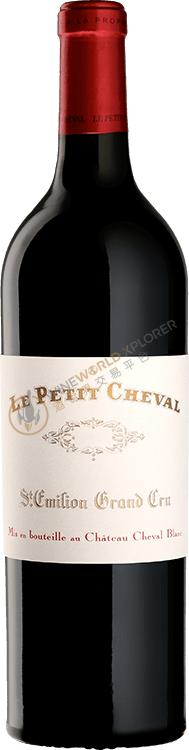
Le Petit Cheval 2007
 View analysis


Description
Tasting notes

Reviewed by: Neal Martin
Tasted blind at the 2007 Bordeaux horizontal in Southwold. This is very meaty on the nose with cedar, smoke and iron rust. It seems a little odd for a 3-year old wine. The palate is very tannic on the entry, dry and a little austere with a leafy, drying finish that tapers away. Tasted January 2011.
Reviewed by: Neal Martin
This has a little dryness on the nose, more savoury than usual, a touch of sous-bois and damp moss. Moderate definition. Good entry on the full-bodied palate, well-balanced, some dense black fruits that seem more merlot than cabernet franc but there is some dryness on the finish. Hopefully barrel ageing will round this out. Tasted April 2008.
Reviewed by: Neal Martin
Tasted blind at Farr Vintners 2007 Bordeaux tasting. The 2007 Le Petit Cheval has a very dry and very green nose that is torn from the pages of a Loire Valley Cabernet Franc instead of a Saint Emilion. In a strange way, I like it. It suits my style. The palate is medium-bodied with firm, slightly dry tannins. Yes, there is a vein of greenness, but it lends freshness and edginess to this wine. That Loire theme continues from the nose; however, there is fine structure here, and even if the finish feels curt, I would take another sip. Tasted March 2015.
Reviewed by: Robert M. Parker, Jr.
Rated -No tasting note given.
About the Producer
This wine comes from the Saint-Emilion region on the right bank of Bordeaux, France. It is worth mentioning that, in view of the excellent quality and uniformity of the grapes, Château Cheval Blanc did not brew the second-brand wine in 2015. Except for a small part of wine for internal use that is not for sale, the remaining grapes are all used for wine production. Brew the real wine. The winery implements a rigorous and meticulous brewing process to minimize the use of chemicals to produce fresh, elegant, delicate and balanced wines. After the grapes are crushed, they are placed in small tanks with a capacity of 450 kg, after which the must flows into the fermenters by gravity flow (Gravity Flow). Depending on the weight of the must after crushing and the plot of origin, the winemaker will choose a different fermenter and only fill 3/4 of it. After 12 hours of alcoholic fermentation, the workers perform skinning three times a day. According to the daily tasting by the technical team and the cellar supervisor and the measurement data of the liquid hydrometer, the workers will gradually reduce the number of skins in the late fermentation period. After the alcoholic fermentation is complete, the wine is soaked in the skins for several days in temperature-controlled fermenters at 28-30°C to make the tannins more supple and the structure smoother. Afterwards, the wine liquid is transferred to a fermenter at 20°C for 3 weeks to several months of malolactic fermentation (Malolactic Fermentation) to soften the acidity and stabilize the structure. After all the fermentation processes are completed, the wine is transferred to new oak barrels and aged in an underground cellar with a constant temperature of 14°C for 16-18 months. The winemaker will change barrels at this stage, using inert gas to transfer the 210 liters of wine to adjacent oak barrels to minimize oxidation and maintain the balance of the wine. After aging in barrels for three months, the winemaker tastes the wine in each oak barrel, and then mixes the wine to prepare the current year's Cheval Blanc red wine.
1996(1)1999(1)2000(1)2001(1)2002(1)2003(3)2005(3)
Package Size
