Wine Advisor



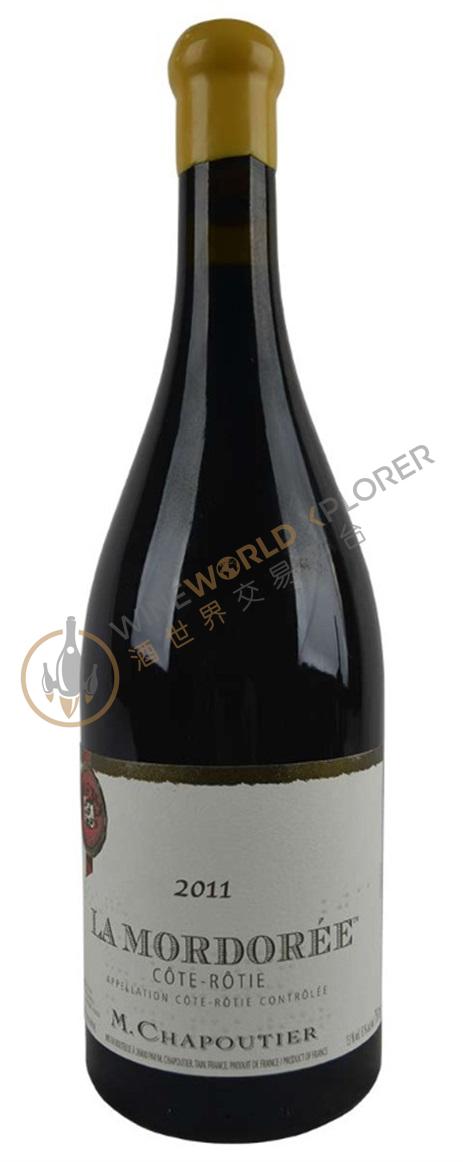
M. Chapoutier, Cote Rotie La Mordoree 2020
 View analysis


Description
Tasting notes

Reviewed by: Joe Czerwinski
As always, the 2020 Cote Rotie la Mordorée is a blend of two adjacent parcels: one in La Côte Blonde and one in La Côte Brune. Menthol, blueberries and raspberries appear on the nose of this full-bodied, concentrated but seemingly weightless effort. Fine and silky in feel, it finishes long and elegant. It should be approachable within a few years and drink well for up to two decades.
Reviewed by: Joe Czerwinski
Much like the 2019, the 2020 Cote Rotie la Mordorée is one of the best Chapoutier Cote Roties I can recall tasting. Scents of menthol, cedar, wild blueberries, vanilla and violets all show up on the nose, while the palate is medium to full-bodied, smooth, silky and elegant. Really long on the finish, it's a beauty that should drink well for close to two decades.
Reviewed by: Stuart Pigott
Still very young, this great Cote-Rotie has an incredibly dense nose of forest berry fruits, licorice, smoke and pepper. Stunning concentration and enormous structure, but everything fits together beautifully. Enormously long complete finish with a breathtaking freshness. A cuvee of Cote Blonde (gneiss soil) and Cote Brune (mica schist) sides of the appellation. From biodynamically grown grapes with Demeter certification. Drinkable now, but best from 2025.
About the Producer
Founded in 1808, M. Chapoutier owns 175 hectares of vines in five appellations in the Rhone Valley and is now run by the energetic and brilliant Michel Chapoutier. Since Michel started running the estate, the quality of the winemaking has improved very quickly and the philosophy of winemaking has changed considerably. Michel Chapoutier's achievements caused an instant sensation in the winemaking world and he completely changed the way Chapoutier wines were made and the winemaking process, eventually making wines to rival those made by Marcel Guigal, one of the best winemakers in the Rhone Valley. The vineyards of Château Sapoutier range from the Rhone Valley to Châteauneuf-du-Pape, with a number of quality vineyards planted with Syrah, Grenache, Marsanne, Roussanne and other major grape varieties. The winery is "mono-varietal" (i.e. making wines from a single variety), for example, all Syrah for the Châteauneuf-du-Rotie wines, all Marsanne for the Hermitage whites and all Chateauneuf-du-Pape wines. The wines of Chateauneuf-du-Pape are all Grenache. Château Sapoutier has worked tirelessly to improve the quality of its wines, even though each single vineyard produces far more than the 500 cases of fine wine. Since 1989, Château Sapoutier has been using biodynamic farming and winemaking methods with the aim of producing wines that are the purest and closest to the natural terroir. Every decision, every step of the viticultural and winemaking process is designed to add to the terroir, varietal character and vintage identity of the wines. Only wild yeasts are used for fermentation and the wines are made in small oak barrels. The best red and white wines are not clarified or filtered before bottling.
1989(3)1990(2)1991(2)1992(1)1995(2)1996(1)1997(1)1998(2)1999(3)2000(1)2001(2)2003(1)2006(4)2007(2)2008(2)2010(1)2011(2)2012(2)2013(8)2014(1)2016(2)2017(2)2018(3)2019(6)
Package Size
3 x 1.5L