Wine Advisor



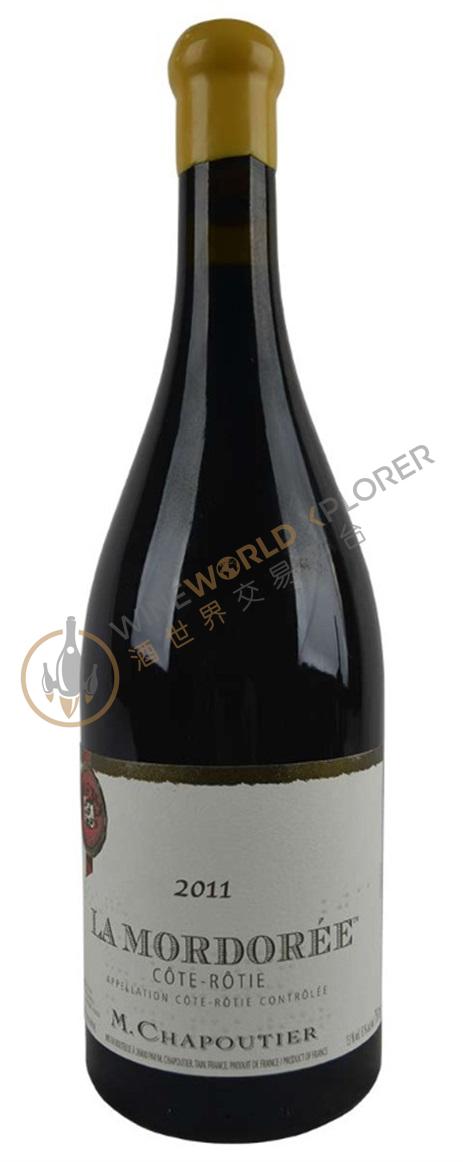
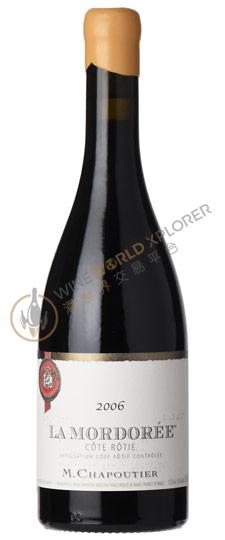
M. Chapoutier, Cote Rotie La Mordoree 2012
 View analysis


Description
Tasting notes

Reviewed by: Jeb Dunnuck
The 2012 Cote Rotie La Mordoree excels in the vintage with its perfumed aromatics and medium to full-bodied richness on the palate. Carrying plenty of mineral-laced black cherry and raspberry nuances intermixed with underbrush, leather and bacon fat, it possesses an understated elegance, with superb purity of fruit, fine tannin and a great finish. It should be at its best in a handful of years, and evolve gracefully for 12-15 years or more. This was an incredible tasting with Michel Chapoutier and his second hand man, Pierre-Henri Morel. Certainly one of the success stories in wine, which Robert Parker does a fabulous job of detailing in Issue 204, this estate goes from strength to strength in just about every appellation in the Rhone Valley. Looking specifically at Hermitage, Chapoutier owns a massive 64 acres, mostly on the famed Bessards lieu-dit, yet also with significant portions on Le Meal, L’Ermite and Les Greffieux, with smaller portions in the Beaume and Murets lieux-dits. From this he fashions five reds (Monier De La Sizeranne, Les Greffieux, Le Meal, Le Pavillon and L’Ermite) and four whites (Chante Alouette, Cuvee de l’Oree, Le Meal Blanc and L’Ermite Blanc), all of which are brilliant wines, with the best ranking up alongside the top wines in the world. In addition, his Saint Josephs (Les Granits and Le Clos) are some of the leading wines of the appellation (along with Guigal’s Vignes de l’Hospice and a few others), and his Cote Rotie La Mordoree, which comes from his 12 acres (split between the roughly defined Cote Blonde and Cote Brune regions), is always a classic example of the appellation. I was also able to taste through a full lineup of his Languedoc and Roussillon releases, all of which were impressive. I’ll review those wines in my 2014 coverage on those regions. Looking at the 2011 whites, these were all tasted by Robert Parker last year, but since I tasted through the lineup, I opted to include reviews here as well. Importer: Terlato Wines International, Lake Bluff, IL; tel. (847) 604-8900
Reviewed by: Jeb Dunnuck
While I loved Michel's 2012 Cote Rotie la Mordoree from barrel, it blew me away from bottle, and I think bares more than a passing resemblance to his 1991. About as elegant and seamless as they come, it exhibits incredible notes of violets, peppery spice, spring flowers, rose petal and darker berry fruit. This is followed by a full-bodied, sweetly fruited, expansive Cote Rotie that's perfectly balanced, has beautiful mid-palate density, and ultra-fine tannin that emerge on the finish. It's a blockbuster effort to drink over the coming two decades.
About the Producer
Founded in 1808, M. Chapoutier owns 175 hectares of vines in five appellations in the Rhone Valley and is now run by the energetic and brilliant Michel Chapoutier. Since Michel started running the estate, the quality of the winemaking has improved very quickly and the philosophy of winemaking has changed considerably. Michel Chapoutier's achievements caused an instant sensation in the winemaking world and he completely changed the way Chapoutier wines were made and the winemaking process, eventually making wines to rival those made by Marcel Guigal, one of the best winemakers in the Rhone Valley. The vineyards of Château Sapoutier range from the Rhone Valley to Châteauneuf-du-Pape, with a number of quality vineyards planted with Syrah, Grenache, Marsanne, Roussanne and other major grape varieties. The winery is "mono-varietal" (i.e. making wines from a single variety), for example, all Syrah for the Châteauneuf-du-Rotie wines, all Marsanne for the Hermitage whites and all Chateauneuf-du-Pape wines. The wines of Chateauneuf-du-Pape are all Grenache. Château Sapoutier has worked tirelessly to improve the quality of its wines, even though each single vineyard produces far more than the 500 cases of fine wine. Since 1989, Château Sapoutier has been using biodynamic farming and winemaking methods with the aim of producing wines that are the purest and closest to the natural terroir. Every decision, every step of the viticultural and winemaking process is designed to add to the terroir, varietal character and vintage identity of the wines. Only wild yeasts are used for fermentation and the wines are made in small oak barrels. The best red and white wines are not clarified or filtered before bottling.
1989(3)1990(2)1991(2)1992(1)1995(2)1996(1)1997(1)1998(2)1999(3)2000(1)2001(2)2003(1)2006(4)2007(2)2008(2)2010(1)2011(2)
Package Size