Wine Advisor



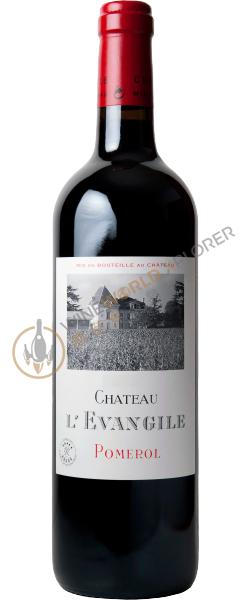
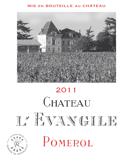
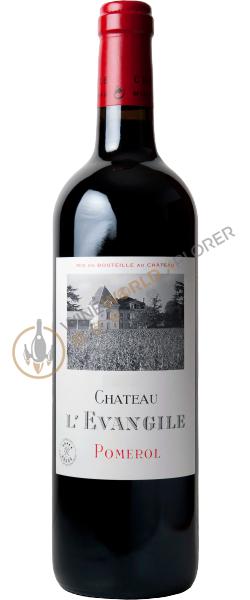
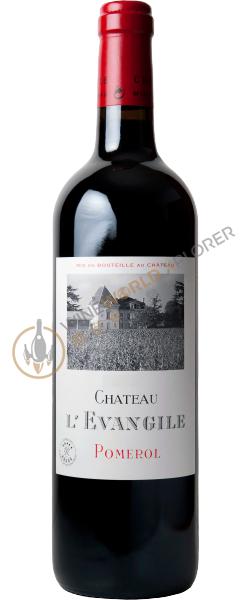
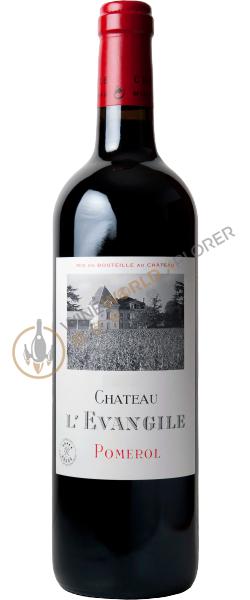
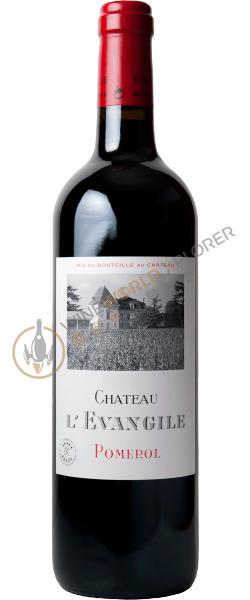
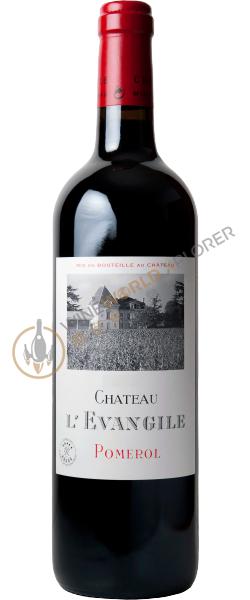
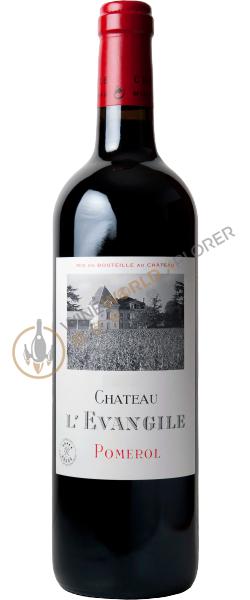
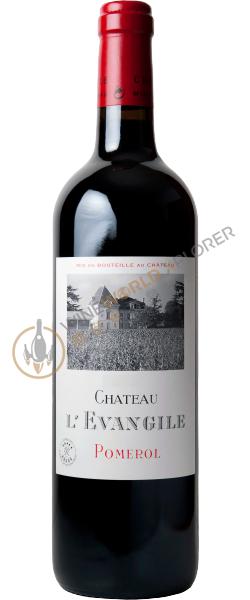
L'Evangile 2019
 View analysis


Description
Tasting notes

Reviewed by: Lisa Perrotti-Brown
The 2019 L'Evangile is composed of 83.5% Merlot, 16% Cabernet Franc and 0.5% Cabernet Sauvignon, harvested from the 13th of September to the 3rd of October. The alcohol comes in at 14.6%. Deep garnet-purple colored, the nose hits the ground running with opulent scents of ripe black cherries, dried mulberries, baked plums and warm blueberries plus hints of candied violets, licorice, molten chocolate and wild sage with just a drop of hoisin. Medium to full-bodied, the palate is wonderfully concentrated with seductive layers of exotic spice-laced black fruit preserves and a velvety texture, finishing long and with just enough freshness. Tantalizingly moreish!
Reviewed by: William Kelley
The 2019 L'Evangile is very good, wafting from the glass with aromas of cherries, sweet berries, warm spices, violets and loamy soil, framed by a nicely integrated patina of new oak that reflects a concerted effort to refine cooperage choices at this address in recent years. Full-bodied, rich and velvety, it's a broad, textural wine with a richly layered core of fruit, succulent acids and ripe, supple tannins that reflects the warm, dry vintage. As usual, it's a Merlot-dominant blend, complemented by some 16% Cabernet Franc and now 1% Cabernet Sauvignon.
Reviewed by: Antonio Galloni
The 2019 L'Évangile is a highly problematic wine. Whether that is a result of excessive heat stress in the vineyard or decisions made in the field and the cellar, is hard to say. I thought élevage would bring the wine together. Instead, time has only accentuated the awareness present in the en primeur sample. I don't think it is a surprise that a whole new team led by Juliette Couderc and Olivier Trégoat is now in charge. Couderc and Trégoat have worked together previously at the Rothschild family's Long Dai winery in China and seem quite determined in turning things around here. Let me be clear; that does not mean the former team is necessarily totally responsible for the 2019, as some of the decisions may have come from higher up. There is no way for an outsider to know, and in the end it doesn't really matter. What is obvious is that the 2019 L'Évangile is alcoholic, aggressive in its contours and disjointed in feel. It goes without saying that quality is far from where it should be. Even so, Saskia de Rothschild is passionate about her family's Pomerol estate and does not shy away from critiquing her own wines, so I am confident the 2019 will one day be regarded as a bump in the road.
Reviewed by: Antonio Galloni
The 2019 L'Évangile is a rich, sumptuous wine. There is a good bit of immediacy to the 2019, but ultimately the wine feels overripe and disjointed. Black cherry, chocolate, leather and spice add to the wine's flamboyant personality, but the 2019 never seems to totally come together.
Reviewed by: Neal Martin
The 2019 L'Évangile is tasted from two bottles, the first hideously corked. The second has a well-defined bouquet with blackberry, wild strawberry and truffle. A welcome briny note becomes more pronounced with aeration. The palate is medium-bodied with supple tannins, fleshy and pure. A sweet core of fruit with an almost candied and very flattering finish. A bit evolved? Wonder how long-term it is though? Tasted blind at the Southwold annual tasting.
Reviewed by: Neal Martin
I was quite critical of the 2019 L’Évangile when I tasted it as a barrel sample, and of course the winemaking team has changed since this was made. The 2019 has a very floral bouquet of ripe dark berry fruit infused with violet and peony notes. The 15.3° alcohol has slightly blurred the edges since bottling. The palate is medium-bodied and rounded, with fleshy, ripe tannins and no hard edges. And that’s the problem. This just lacks tension and feels static; there’s no "movement" in this Pomerol compared to, say, its neighbor Vieux-Château-Certan, which I tasted immediately before. The succeeding vintage is definitely superior.
Reviewed by: Neal Martin
The 2019 L'Évangile was picked from 13 September, expediting the picking of the young Merlot that was threatened by hydric stress, the Cabernet Franc picked 22-27 September. This is the first vintage to include a "pinch" of Cabernet Sauvignon from the newly planted plot, for now just 0.5% of the blend. Matured in 75% new oak instead of the usual 100%, it has a rich and opulent bouquet with mulberry and blueberry fruit. I am seeking just a little more delineation and nerve vis-à-vis its peers, more clarity and terroir expression. The palate is medium-bodied with soft, rounded tannins that impart a seductive creamy texture, a leitmotif of this Pomerol cru and vintage. I would prefer more Cabernet influence towards the finish that would lend more dimension and personality. It is a sensual Pomerol but the oak still seems superfluous and detrimental to clarity on the finish.
Reviewed by: Neal Martin
The 2019 L'Évangile is a rich, sumptuous wine. There is a good bit of immediacy to the 2019, but ultimately the wine feels overripe and disjointed. Black cherry, chocolate, leather and spice add to the wine's flamboyant personality, but the 2019 never seems to totally come together.
Reviewed by: James Suckling
Lots of black-olive, crushed-berry and wet-earth aromas and flavors. Full-bodied, yet polished with a very fine, velvety texture from the tannins. It’s long and structured with a blue-fruit and stone undertone to the palate. Some sage, too. More balanced than in the past. Extremely persistent on the palate. 83.5% merlot, 16% cabernet franc and 0.5% cabernet sauvignon.
Reviewed by: James Suckling
Fruit-tea, blackberry, tile and ripe-fruit aromas follow through to a full body with density and richness. Chocolate and walnut. Dense and seamless with super fruit and length. Lots of fruit. Very polished. Stylized. All the cabernet franc on the estate is in the wine. From organic grapes. Give it at least five to seven years to open. Try after 2026.
About the Producer
Chateau L'Evangile is one of the most famous châteaux in the Pomerol region of Bordeaux, France. In the mid-18th century, Chateau L'Evangile was owned by the Leglise family of Libourne, and its name, "Fazilleau", was recorded in the 1741 land register. At the beginning of the 19th century, the estate was bought by a lawyer named Isambert and renamed Chateau L'Evangile. Evangile is the French word for "gospel", and the renamed estate lived up to its name, becoming a true "gospel" of the Pomerol region. In 1862, Paul Chaperon acquired Chateau L'Evangile and made it famous through a series of efforts to give it a distinctive Second Empire style of architecture. In the second edition of Cocks Et Feret in 1868, Chateau L'Evangile was listed as a Premier Cru in the Haut-Pomerol region. After Chabron's death, his daughter inherited the estate, which she then brought to her husband's family, the Ducasse family, who ran the estate until 1990. In 1990, the estate was acquired by Domaines Barons de Rothschild Lafite. Immediately after taking over, the group began a comprehensive reform and upgrading of the estate. The first steps included a more careful selection of the grapes used to make the main wine and the creation of Blason de L'Evangile, Pomerol, France, as a secondary wine. In addition, the renovation measures included a comprehensive reorganization plan: delaying the harvest as much as possible so that the grapes would be as ripe as possible, and controlling yields to a maximum of 4,500 liters per hectare in order to improve the quality of the vines, which was partially completed in 1998. 2004 saw the completion of the renovation of the winery and cellars, and the creation of a new layout for the estate. These vintages produced wines of excellent quality. Chateau L'Evangile is located in a unique location. The vineyard covers 22 hectares of sandy clay and gravel soils with a high iron content subsoil. The vineyard is planted with 80% Merlot and the remaining 20% Cabernet Franc. The vineyard's production is limited, and harvesting and many other tasks are done by hand. The winery employs Michel Rolland, the famous "flying winemaker", as a winemaking consultant. Under the management of the Lafite Group, the grapes from each parcel are divided into different lots in order to determine their potential for full-fledged wines at the final stage of fermentation. All aspects of the winemaking process are closely integrated with traditional techniques and proven modern technologies. During the fermentation process, the winery performs drenching and maceration, during which the wine is tasted several times. After fermentation, the wines are aged in oak barrels for 18 months. Due to the small size of the vineyard, the average annual production of the winery is 5,000 cases. Robert Parker, the famous wine critic, has praised Le Vin de Guignol as the "star of the future" of Pomerol and believes that it has the potential to grow even more under the leadership of Lafite. A book published many years ago, Grands Vins de Bordeaux, described the wines produced by the Rocquières as "full-bodied, elegant, and with unparalleled finesse."
1964(1)1967(1)1972(2)1975(1)1979(2)1981(3)1982(1)1983(1)1986(1)1989(5)1990(2)1994(3)1995(5)1997(1)1998(3)1999(1)2000(7)2001(3)2002(2)2004(1)2005(8)2006(8)2007(3)2008(7)2009(7)2010(6)2011(15)2012(19)2013(14)2014(6)2015(15)2016(10)2017(26)2018(10)
Package Size