
 Wine Advisor



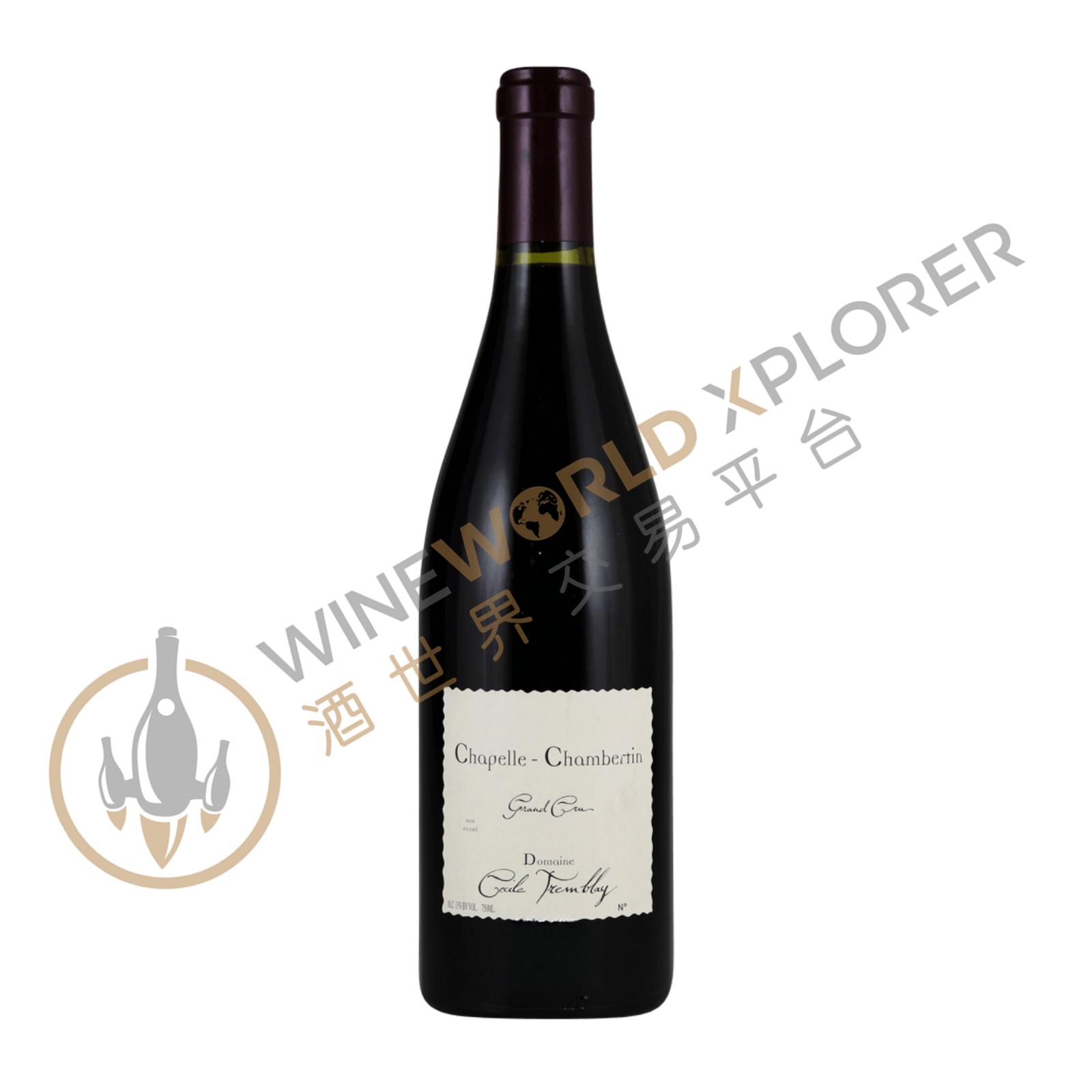
Cecile Tremblay, Chapelle Chambertin Grand Cru 2017
 View analysis


Description
Tasting notes

Reviewed by: William Kelley
The 2017 Chapelle-Chambertin Grand Cru offers up a complex bouquet of cassis, plums, sweet spices, grilled squab and savory base notes. On the palate, it's deep, dense and full-bodied, with the most concentration and substance of any wine in the cellar, framed by fine structuring tannins and concluding with a long finish. In contrast to the expansive Echézeaux, the Chapelle-Chambertin is tighter-knit and more focused. Tremblay's vines are located in lieu-dit Les Gémeaux, next to the holdings of Domaine Claude Dugat.
Reviewed by: William Kelley
Like many wines from this charming, demonstrative vintage, Tremblay's 2017 Chapelle-Chambertin Grand Cru can already be drunk with pleasure. Exhibiting aromas of red berries and plums mingled with notions of orange rind, warm spices and vanilla pod, it's full-bodied, ample and fleshy, with a round, giving core of fruit framed by supple tannins and lively acids. Expect it to put on additional depth with further bottle age, much like its 2007 counterpart.
Reviewed by: Neal Martin
The 2017 Chapelle-Chambertin Grand Cru has around 80% whole bunches this year. It has a very perfumed bouquet of raspberry, crushed strawberry, vanilla pod and a touch of iodine, all very well defined. The palate is medium-bodied with sappy black and red fruit, perhaps not as complex as the Echézeaux, and a touch of brown spice surfaces toward the finish. Very fine.
About the Producer
Cecile TREMBLAY descends from a long line of vignerons. The story begins in 1921, with the union of Cécile’s great-grandparents, Edouard Jayer, a cooper in Nuits-Saint-Georges, and Esther Fournier who inherited vineyards from her family. Together they established and developed their own Domaine. The domaine’s vineyards were then eventually passed down to their five children. Renée, the youngest daughter, kept her share of the vineyards under métayage. Later on, Renée’s only daughter, Marie-Annick, grew the family holdings with her husband while keeping all vineyards under métayage. Cécile Tremblay, who had studied enology and viticulture in Dijon, reclaimed the family heritage and took over the management of the vineyards in 2002. A year later, Cécile bottled her first wines, Domaine Cécile Tremblay was born!
