
 Wine Advisor



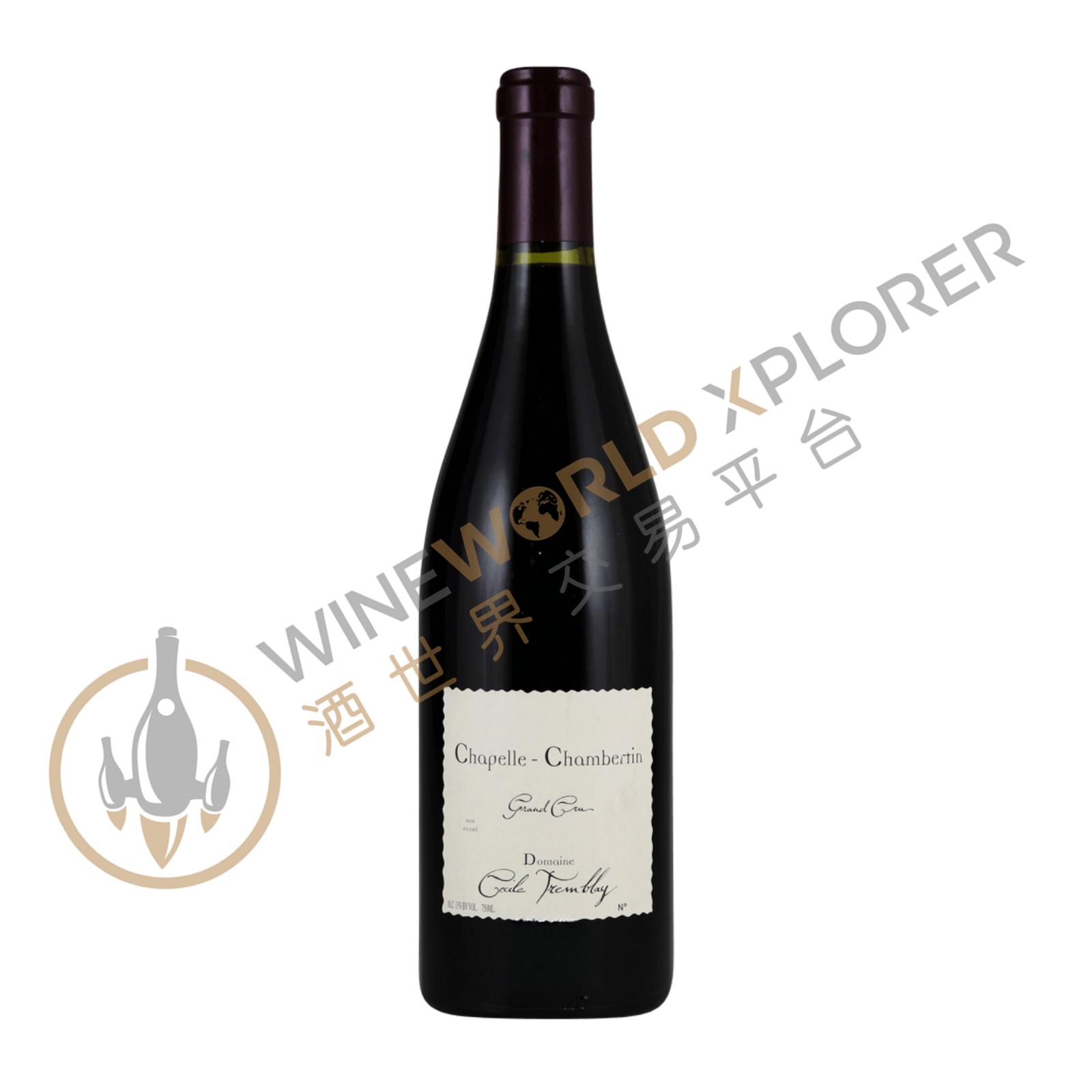
Cecile Tremblay, Chapelle Chambertin Grand Cru 2007
 View analysis


Description
Tasting notes

Reviewed by: William Kelley
This was the best bottle I've ever encountered of Tremblay's 2007 Chapelle-Chambertin Grand Cru. Wafting from the glass with fragrant aromas of peonies, sweet berry fruit, loamy soil and spices, it's medium to full-bodied, ample and seamless, with melting tannins, succulent acids and an expansive finish. It can't quite match what Cécile is producing today, but readers with bottles in their cellars will find much to enjoy.
Reviewed by: David Schildknecht
Tremblay’s 2007 Chapelle-Chambertin mingles mushroom stock, sirloin juices, cassis, and beet root both on the nose and as a palate-saturating concentrate such as one seldom encounters in this vintage. While this lacks quite the energy of the corresponding Echezeaux, its muscular, broad-shouldered structure and purity of fruit should easily guarantee it at least close to a decade of healthy and fascinating evolution. Cecile Tremblay scored some of the most consistent successes of any Cote d’Or Pinot domaine with her 2008 collection and those from among her 2007 bottlings that I was able to sample included a couple of wines exceptionally impressive for that vintage. Tremblay blames irregular flowering and correspondingly disparate ripeness rather than any rot for the 25% of her 2008 fruit that she says was discarded on the sorting table, but pronounces herself “quite content” with the results, a judgment I can only characterize as exhibiting a ridiculous degree of restraint! (And while she didn’t mention it and I didn’t ask to taste it, I saw a lot of 2008 Bourgogne Rose lying around in bins at Tremblay’s temporary cellar quarters in Gevrey.) To convey an idea of the concentration of raw material with which she was working, Tremblay noted that most of her fermentative lots were give only a single pigeage … that’s not per day, but in total. Anywhere from one- to two-thirds of whole clusters with stems were included in the ferments, with the most striking wines tending toward the higher end. The 2008s here (save for three noted) were still in barrels (form which I sampled representatives) when I last tasted, and were due to have been bottled in late spring. Incidentally, Tremblay recovered more of her family’s properties with the 2009 vintage, which also yielded a bumper crop per vine of irresistible ripeness and what appear to be for the vintage unusual depth and verve, so any wine lovers have trouble scoring some bottles of 2008s might get their chance from 2009 despite the hype already surrounding that vintage. Importer: Weygandt-Metzler, Unionville, PA; tel. (610) 486-0800
Reviewed by: William Kelley
Tremblay moved cellars during the élevage of her 2007 Chapelle-Chambertin Grand Cru, which was ultimately bottled by hand, barrel by barrel, in Vosne-Romanée. A wine that's seemingly taking on new depth and interest every time I taste it, it wafts from the glass with aromas of plums, orange rind, exotic spices, potpourri and sweet soil tones, followed by a medium to full-bodied, ample palate framed by melting tannins and succulent acids, and concluding with a long, rose-inflected finish. It's drinking beautifully today. The 2007 was harvested on 25 August—making it the polar opposite of the 2008 that followed in this tasting.
Reviewed by: William Kelley
The 2007 Chapelle-Chambertin Grand Cru continues to drink beautifully, and it's probably my favorite vintage from this early phase of Tremblay's career. Much as it did the last time I drank it, it wafts from the glass with aromas of plums, orange rind, exotic spices, potpourri and sweet soil tones, followed by a medium to full-bodied, ample palate framed by melting tannins and succulent acids and concluding with a long, rose-inflected finish.
Reviewed by: David Schildknecht
The 2007 Chapelle-Chambertin Grand Cru continues to drink beautifully, and it's probably my favorite vintage from this early phase of Tremblay's career. Much as it did the last time I drank it, it wafts from the glass with aromas of plums, orange rind, exotic spices, potpourri and sweet soil tones, followed by a medium to full-bodied, ample palate framed by melting tannins and succulent acids and concluding with a long, rose-inflected finish.
About the Producer
Cecile TREMBLAY descends from a long line of vignerons. The story begins in 1921, with the union of Cécile’s great-grandparents, Edouard Jayer, a cooper in Nuits-Saint-Georges, and Esther Fournier who inherited vineyards from her family. Together they established and developed their own Domaine. The domaine’s vineyards were then eventually passed down to their five children. Renée, the youngest daughter, kept her share of the vineyards under métayage. Later on, Renée’s only daughter, Marie-Annick, grew the family holdings with her husband while keeping all vineyards under métayage. Cécile Tremblay, who had studied enology and viticulture in Dijon, reclaimed the family heritage and took over the management of the vineyards in 2002. A year later, Cécile bottled her first wines, Domaine Cécile Tremblay was born!
