
 Wine Advisor



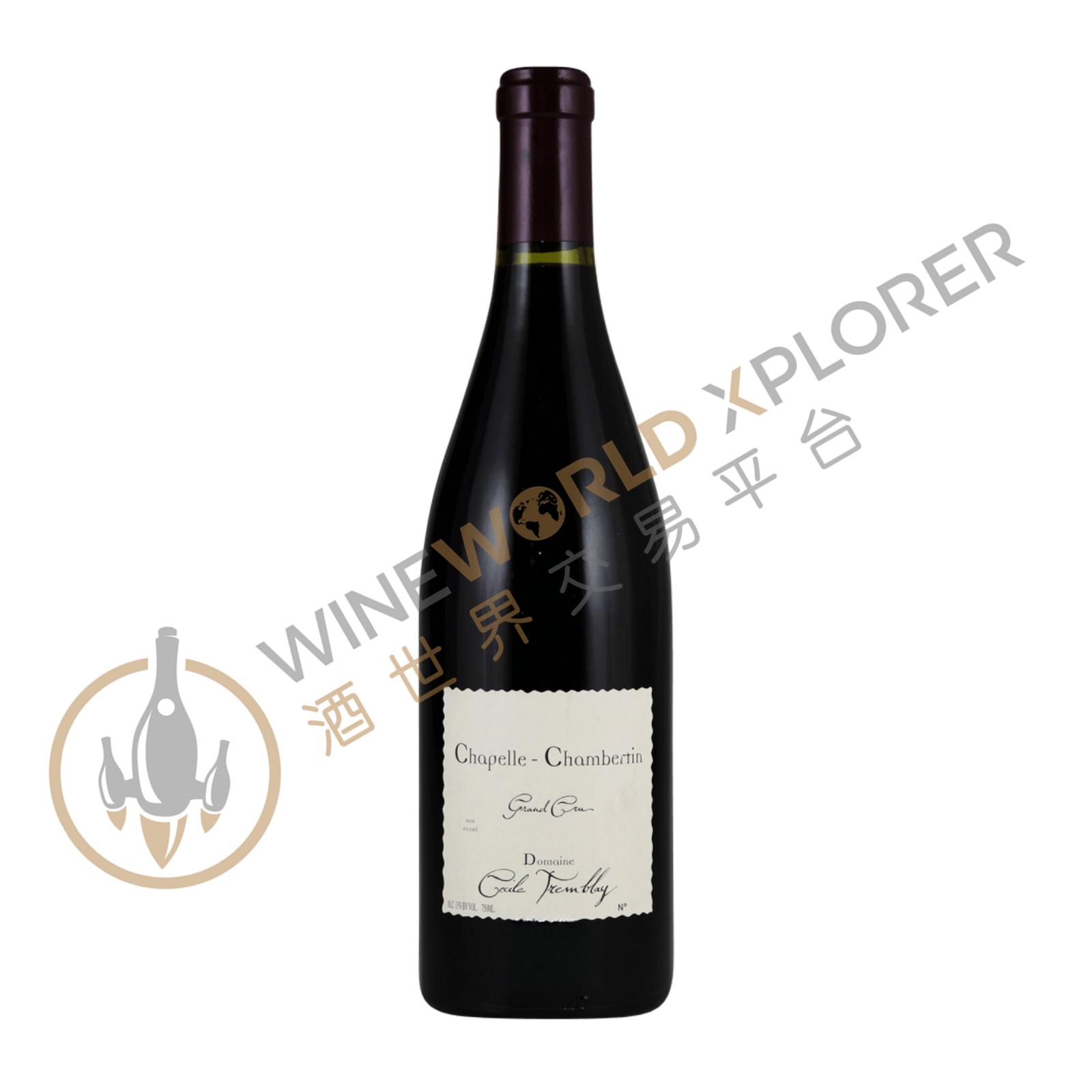
Cecile Tremblay, Chapelle Chambertin Grand Cru 2009
 View analysis


Description
Tasting notes

Reviewed by: William Kelley
I vividly remember my first encounter with Cécile Tremblay's glorious 2009 Chapelle-Chambertin Grand Cru, shortly after its release, and today the wine is no less dramatic, soaring from the glass with a blaze of red-black cherry, plums, wood smoke, espresso roast and grilled meat. On the palate, the wine is broad and texturally expansive, with a deep and multidimensional mid-palate, velvety tannins and a long, controlled finish. This is the most lavish Chapelle-Chambertin of Cécile Tremblay's career before the 2015 vintage, and in the wine's generosity and volume, one really feels the vineyard's proximity to the Clos de Bèze this year.
Reviewed by: Antonio Galloni
The 2009 Chapelle-Chambertin is a hugely promising wine. Warm spiced notes lead to a solid core of radiant fruit as this intense, powerful wine opens up in the glass. High-toned floral, mentholated notes add complexity on the intense finish. The yields from these old vines were just 25 hectoliters per hectare. Tremblay used 100% whole clusters here. This will be a fascinating wine to follow over the coming years. Anticipated maturity: 2019-2029. Cecile Tremblay is one of Burgundy’s emerging young growers. I was very impressed with all of the wines I tasted. Tremblay farms four hectares of vineyards across eleven appellations. She favors lengthy macerations (the 2009s spent 30 days on the skins) with no chaptalization or acidification. The percentage of whole clusters varies from wine to wine and can reach 100% at the grand cru level. The wines stay on the lees with no racking until they are prepared for bottling. New oak ranges from 20% for the village wines to 70% for the Grand Crus. These are striking wines, but there is every reason to believe the best is yet to come from this small, high-quality domaine. Importer: Peter Weygandt, Unionville, PA; tel. (610) 486-0800
Reviewed by: William Kelley
My first encounter with Domaine Cécile Tremblay was in the form of a bottle of the 2009 Chapelle-Chambertin Grand Cru, an immensely dramatic, fleshy young wine that made an immense impression on me as a student. Today, the 2010 is gradually eclipsing the faster-evolving 2009, but the latter remains a very attractive wine, exhibiting aromas of cherries, sweet berries, licorice and rose petals, followed by a full-bodied, rich and fleshy palate that's broad and enveloping, concluding with an expansive finish.
Reviewed by: Antonio Galloni
The 2009 Chapelle-Chambertin has come together beautifully since I last tasted it about six months ago. The personality of Chapelle is now beginning to emerge, as is the case with so many grand crus in this vintage. As beautiful and expressive as the fruit is today, there is also more than enough supporting structure to provide balance and a sense of harmony. I very much like the intensity and sheer personality of the Chapelle in 2009. Tremblay used 100% stems here. Anticipated maturity: 2019-2034. Importer: Peter Weygandt, Unionville, PA; tel. (610) 486-0800
Reviewed by: Antonio Galloni
My first encounter with Domaine Cécile Tremblay was in the form of a bottle of the 2009 Chapelle-Chambertin Grand Cru, an immensely dramatic, fleshy young wine that made an immense impression on me as a student. Today, the 2010 is gradually eclipsing the faster-evolving 2009, but the latter remains a very attractive wine, exhibiting aromas of cherries, sweet berries, licorice and rose petals, followed by a full-bodied, rich and fleshy palate that's broad and enveloping, concluding with an expansive finish.
About the Producer
Cecile TREMBLAY descends from a long line of vignerons. The story begins in 1921, with the union of Cécile’s great-grandparents, Edouard Jayer, a cooper in Nuits-Saint-Georges, and Esther Fournier who inherited vineyards from her family. Together they established and developed their own Domaine. The domaine’s vineyards were then eventually passed down to their five children. Renée, the youngest daughter, kept her share of the vineyards under métayage. Later on, Renée’s only daughter, Marie-Annick, grew the family holdings with her husband while keeping all vineyards under métayage. Cécile Tremblay, who had studied enology and viticulture in Dijon, reclaimed the family heritage and took over the management of the vineyards in 2002. A year later, Cécile bottled her first wines, Domaine Cécile Tremblay was born!
