
 Wine Advisor



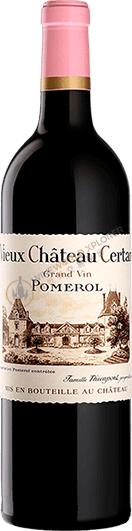
Vieux Chateau Certan 2002
 View analysis


Description
Tasting notes

Reviewed by: Neal Martin
This has a rather innocuous nose but with good definition, lacking the complexity of other vintages. Cassis, blackberry leaf. The palate is succulent, fleshy, well-knit tannins with a surprising amount of glycerine. Bitter cherry and raspberry towards the finish where that Cabernet Franc adds a savoury touch. Fine. Drink now-2015. Tasted November 2006.
Reviewed by: Neal Martin
Tasted blind at Farr’s 2002 Bordeaux tasting. This has a ripe, lifted, quite opulent bouquet with notes of black cherry, bilberry and earth. The medium-bodied palate has a sappy entry, surprisingly showing very little Cabernet Franc with a rather chewy, one-dimensional finish. I was disappointed when I found out the identity of this wine. Tasted October 2009.
Reviewed by: Neal Martin
Tasted from bottle at Mark Walford’s annual lunch at Waterside Inn. I have never been totally convinced by Alexandre Thienpont’s 2002. Here it has a fragrant, earthy, foursquare bouquet whose infant opulence has ebbed in recent years. Indeed, it has turned rather conservative with quite dry tannins, nicely balanced with a touch of piquancy on the finish. There are far superior VCC’s in this decade. Tasted May 2013.
Reviewed by: Robert M. Parker, Jr.
A terrific effort, this classic blend of 70% Merlot, 20% Cabernet Franc, and 10% Cabernet Sauvignon exhibits a dark ruby/purple color as well as a complex bouquet of cedar, spice box, black cherries, and cassis. With impressive purity, medium body, moderate tannin, and a long finish (40 plus seconds), it will be at its finest between 2008-2018.
Reviewed by: Neal Martin
The 2002 Vieux Château Certan is a vintage that I have never fallen in love with. Having tasted it regularly since primeur, it has a decidedly broody bouquet that is only just satisfactory. The palate is typical of the 2002s, balanced but not particularly engaging, clean but almost anonymous on the finish. Tasted at The Glasshouse restaurant in London.
About the Producer
Among all the Pomerol appellations, Vieux Chateau Certan is one of the oldest, and even Petrus is a latecomer to it. It was called "Sertan" by the Portuguese, meaning desert, poor land and unsuitable for growing crops, but the soil was very suitable for growing grapes. Over time, the name "Sertan" evolved into the homonym "Certan", which is part of the winery's name to this day. The vineyard of Château de la Vieux Sedan covers approximately 14 hectares and is divided into 23 plots. The upper layer of the vineyard is about 30 cm of clayey gravel, while the iron-bearing clay is in the lower layer of the soil. The grape varieties planted are predominantly Merlot (about 70%), with Cabernet Franc (25%) and Cabernet Sauvignon (5%) making up the rest of the vineyard. The average age of the vines is about 50 years. The harvest is rigorous, with fermentation taking place in temperature-controlled oak barrels and aging in 2/3 new oak barrels, while some vintages, such as 1987, are 100% new oak and aged for 18-22 months. The wines of Old Sedan are made from Merlot, Cabernet Franc and Cabernet Sauvignon, which is a stylistic departure from the absolute dominance of Merlot in Pomerol. Old Sedan is the most similar to the Medoc style in Pomerol, with a color that is usually less intense, but with firm tannins and a robust body. After a few years of ageing, it is sweet, mineral and perfectly smooth, with a strong persistence in the mouth. The old Sedan has a unique and flawless structure, the new wine has a rather prominent charred leathery taste and the tannins take at least 5 years to soften. The mature wine has concentrated flavors and a perfect balance, not as "powerful" as Château Petrus, but a perfect combination of strength and softness, a unique Pomerol wine.
1958(1)1969(2)1970(1)1974(1)1977(1)1978(1)1981(2)1982(1)1986(1)1987(1)1988(2)1989(1)1990(3)1993(1)1995(2)1996(3)1997(1)1998(5)2000(4)2001(4)
Package Size
12 x 75cl24 x 37.5cl
