
 Wine Advisor



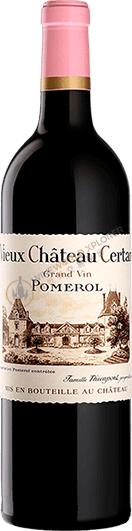
Vieux Chateau Certan 1978
 View analysis


Description
Tasting notes

Reviewed by: Neal Martin
I thought this might be a little tainted at first, but it blows away enough to award a score. This has an intriguing nose that is well defined but quite broody and sullen, though that is part of the attraction. The bouquet builds nicely in the glass revealing cigar-box, mint, leather and spice box aromas. The palate is medium-bodied, well-knit and harmonious with a very well defined and well-balanced core. Good breeding here, the finish succinct and understated. Drink now-2012. Tasted September 2008.
Reviewed by: Robert M. Parker, Jr.
The 1978 Vieux-Chateau-Certan has much more color than the 1979, with better concentration, a relatively rich, supple, medium-bodied texture, light tannins, and a round, attractive finish. Anticipated maturity: Now. Last tasted, 7/83.
Reviewed by: Neal Martin
Tasted at the Bipin Desai’s VCC vertical in Los Angeles. I like this VCC because of its austere, slightly under-ripe nature (even though Alexandre Thienpont suggested that if he had been in charge of the harvest at this time, he would have harvested later.) Still, it has a very well-defined, austere, tobacco-tinged nose with cedar and sandalwood coming through, then more wild mushroom/earthy scents. The palate is medium-bodied with that green edge, rather foursquare but with good weight and noticeable sharp acidity on the slightly clipped finish. Fully-mature, but this should be good for several years yet. Fresh, pointed, “old school” Pomerol. Drink now-2015. Tasted November 2008.
Reviewed by: Robert M. Parker, Jr.
The 1978 Vieux-Chateau-Certan has much more color than the 1979, with better concentration, a relatively rich, supple, medium-bodied texture, light tannins, and a round, attractive finish. Anticipated maturity: Now. Last tasted, 7/83.
Reviewed by: Neal Martin
The 1978 Vieux Château Certan has a slightly austere nose with cedar and tobacco scents, perhaps just needing more fruit. The palate is medium-bodied with a slightly lactic entry. This feels quite high in terms of acidity (Alexandre Thienpont mentioned that it was picked one week earlier than necessary.) At least there is a sense of harmony, though it does lack a bit of length. Tasted at the Vieux Château Certan dinner at La Trompette.
About the Producer
Among all the Pomerol appellations, Vieux Chateau Certan is one of the oldest, and even Petrus is a latecomer to it. It was called "Sertan" by the Portuguese, meaning desert, poor land and unsuitable for growing crops, but the soil was very suitable for growing grapes. Over time, the name "Sertan" evolved into the homonym "Certan", which is part of the winery's name to this day. The vineyard of Château de la Vieux Sedan covers approximately 14 hectares and is divided into 23 plots. The upper layer of the vineyard is about 30 cm of clayey gravel, while the iron-bearing clay is in the lower layer of the soil. The grape varieties planted are predominantly Merlot (about 70%), with Cabernet Franc (25%) and Cabernet Sauvignon (5%) making up the rest of the vineyard. The average age of the vines is about 50 years. The harvest is rigorous, with fermentation taking place in temperature-controlled oak barrels and aging in 2/3 new oak barrels, while some vintages, such as 1987, are 100% new oak and aged for 18-22 months. The wines of Old Sedan are made from Merlot, Cabernet Franc and Cabernet Sauvignon, which is a stylistic departure from the absolute dominance of Merlot in Pomerol. Old Sedan is the most similar to the Medoc style in Pomerol, with a color that is usually less intense, but with firm tannins and a robust body. After a few years of ageing, it is sweet, mineral and perfectly smooth, with a strong persistence in the mouth. The old Sedan has a unique and flawless structure, the new wine has a rather prominent charred leathery taste and the tannins take at least 5 years to soften. The mature wine has concentrated flavors and a perfect balance, not as "powerful" as Château Petrus, but a perfect combination of strength and softness, a unique Pomerol wine.
1958(1)1969(2)1970(1)1974(1)1977(1)
Package Size
