
 Wine Advisor



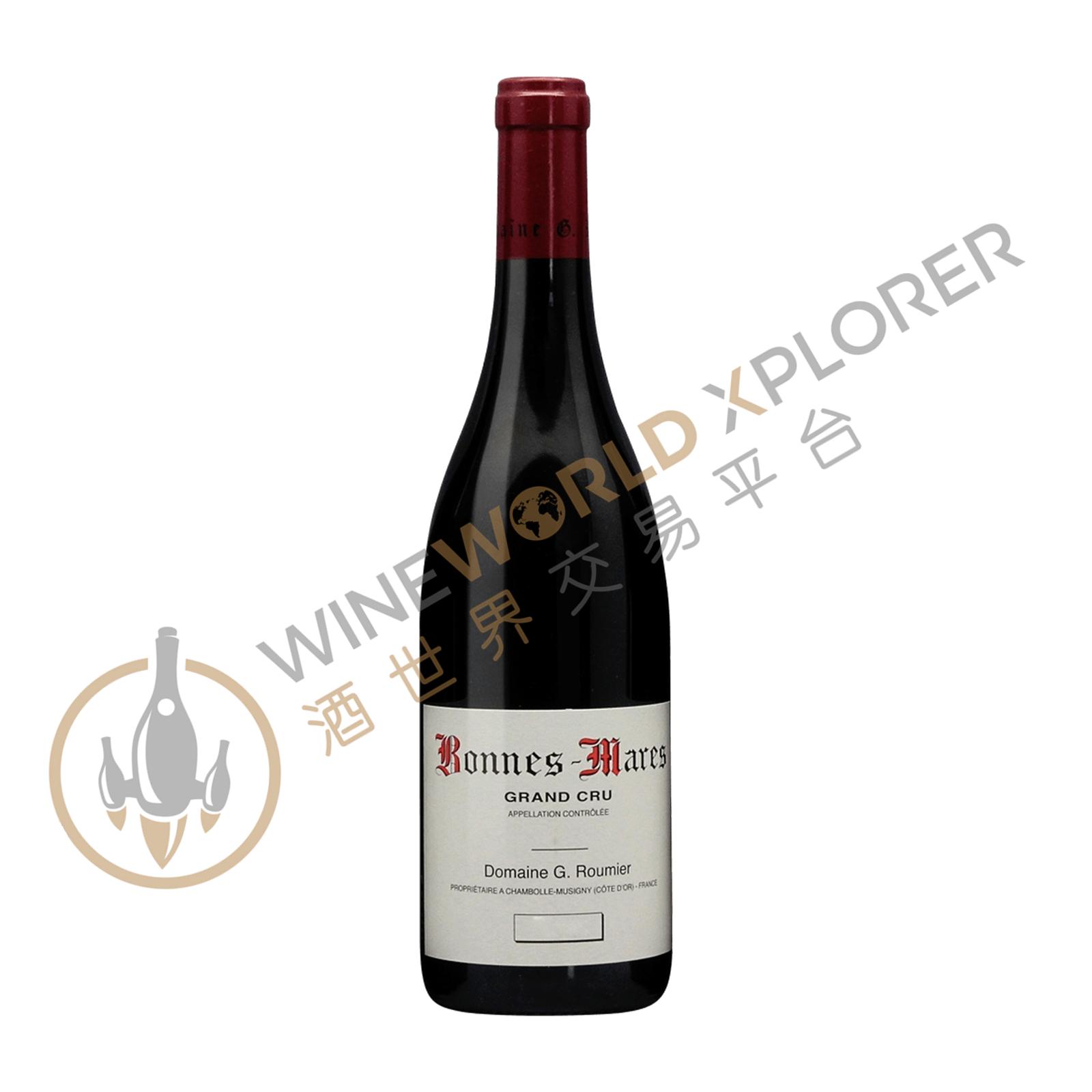
Georges Roumier, Bonnes Mares Grand Cru 2016
 View analysis


Description
Tasting notes

Reviewed by: Neal Martin
The 2016 Bonnes-Mares Grand Cru is showing more oak on the nose compared to Bruno Clair’s Bonnes-Mares tasted alongside, although there is clearly sufficient fruit behind to support it: blackberry, blueberry and a touch of boysenberry. The palate is medium-bodied with sappy black fruit laced with black tea and a touch of iodine, then a strong marine influence develops towards the finish. My concern is that the wood tannins threaten to dominate but thankfully with aeration this settles down nicely and I suspect with time it would meliorate further. Tasted blind at the 2016 Burgfest tasting.
Reviewed by: Stephen Tanzer
(the crop level averaged just 26.5 hectoliters per hectare but Roumier had frost issues only in his vines closer to the village of Chambolle, with one of his northern plots--on red soil--yielding 40 h/h): Bright medium red. Sexy, slightly high-toned aromas of raspberry, mocha and minerals; but a bit less floral than usual at this early stage. Wonderfully spicy and sweet on the palate, showing surprising energy and a piquant black pepper note to its concentrated dark berry and spice flavors. This wonderfully fleshy, silky Bonnes-Mares is distinctly relaxed in the context of the vintage and almost too easy to taste today. Finishes ripely tannic and very long. Roumier has a new 0.5-hectare parcel of Bonnes-Mares on white soil (through a share-cropping arrangement with investors) as of the 2016 harvest.
Reviewed by: Neal Martin
The 2016 Bonnes Mares Grand Cru was not as affected by the frost as other cuvées. Christophe explained that the northern part of his vines was less frozen and ended up being cropped at a none-too-shabby 28 hectoliters per hectare. Also, his holding is augmented by half a hectare situated on the terres blanches soils under a new fermage from Pierre Naigeon. It has a very precise bouquet that delivers exquisite blackberry, briary and subtle leafy/undergrowth scents emanating from the whole bunch element. For a Bonnes Mares, this has an atypically firm structure: a more masculine Bonnes Mares with dark berry fruit and hints of graphite toward the finish. This is a Bonnes Mares that is holding its breath, and it deserves several years, probably a decade, to reach its drinking window. It is not quite as good as the 2015 Bonnes Mares, but it is only a whisker away.
Reviewed by: Neal Martin
The 2016 Bonnes-Mares Grand Cru is showing more oak on the nose compared to Bruno Clair’s Bonnes-Mares tasted alongside, although there is clearly sufficient fruit behind to support it: blackberry, blueberry and a touch of boysenberry. The palate is medium-bodied with sappy black fruit laced with black tea and a touch of iodine, then a strong marine influence develops towards the finish. My concern is that the wood tannins threaten to dominate but thankfully with aeration this settles down nicely and I suspect with time it would meliorate further. Tasted blind at the 2016 Burgfest tasting.
About the Producer
The domaine was founded in 1924 by Georges Roumier, who began domaine bottling in 1945. He was succeeded in 1957 by his son Jean-Marie and now grandson Christophe, who joined his father in 1982 and took over completely in 1992. Most of the wines are rented (en fermage) from family members although Ruchottes Chambertin is held on a share cropping deal with an external proprietor, Michel Bonnefond. The wines are seductively fruity in their youth yet with excellent ageing potential. The grapes are sorted in the vineyard, with a table de tri at the winery since 2003. They are mostly destemmed, albeit depending on vineyard and vintage, with a few more stems being used recently – then placed in wooden fermenters. The juice is given a cool soak at 15° then allowed to start naturally. The juice is punched down twice a day and temperature controlled so as not to exceed 32°C. There is no great reliance on new wood in the maturation cellar, with 15-25% being used for village wines, 25-40% for premiers crus and no more than 50% for Bonnes Mares. In recent years Christophe has been searching for, and achieving, a greater sense of precision in his wines.
1981(1)1989(1)1990(1)1996(1)1997(1)1999(2)2000(4)2001(3)2002(2)2004(3)2005(1)2006(2)2007(3)2008(4)2009(5)2010(3)2011(3)2012(5)2013(5)2014(4)2015(3)
Package Size
1 x 75cl
