
 Wine Advisor



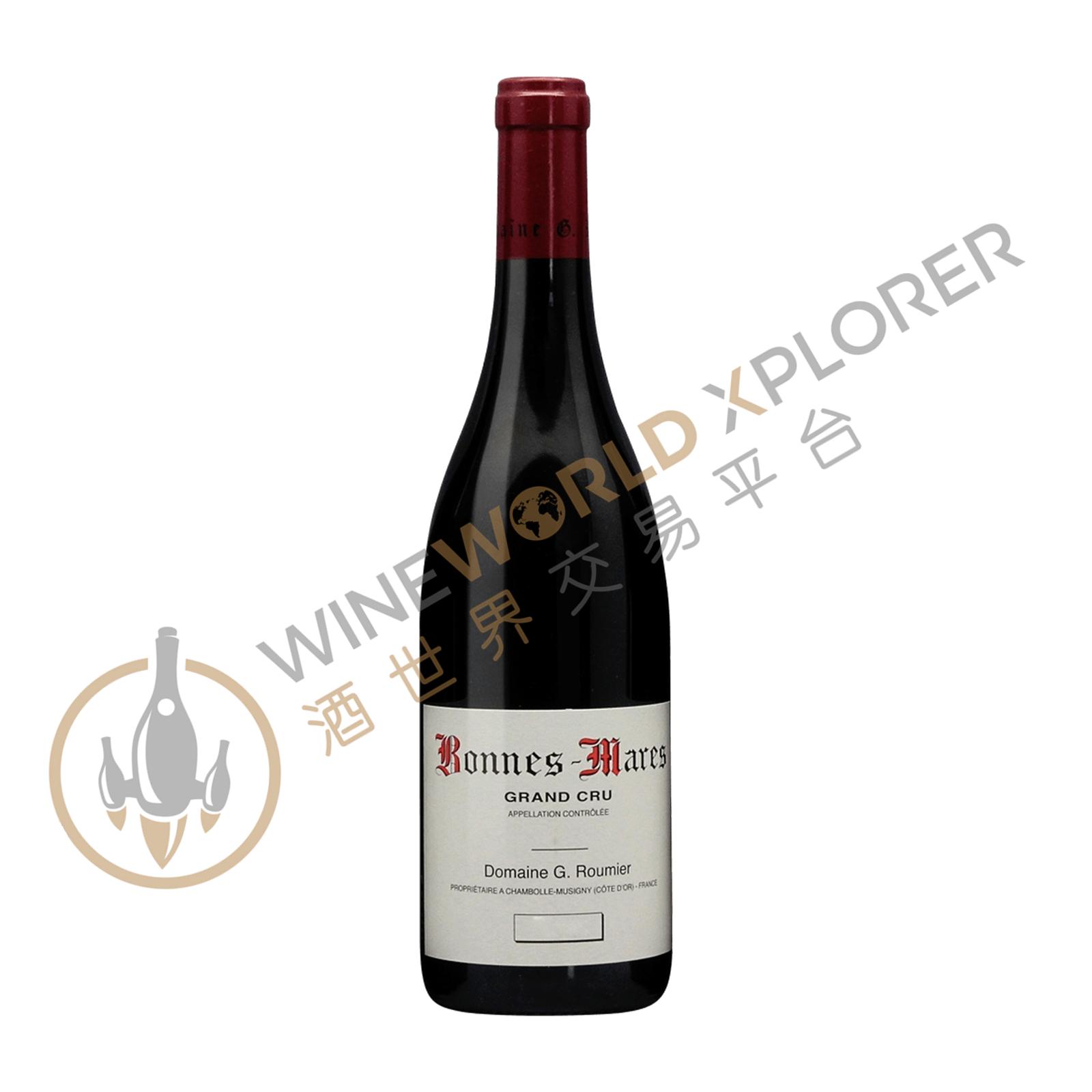
Georges Roumier, Bonnes Mares Grand Cru 2005
 View analysis


Description
Tasting notes

Reviewed by: Neal Martin
A magnificent wine in barrel, this has a broody, introverted nose that is giving very little away at the moment. But the palate displays that effortless sense of balance and natural harmony with filigree tannins and a complex finish with black cherries, loganberry, orange zest and a hint of that mango sorbet I noticed in barrel. Great length and persistency - a wine to treasure. Drink 2012-2030. Tasted February 2008.
Reviewed by: Neal Martin
Having tasted separate samples of the “Terre Rouge” and “Terre Blanche”, time to taste the final cuvee that Christophe Roumier blended for me. A wonderful, ethereal nose of black cherries, violets, orange-blossom and just a faint hint of that clayey scent from the Terre Rouge. Amazing delineation. The palate has firm grip and tannins, more masculine than feminine with good acidity. Red cherries, wild strawberry, cassis with a citrus-fresh finish with a touch of mango sorbet lingering on the aftertaste. A wonderful Bonnes-Mares: more than the sum of two parts. Drinking 2012-2030. Tasted January 2007.
Reviewed by: David Schildknecht
Roumier vinifies separately and later assembles the fruits of white chalk and red (iron-rich) parcels that inform his 2005 Bonnes Mares. At the time of my visit he had retained one pure barrel of each component as an investigation into terroir and the results were as fascinating as the blended wine is fascinatingly and profoundly beautiful. The ferrous lot (55% of the final assemblage) displays ripe blackberry and raspberry berries, along with (red soil-born) pungent smokiness, Chartreuse-like herbal and floral essences. A liqueur-like presentation of black fruits temporarily overshadows the mysterious (white rock-born) meld of chalky minerality and beef marrow that wells up gradually on a creamy palate with tannins of utmost refinement. The tension and energy are riveting – lending the wine a dynamic, fleet-of-foot impression for all of its manifestly huge extract – with incisive brightness of palate-staining fruit and vibrant minerality leading to a finish of sensational clarity and length. Even here, by the way, Roumier employs only around 40% new wood. One senses that Christophe Roumier considers 2005 a high point of his career, and my visit with him was among the high points of my recent trip. He describes this as “a classic vintage lending itself to very calm, classic vinification,” which given the opportunities afforded by perfectly healthy, firm, dry, ripe fruit involved triage almost solely to remove ladybugs, and included around 25% whole clusters in the fermenters at the Premier Cru level and 50% at that of Grand Cru. Importer: Diageo Chateau and Estate Wines Company, New York, NY; tel. (212) 419-1400.
About the Producer
The domaine was founded in 1924 by Georges Roumier, who began domaine bottling in 1945. He was succeeded in 1957 by his son Jean-Marie and now grandson Christophe, who joined his father in 1982 and took over completely in 1992. Most of the wines are rented (en fermage) from family members although Ruchottes Chambertin is held on a share cropping deal with an external proprietor, Michel Bonnefond. The wines are seductively fruity in their youth yet with excellent ageing potential. The grapes are sorted in the vineyard, with a table de tri at the winery since 2003. They are mostly destemmed, albeit depending on vineyard and vintage, with a few more stems being used recently – then placed in wooden fermenters. The juice is given a cool soak at 15° then allowed to start naturally. The juice is punched down twice a day and temperature controlled so as not to exceed 32°C. There is no great reliance on new wood in the maturation cellar, with 15-25% being used for village wines, 25-40% for premiers crus and no more than 50% for Bonnes Mares. In recent years Christophe has been searching for, and achieving, a greater sense of precision in his wines.
1981(1)1989(1)1990(1)1996(1)1997(1)1999(2)2000(4)2001(3)2002(2)2004(3)
Package Size
