
 Wine Advisor



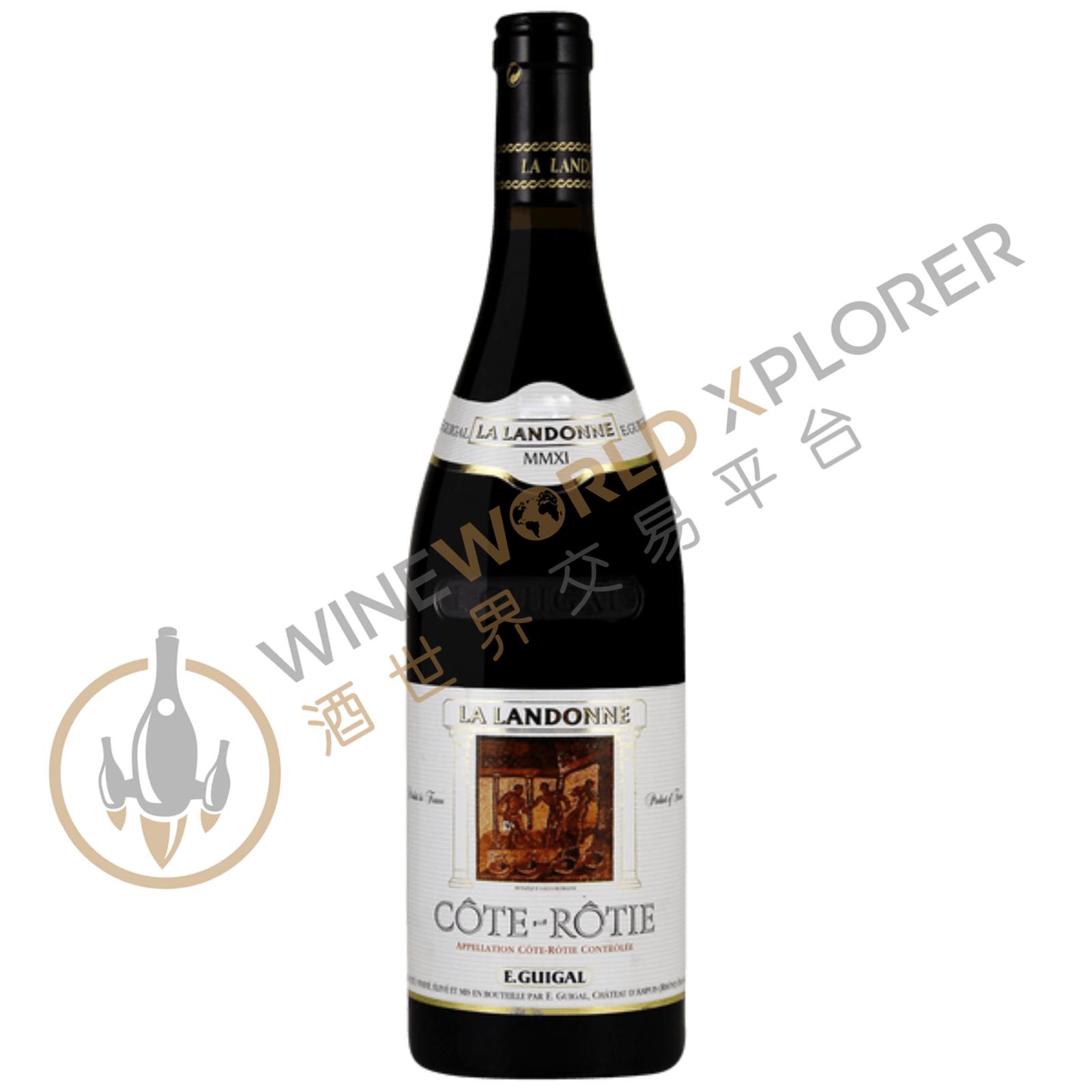
Etienne Guigal, Cote Rotie La Landonne 2010
 View analysis


Description
Côte-Rôtie « La Landonne » completes this famous trilogy. An immense and pure wine with intense flavours and deep colour, this is the perfect wine for ageing.
Tasting notes

Reviewed by: Jeb Dunnuck
A wine that's certainly not for those seeking instant gratification, the 2010 Cote Rotie la Landonne is a powerhouse Cote Rotie that offers up deep, masculine notes of crushed rocks, smoked meats, game, espresso and assorted dark cassis and currant-like fruit. Full-bodied, tight, structured and backward, with fabulous mid-palate density and length, it needs to be forgotten in the cellar for a decade, but will have 40-50 years of overall longevity.
Reviewed by: Robert M. Parker, Jr.
The 2010 Cote Rotie La Landonne exhibits copious aromas of black olives, graphite, roasted meats, charcuterie, espresso roast and forest floor as well as hints of chocolate and melted road tar. Intense, full-bodied, mouth-saturating, teeth-staining black fruits saturate the palate for 60+ seconds. This should turn out to be a prodigious Cote Rotie. (Not yet released) The Guigal family may be the modern world’s greatest testament to a family-run winery with impeccably high standards, integrity and an uncompromising vision of the future. They continue to push the envelope of quality to greater and greater heights. Marcel Guigal learned it all from his father, Etienne, a legend in the Northern Rhone. Over my three decade plus career, it has been a noteworthy story to watch Marcel’s son, Philippe, take full responsibility for the future direction of this incredible enterprise, if not empire. I have almost unlimited admiration for the Guigals and their ability to produce millions of bottles of inexpensive Cotes du Rhones that are among the finest of the entire Rhone Valley, as well as their portfolio of exquisite whites, reds and roses from the most prestigious appellations in the Rhone. After more than three decades of tasting here, I never cease to be amazed by what they accomplish. I have said this many, many times, but it bears repeating – the magic of the Guigals is not only due to having some extraordinary vineyards in St.-Joseph, Hermitage, Cote Rotie and Condrieu, but also the ability to pay the highest price for purchased grapes and/or wine from which they fashion remarkable blends. The importance of a wine’s upbringing (or, as the French call it, elevage) is the key to understanding the entire Guigal locomotive. No one does it better; no one has done it longer; and no one seems to have the Midas touch for putting the wines in the bottle at precisely the right moment to capture the essence of a wine before it begins to fade or lose its vibrancy. This may sound easy, but to date, no one comes remotely close to what the Guigals consistently do across all fields of play. About a decade ago, Guigal’s white wines began to take on an amazing level of quality and the family continues to augment and increase that quality. Their Cotes du Rhone Blanc, usually a blend of two-thirds Viognier and the rest Clairette and Bourboulenc, has become a reference point for what amazing value and high quality can be achieved in a completely naked, expressive wine. Guigal produces approximately 40% of all the Condrieu made, and he continues to add some exquisite terroirs to his portfolio. For example, he recently bought the vineyard owned by Alain Parent and Gerard Depardieu, Lys de Volant. Guigal can produce two cuvees of white Hermitage, their regular blend of 90% Marsanne and 10% Roussanne, and, in exceptional vintages, a luxury cuvee called Ex-Voto, which is approximately 80% Marsanne and 20% Roussanne. It spends more time in small new oak than the regular cuvee. From the Northern Rhone, Guigal’s finest values are his Crozes-Hermitage and his lower level cuvees of St.-Joseph, all of which are 100% Syrah. The Crozes-Hermitage comes from hillside vineyards and the St.-Joseph comes from hillsides with decomposed granite soils that are commonplace in the northern half of that sprawling appellation. With the purchase of the estates of Jean-Louis Grippat as well as the holdings of De Vallouit, Guigal increased his estate vineyards in Hermitage. A basic Hermitage cuvee is produced each year, and in the top vintages, a luxury cuvee called Ex-Voto is made. Guigal now owns vineyards in the famed lieux-dits of Les Bessards, Dionnieres, l’Ermite and Le Meal. The regular Hermitage is generally aged for up to three years in small oak casks, about 50% new. When declared, the Ex-Voto is given the same 42 months in 100% new French oak as his three single vineyard Cote Roties (La Mouline, La Landonne and La Turque). The Ex-Voto is a blend of fruit from Les Bessards (40%), Les Greffieux (40%) and Les Murets (20%). Guigal produces approximately 300,000 bottles each year of his Cote Rotie Brune et Blonde. We started with the 2008, probably the second worst vintage in the Northern Rhone (2002 being the worst in the last decade). Not a single vineyard wine, but a prodigious Cote Rotie is Guigal’s Cote Rotie Chateau d’Ampuis. Marcel Guigal’s son, Philippe, lives at this estate with his wife and children, and this is also where they cooper their wood barrels made from staves that are air-dried a minimum of three years. This cuvee is always a blend of some of the finest parcels on the hillsides of Cote Rotie, including La Garde, Le Clos, Grande-Plantee, Pommiere, Pavillon, Le Moulin and La Viria. It is aged 38 months in 100% new French oak, and around 2,000 cases are produced in most vintages. The three single vineyard Cote Roties are consistently among the world’s greatest wines. I often find La Mouline to be a so-called “desert island” wine as it was in vintages such as 1978, 1983, 1985, 1988, 1989, 1991, 1999, 2003, 2005 and 2009. La Mouline is made from the oldest vines and is vinified differently than the other single vineyard cuvees, utilizing pump-over techniques as opposed to punching down (La Turque) or immersed cap (La Landonne). To reiterate, the Cote Rotie La Turque comes from the Cote Brune and its upbringing is the same as La Mouline’s, aged 42 months in 100% new French oak, co-fermented with 5-7% Viognier, and bottled unfined and unfiltered. It comes from younger vines as the first vintage was 1985 and that remarkable wine was made from 3-year-old vines (which puts a kink in the French myth that old vines are always the best). As I previously indicated, La Turque is vinified by punching down as opposed to pumping over or the immersed cap fermentation of La Landonne. The third of these prodigious Cote Roties, La Landonne, comes from the Cote Brune. Unlike its siblings, it is 100% Syrah that receives the same upbringing, 42 months in 100% new French oak and bottling with no fining or filtration. The other luxury cuvee, although not a single vineyard wine, is the Hermitage Ex-Voto, which is aged 42 months in 100% new oak and bottled unfined and unfiltered. It is always fashioned from Les Bessards (40%), Les Greffieux (40%), Les Murets (10%) and l’Ermite (10%). The Gigondas and Chateauneuf du Pape produced by Guigal are often excellent, even outstanding wines that sell for a fraction of the price asked for his luxury cuvees of Cote Rotie, Hermitage, Condrieu and St.-Joseph. Guigal’s Gigondas spends around 24-25 months in wood foudres, and includes a great deal of Mourvedre in the blend. The Chateauneuf du Pape, which comes from purchased wine, is aged two years in foudre prior to release. Guigal normally includes a minimum of 10% Mourvedre in the blend, with the balance old vine Grenache. As I have said many times, one of these days the Guigals will purchase a famous estate in Chateauneuf du Pape because Marcel’s father, Etienne, had always said the three greatest appellations of the Rhone Valley were Cote Rotie, Hermitage and Chateauneuf du Pape (few people would disagree). Importer: Vintus Wines, Pleasantville, NY; tel. (914) 769-3000
Reviewed by: Robert M. Parker, Jr.
We will not see the 2010 Cote Rotie La Landonne in the marketplace for four years, but it exhibits a black/purple color in addition to abundant floral notes intermixed with licorice, forest floor, white chocolate, tar and grilled meats. The stunning nose is followed by a full-bodied wine with good acidity, sweet tannin and an enormous texture as well as mouthfeel. It will need to be forgotten for 10+ years after its release, and should drink well over the following half century. (Not yet released) The following paragraph is taken from issue #193, but I believe it is so important to understand the Guigal philosophy that I am repeating it verbatim. “As I have written many times before, no one in the wine world is better at ‘raising’ a wine (or as the French call it elevage) than Marcel Guigal, who learned the skills from his father, Etienne. Because everyone tends to focus on vintage conditions and terroir, the importance of a wine’s elevage is often overlooked, but Guigal’s unusually long tank, foudre and small barrel aging regime for all his red wines as well as several of his whites results in an array of remarkable wines time and time again. Even the most challenging vintages, which often taste under-nourished, vegetal and thin in their first year or two of life, tend to take on concentration and character, turning out to be some of the finest wines in many of the most difficult Rhone vintages. Moreover, Guigal’s wines always taste better out of bottle than from barrel, which speaks to his honesty and integrity as well as to his brilliance in deciding how long to age a wine in wood or tank, as well as choosing the perfect moment to bottle it. None of this is as simple as it might sound, and that’s why Marcel Guigal gets my vote as the reigning genius in terms of the upbringing of his wines.” Crozes-Hermitage has become one of the Guigal “go-to” wines for value hunters and he has raised the level of this humble appellation dramatically with his recent efforts. Cote Rotie was what made Marcel Guigal and his father, Etienne, famous. The Guigals are the largest landholders in Cote Rotie and produce 35-40% of this hallowed appellation’s production. Five cuvees are produced in every vintage, the three single vineyard offerings, the Chateau d’Ampuis (a blend of top sites aged 38 months in 100% new French oak casks), and their largest production offering, the Brune et Blonde (which is aged in small barrels and usually co-fermented with 3-5% Viognier depending on the vintage). Along with Michel Chapoutier’s St.-Joseph Les Granits, Guigal’s St.-Joseph Vignes de l’Hospice is the top wine of the appellation. Guigal purchased this 8-acre parcel of steep hillside vines from Grippat. Aged 30 months in 100% new oak, this wine is extraordinary. Guigal claims the soil is reminiscent of Les Bessards Vineyard in Hermitage Over the last decade, Guigal has dramatically increased his vineyard holdings in Hermitage, purchasing the estates of Jean-Louis Grippat as well as the Hermitage holdings of De Vallouit. He now has parcels in such famed vineyards as Le Meal, Les Beaumes, Les Bessards and Dionnieres. Guigal’s basic red Hermitage (which has been made for over five decades) is generally aged for more than three years in small casks, of which about 45% are new. In exceptional vintages, Guigal will cull out a special cuvee called Ex-Voto, which is aged 42 months in 100% new French oak. One thousand cases are usually made from three separate vineyards (40% from Les Bessards, 40% from Les Greffieux and 20% from Les Murets.) Guigal owns the spectacular Chateau d’Ampuis on the banks of the Rhone River. His son, Philippe, lives here and this is where they produce their wood barrels from long-aged wood staves they purchase 3 to 5 years in advance. This wine, which comes from a blend of such extraordinary vineyards as La Garde, Le Clos, Grande-Plantee, Pommiere, Pavillon, Le Moulin and La Viria, is aged 38 months in 100% new French oak. Production is approximately 2,000 cases in a good year. The three single vineyard Cote Roties are among the world’s top fifty wines ever made. Their differences become apparent around age 8-10 and are dramatically different by age 15. The first vintage of La Landonne was 1978, La Turque was 1985 and La Mouline was 1966. La Mouline is always the sexiest and easiest to appreciate young as it is co-fermented with 11% Viognier. La Turque is co-fermented with 5-6% Viognier and La Landonne is 100% Syrah. La Mouline comes from the Cote Blonde, which has lighter soils (hence the name), and La Turque and La Landonne emerge from the Cote Brune. La Mouline is made from the oldest vines (60-65 years) and is vinified using pump over techniques. From relatively young vines (about 20 years of age), La Turque is vinified by punching down. La Landonne is vinified using the modern system of the cap being immersed. The results are three very different wines, although all of them spend 42 months in 100% new French oak, are barely racked, have minimal levels of SO2, and are bottled unfined and unfiltered. Importer: Vintus Wines, Pleasantville, NY; tel. (914) 769-3000
Reviewed by: Jeb Dunnuck
Scheduled to be bottled in February of 2014, the 2010 Cote Rotie La Landonne is a more fresh, pure and focused example of the 2009. While it doesn’t have the over the top exuberance of the prior vintage, it offers incredibly pure, detailed and classic aromas and flavors of black pepper, currants, blackberry, mineral and smoked bacon fat. Full-bodied, layered and deeply concentrated, yet also graceful and seamless, this knockout effort should require a decade to come around and have 3-4 decades of longevity. (Not yet released) One of the highlight tastings during my more than two weeks spent working in the Northern Rhone, this set of releases by the father/son pair, Marcel and Philippe Guigal, is about as stacked a lineup as you’ll find anywhere in the world. From their tiny production Cote Roties, to the massive production level Cotes du Rhone (red and white), the quality here is impeccable, as is the attention to detail at every step of the winemaking process. Looking at the vintages reviewed here, reds first, their 2009s are some of the most bombastic, decadent and thrilling wines out there. While they have the over the top richness that allows them to dish out plenty of pleasure even now, they need 4-5 years to integrate their oak and to fully flesh out. Count yourself lucky if you have a few of these hidden in the cellar. More classic in style across the board, the 2010s are more focused and straight, yet similarly concentrated, if not with additional density. They will take slightly longer to come around compared to the 2009s, and certainly offer a more textbook drinking experience. They, too, are at the top of the wine hierarchy. The 2011s show the vintage nicely with slightly more approachable profiles, sweet tannin and brilliant concentration, especially in the vintage. They still have another year in barrel to go, but will certainly be among the top wines of the vintage, have broad drink windows, and should come close to what was achieved in 2009 and 2010, albeit in a different style. Lastly, the 2012s should, in my mind, surpass the 2011s, as they have a smidge more overall density, as well as fabulous purity. Neither the 2011s nor 2012s have the density of the 2010s, nor the sheer wealth of material that’s found in the 2009s. Nevertheless, time will tell, and these wines won’t be bottled for some time yet. Looking at the whites, 2011 and 2012 are similar in quality. Both vintages have beautiful purity, good overall acidity and good concentration, i.e., lots to like. Whether or not we’ll see a 2012 Ermitage Ex-Voto Blanc (which was not produced in 2011) remains to be seen, but what I tasted was certainly promising, if not earth-shattering (as was the 2010!). Looking at the Chateau d’Ampuis releases, this cuvee is a blend of vineyards (La Garde, Le Clos, Grande-Plantee, Pommiere, Pavillon, Le Moulin and La Viria lieux-dits) and sees upwards of 38 months in 100% new French oak. Importer: Vintus Wines, Pleasantville, NY; tel. (914) 769-3000
Reviewed by: Jeb Dunnuck
As with the other two single-parcel Cote Roties, the 2010 Cote Rotie La Landonne is pure perfection in a glass. An incredibly massive, muscular, full-bodied effort, it has an insane amount of structure to go with an equal amount of concentrated fruit. Cassis, smoked bacon, coffee bean, cracked pepper and liquid rock-like qualities are all present here, and it hits the palate with a chiseled, focused textured, building tannin and terrific length. It’s the most backward of the 2010s and will require a decade of cellaring, but will keep for about as long as you’d like to hold onto bottles.
Reviewed by: Josh Raynolds
Glass-staining ruby. Potent smoke- and spice-accented black and blue fruit aromas are complicated by sexy potpourri and incense nuances that build with aeration. Sweet, penetrating blackberry and cherry liqueur flavors stain the palate, with licorice pastille and violet qualities coming in slowly. Rich yet lively and precise, finishing with outstanding energy and chewy tannins that frame the wine's lush, alluringly sweet fruit.
Reviewed by: Josh Raynolds
Dark purple. A heady, explosively perfumed bouquet displays scents of ripe blueberry, cherry-cola, incense and smoked meat, with an intense spicy quality adding lift. Stains the palate with potent dark fruit liqueur and candied violet flavors that are sharpened and lifted by juicy acidity. Youthfully firm tannins build through a finish that strongly repeats the blue fruit and floral qualities. This one is built for the ages.
About the Producer
In 1946, Etienne Guigal founded Château Guigal in the village of Ampuis, the winemaking heart of the Rhône. The village of Ampuis is rich in history, with vineyards that are over 2,400 years old and buildings that still date back to Roman times, and it was here that Etienne Guigal arrived in 1923 at the age of 14. He decided to devote himself to winemaking, which he did for more than 67 years. In 1961, the young Marcel Guigal took over the management of the estate from his father. Thanks to Marcel's efforts, Château Guigal began to acquire some well-known wineries and grew in strength.
1982(1)1983(1)1986(1)1989(1)1993(1)1995(1)1996(3)1997(2)1999(3)2001(1)2003(3)2004(2)2005(4)2006(6)2008(1)
Package Size
12 x 75cl
