
 Wine Advisor



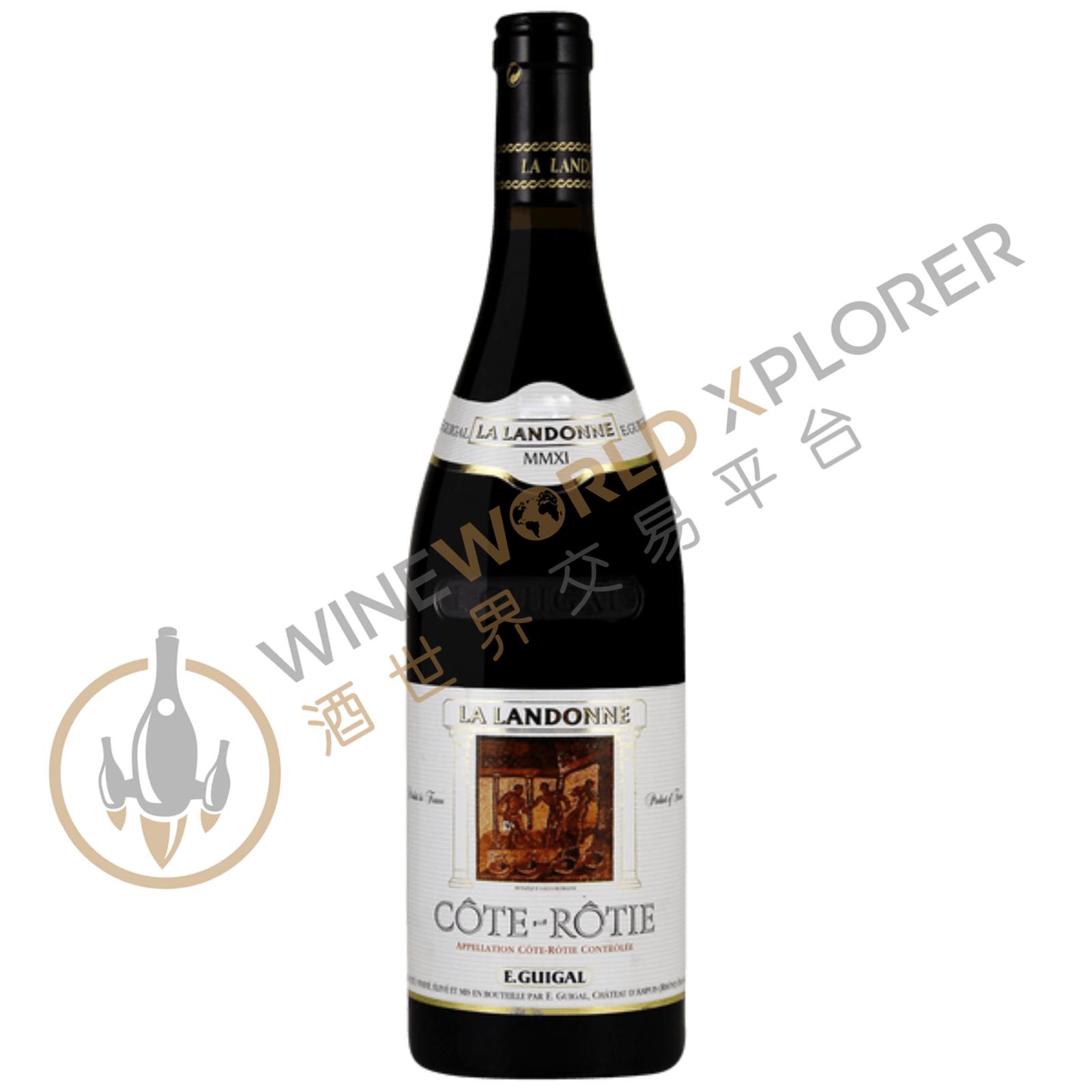
Etienne Guigal, Cote Rotie La Landonne 1993
 View analysis


Description
Côte-Rôtie « La Landonne » completes this famous trilogy. An immense and pure wine with intense flavours and deep colour, this is the perfect wine for ageing.
Tasting notes

Reviewed by: Robert M. Parker, Jr.
The 1993 La Landonne exhibits a dark color, but is excruciatingly tannic, without fat and ripe fruit behind its structure. Last tasted 6/96.
Reviewed by: Robert M. Parker, Jr.
The great glories of this house are its Cote Roties, of which there are now five separate offerings. The 1993s, which have just come on the marketplace, are from a troublesome vintage for everyone in Cote Rotie, rivaling 1984 in difficulty. Nevertheless, the single-vineyard wines have turned out well. As for the single vineyard wines, they are all excellent in 1993, but more herbaceous and clearly marked by the green pepper smells of slightly underripe Syrah. The most tannic of the three famous single vineyards is the 1993 Cote Rotie La Landonne. It is amazingly powerful and rich for the vintage, and reveals more fruit and intensity than it did prior to bottling. It exhibits a saturated ruby color, and copious amounts of pepper, tar, olives, licorice, and black cherry fruit in the nose. It remains the most muscular and structured of the three wines, and has managed to avoid the hollowness and vegetal character that plague so many 1993 northern Rhones. This Cote Rotie should age gracefully for a decade or more. Guigal is one of the cellars where the wines always taste better after they are bottled than they do from cask, although as the scores in this segment indicate, some profound wines can be found in the 1994, 1995, and 1996 vintages Chez Guigal. Importer: Classic Wines, Boston, MA; tel. (617) 731-6644
Reviewed by: Robert M. Parker, Jr.
The most tannic and animal-like of the single-vineyard Cote Roties is always La Landonne. The 1993 is losing its fruit, revealing a tough, hard personality with high levels of astringent tannin. A marginally acceptable wine, its peppery, green, vegetal, toasty new oak nose is unexciting. Tough, lean, tart, and hard, this is another charmless, attenuated 1993. If Marcel Guigal cannot make an excellent wine in 1993, it says a lot about just how miserable this vintage was. Importer: Classic Wines, Boston, MA; tel. (818) 548-1200
Reviewed by: Robert M. Parker, Jr.
When I saw Marcel Guigal in late March, the 1993s were clearly the lightest wines he had made from the three Cote Rotie single vineyards since 1984 or 1981. They will out turn out to be ripe, soft, medium-bodied wines with only La Landonne revealing grip and tannin. Although 1993 was a tough vintage (the worst in the last 20 years for many northern Rhone producers), Guigal has turned out very good single vineyard Cote Roties that will need to be drunk during their first 5-10 years of life. Importer: Classic Wines, Boston, MA; Tel. (617) 731-6644
Reviewed by: Robert M. Parker, Jr.
The 1993 vintage was the most difficult year for Guigal since 1984, 1977, and 1975. Yet, some of Guigal's wines have turned out to be successful, although his numerical scores are the lowest I have bestowed him since the 1984 vintage (which indicates the remarkable consistency of this cellar). The three single vineyard Cote Roties have turned out to be very good, possibly excellent. I remember just how uninteresting the 1992s were prior to bottling. The 1993 Cote Rotie La Landonne exhibits the darkest color of these wines, but is excruciatingly tannic, without the fat and ripe fruit behind its structure. All things considered, these are noteworthy efforts in a dreadful vintage. Guigal still has a couple of difficult vintages to bottle, but his 1992s have turned out surprisingly strong. In addition, the 1993s are satisfying for the vintage. Following 1993 are two great vintages for Guigal - 1994 and 1995. Importer: Classic Wines, Boston, MA; tel. (818) 548-1200
About the Producer
In 1946, Etienne Guigal founded Château Guigal in the village of Ampuis, the winemaking heart of the Rhône. The village of Ampuis is rich in history, with vineyards that are over 2,400 years old and buildings that still date back to Roman times, and it was here that Etienne Guigal arrived in 1923 at the age of 14. He decided to devote himself to winemaking, which he did for more than 67 years. In 1961, the young Marcel Guigal took over the management of the estate from his father. Thanks to Marcel's efforts, Château Guigal began to acquire some well-known wineries and grew in strength.
1982(1)1983(1)1986(1)1989(1)
Package Size
