Wine Advisor



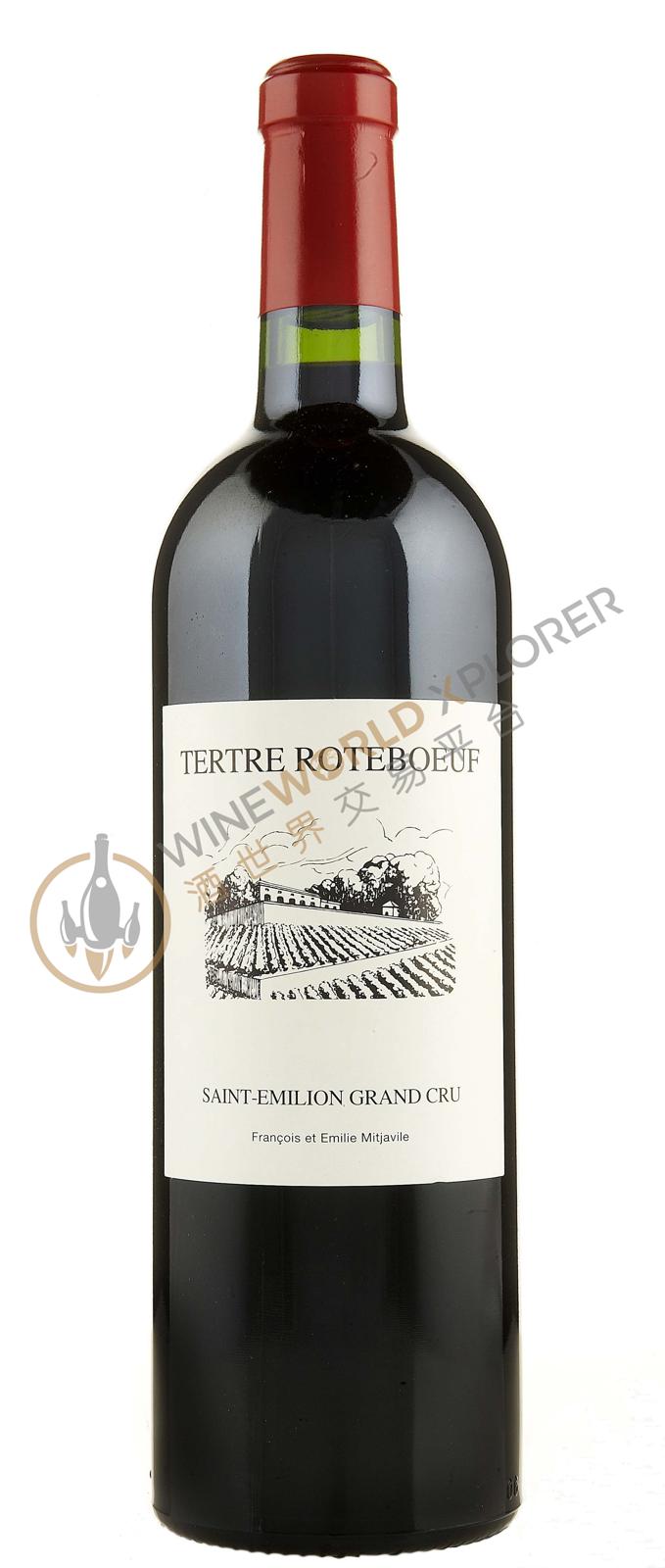
Tertre Roteboeuf 2000
 View analysis


Description
Tasting notes

Reviewed by: Neal Martin
The 2000 Tertre-Rôteboeuf is instantly captivating on the nose of gushing red cherries, crushed overripe strawberry, orange pith and violet scents, very Burgundy-like in terms of purity and very well defined. The palate is harmonious, sensual, silky-smooth and kept on an even keel by its fine acidity. Notes of allspice, black pepper and clove emerge. If I were to quibble, maybe it does not quite deliver the complexity you might anticipate on the finish, yet texturally this is an irresistible Saint-Émilion with grace and poise.
Reviewed by: Stephen Tanzer
(bottled in August of 2002) Bright ruby-red. A cocktail of roasted berries and cherry on the nose, with superripe notes of espresso, truffle and spices. Sweet, dense and very deep, with voluptuous flavors of red berries, black cherry, chocolate, meat and spices. Pliant and extremely generous wine with lovely fruit. Finishes with huge, ripe, mouthcoating tannins and intriguing notes of minerals and torrefaction.
Reviewed by: Stephen Tanzer
Very good medium ruby. Sappy, liqueur-like aromas of black raspberry, roast coffee, licorice, tobacco and meat. Lush and pliant, with an almost confectionery sweetness. Strong torrefaction notes balanced by solid minerality. Sound acidity on the back end gives the wine good shape and grip. Tannins are quite sweet and ripe.
Reviewed by: Stephen Tanzer
Full ruby. Sappy aromas of black raspberry, black cherry, boysenberry and dark chocolate. Almost confectionery in its sweetness and near-roasted richness yet boasts terrific vivacity. Dense and tightly wrapped today, with very firm supporting spine. Finishes very long, with sweet tannins and a note of bitter chocolate.
Reviewed by: Neal Martin
Tasted blind at Bordeaux Index’s 2000 tasting in London. A lighter colour than its peers, the nose much more Merlot dominated, very polished, lactic at first with touches of chocolate and espresso lacing the opulent, gourmand-like red-berried fruit. Quintessential Tertre-Roteboeuf. The bouquet subsides and mellows with aeration, gaining more clarity, with more wild strawberry, vanilla, ripe Satsuma and apricot developing. It has a swagger, this wine, gaining complexity all the time, that gourmand quality (so Francois Mitjavile) ensuring that I could guess its identity blind. The palate is rounded on the entry, slightly lower acidity, fine tannins, good backbone here but cloaked in ripe, rounded, smoke and chestnut-tinged, meaty, red-berried fruit. Lush and sensuous on the finish. Lovely. Drink now-2025. Tasted March 2010.
Reviewed by: Robert M. Parker, Jr.
I know this sounds crazy, but when I tasted the 2000 Tertre Roteboeuf from bottle on two separate occasions, the only wine that jumped into my head was a deja vu of the 1990 Petrus at age two! Undeniably the finest Tertre Roteboeuf since the spectacular 1998, 1990, and 1989, the dense ruby/purple-colored 2000 exhibits a sweet nose of roasted espresso, mocha, chocolate, black cherry jam, cassis, licorice, new saddle leather, and toasty oak. This explosive, hedonistic concoction is followed by a full-bodied wine with silky tannin, a sumptuous, sweet, lavishly rich mid-palate and texture, and a 45-second finish. It reveals more noticeable structure and grip than the 1998 or 1990 possessed at a similar age. This is a majestic wine. I kept one bottle open for six days without any oxidation! Anticipated maturity: 2005-2025.
Reviewed by: Robert M. Parker, Jr.
Do you think you're sexy? Well this wine, from a 14.7 acre vineyard planted with 85% Merlot and 15% Cabernet Franc, is! Undeniably the finest Le Tertre-Roteboeuf (meaning, "the hill of the belching cow") the dense ruby/purple-colored 2000 exhibits a sweet nose of roasted espresso, mocha, chocolate, black cherry jam, cassis, licorice, new saddle leather, and toasty oak. This explosive, hedonistic concoction is followed by a full-bodied wine with silky tannin, a sumptuous mid-palate and texture, and a 45-second finish. Anticipated maturity: 2005-2025.
Reviewed by: Neal Martin
A stunning millennial offering. A lukewarm reaction when tasted at Farr's 2000 horizontal in Sept-03. Too much new oak dominating at this stage? But a glorious wine in Oct-05. Very deep, almost opaque colour. The nose is very backward, reticent. Black cherry, touch of mint and damp earth developing. Superb balance on the palate. Well-integrated tannins, refined, perfect acidity. Very harmonious and focused. The poise is captivating. Drink from 2012.
Reviewed by: Robert M. Parker, Jr.
My all-time favorite vintage of Tertre-Roteboeuf, the 2000 should age much more consistently than the rather irregular 1990 or the top-notch 1989. The 2005 should give it a run for its money down the road, but at present, this wine is performing fabulously well. It boasts a dense ruby/purple color along with notes of kirsch liqueur and licorice. This St.-Emilion could pass for a great Chateauneuf du Pape or top-notch Musigny, although it has more power and depth than a burgundy, and none of the peppery/garrigue characteristics of a Rhone. Nevertheless, there is a sweet character from the high glycerin level as I suspect the alcohol content exceeds 14%. Velvety textured and full-bodied, but surprisingly youthful, this stunningly rich wine can be drunk now, but promises to last another two decades.
Reviewed by: Robert M. Parker, Jr.
Le Tertre-Roteboeuf (the "hill of the belching beef") is a 14.7 acre vineyard planted with 85% Merlot and 15% Cabernet Franc. An explosive, hedonistic, seductive, sexy fruit bomb, with complexity to spare, Le Tertre-Roteboeuf's 2000 is one of the most exotic and singular wines of the vintage. Proprietor Francois Mitjavile continues to perform at an exemplary level. This is a stunning effort. A dramatic, flamboyant, head-spinning nose of melted fudge, coffee, tobacco, kirsch liqueur, and cassis backed by smoke and scorched earth soars from the glass. In the mouth, this is the essence of Le Tertre-Roteboeuf, full-bodied, super-concentrated, seamless, exotic, and hedonistic, as well as immensely satisfying on an intellectual level. This is great stuff! Anticipated maturity: 2003-2020.
Reviewed by: Neal Martin
The 2000 Tertre-Rôteboeuf is instantly captivating on the nose of gushing red cherries, crushed overripe strawberry, orange pith and violet scents, very Burgundy-like in terms of purity and very well defined. The palate is harmonious, sensual, silky-smooth and kept on an even keel by its fine acidity. Notes of allspice, black pepper and clove emerge. If I were to quibble, maybe it does not quite deliver the complexity you might anticipate on the finish, yet texturally this is an irresistible Saint-Émilion with grace and poise.
About the Producer
Tertre Roteboeuf is located in the Saint-Emilion region of Bordeaux, France, and is one of the top local wineries. Chateau Rotbouf owns 5.7 hectares of vineyards, mainly located in the southeast of Saint-Émilion. The soil in the garden is mostly limestone and clay soil. 80% of the vineyard is planted with Merlot and 20% with Cabernet Franc. The average age of the vines is 40 years, with some Cabernet Franc vines approaching 50 years old. The way of cultivating vines in Rotpov Winery is different. The vines are mainly cultivated in a low cultivation method, which is conducive to the formation of a unique microclimate in the vineyard, making the temperature of the vineyard higher than that of other nearby vineyards. These are conducive to the ripening of grapes. Due to the fact that the vineyards are located in cooler climates, Rotpov often delays the picking of the grapes. The picked grapes are screened, pressed, and then fermented in traditional cement vats. The wine obtained from fermentation will undergo malolactic fermentation (Malolactic Fermentation) in wooden barrels. The winery will mature the wine in new French oak barrels for 18 to 24 months. Chateau Rotbouve has reached the standard of classified winery, but the winery insists not to join the classification system. Such a decision did not affect the status of Chateau Rotbouf in Saint-Émilion or even Bordeaux at all, and the price and market demand of the winery of the chateau have always been at the forefront.
1989(1)1990(2)1991(1)1995(1)
Package Size