
 Wine Advisor



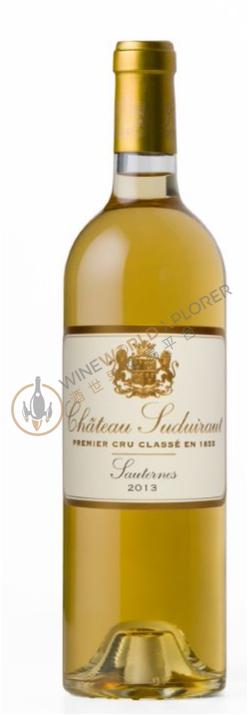
Suduiraut 2013
 View analysis


Description
Tasting notes

Reviewed by: Neal Martin
The 2013 Suduiraut has one of the more flamboyant bouquets of the vintage, one that is actually reminiscent of de Fargues. There are copious Satsuma and dried honey scents, hints of beeswax and almond that keep your snout in the glass. The palate is very well-balanced with a viscous entry, just a touch of marmalade and quince coming through, and then blossoming toward the weighty finish that shows just a touch more oak at the moment. This is an excellent Suduiraut.
Reviewed by: Neal Martin
Aromas of grapefruit, confit citron, kumquat and lemon preface the 2013 Suduiraut, a moderately weighted, juicy and textured wine with a sweet, layered and round palate that segues into a long, mineral and fresh finish. Harvested between September 26 and October 30 in three tries, with a yield of 15 hectoliters per hectare, this blend of 93% Sémillon and 7% Sauvignon Blanc was matured for 20 months in 45% new oak barrels and 55% one-year-old oak barrels. It contains 145 grams per liter of residual sugar.
Reviewed by: Antonio Galloni
The 2013 Suduiraut, picked from 3 to 30 October, is destined to be overshadowed by the succeeding two vintages. The aromatics feel very “contained” with beeswax, dried honey and light spicy aromas, although it is missing the intensity of a top vintage. The palate is very well balanced with crisp acidity, very focused and poised, perhaps a more approachable Suduiraut since it does not possess the concentration of a more benevolent growing season. But it retains admirable freshness and there is a lovely spiciness, a dab of ginger on the aftertaste. 13.6% alcohol, 145gm/L residual sugar. Tasted at the Suduiraut vertical at the château.
About the Producer
Chateau Suduiraut is located in the Sauternes appellation of Bordeaux, France, which is known for its rich and sweet noble rot wines. In the 1855 Sauternes and Barsac classification, Chateau d'Yquem is the only Grand Cru classed. In addition, Château d'Yquem occupies one of the 11 châteaux in the classification that are now classified as First Growths. Château d'Yquem has a long history: in 1580, Nicole d'Allard married Leonard de Suduiraut, and the estate took its name. At the end of the 18th century, Jean Joseph Duroy, nephew of a member of the Suduiraut family at the time, took over the estate and renamed it Cru du Roy. The emblems of the two families, Xukin and Duroy, were then fused together to form the present logo of the estate. The château is a palace-like building with a beautiful garden designed by Le Notre, Louis XIV's royal gardener. In 1992, AXA Millesimes, the French insurance giant, acquired Château Xugene. AXA Millesimes is a powerful group that also owns the famous Pauillac estate, Chateau Pichon-Longueville Baron. The 91 hectares of vineyards at Château d'Azur are planted with 90% Semillon and 10% Sauvignon Blanc. Semillon is a traditional Sauternes variety that provides powerful structure to the wines, bringing full-bodied flavors of roasted dried fruit, acacia flowers and candied fruit. Sauvignon Blanc, on the other hand, is an aromatic, high-acid variety with very distinctive aromas of citrus and white peach that add complexity and acidity to the wine. The soil is predominantly gravelly and sandy clay, which is permeable and poor, requiring the vines to be deeply rooted to extract nutrients, resulting in low yields and intense mineral flavors. The gravel on the surface of the soil also absorbs heat from the sun, which helps the grapes to ripen more quickly. The planting density of the Chateau Xugene vineyard is 7,000 vines per hectare, and the average age of the vines is 35 years. The vineyard's proximity to the Ciron and Garonne rivers, with cool nights, early autumn mists and sunny afternoons, creates the right conditions for the formation and growth of noble rot. The winery prunes the grapes short to allow the bunches to enjoy more sunlight. The harvesting process at Château Xugene is very delicate, with workers picking the grapes in batches according to the infestation of noble rot, and even picking a vine several times. In terms of winemaking, Château Xukin adheres to a philosophy of quality first. The hand-picked grapes undergo a long and careful pressing process to obtain the most aromatic juice, and the fermented wine is then matured in oak barrels for 18-24 months to allow the wine to develop its full flavor and structure. The winery has strict quality standards, and if the quality of the wine does not meet expectations in a given year, the winery will even abandon the production of the year's main wine, Chateau Suduiraut, Sauternes, France. Currently, Chateau Suduiraut produces three sweet white wines, including Chateau Suduiraut, Sauternes, France, which are the best expression of the Sauternes terroir.
1948(1)1983(3)1988(1)1989(2)1990(1)1996(3)1997(1)2001(6)2003(4)2004(2)2005(4)2006(2)2009(3)2010(8)2011(3)
Package Size
12 x 75cl
