
 Wine Advisor



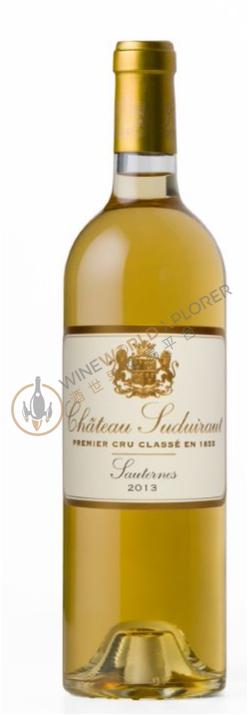
Suduiraut 2016
 View analysis


Description
Tasting notes

Reviewed by: Lisa Perrotti-Brown
The pale lemon-gold colored 2016 Suduiraut features vibrant lime blossom, candied peel, white peaches, guava and exotic spice notes on the nose with nuances of marzipan and crème brûlée. Rich, layered and powerful in the mouth, it has a gorgeous creamy texture, lovely vibrancy and a long, spicy finish.
Reviewed by: Lisa Perrotti-Brown
Pale lemon in color, the 2016 Suduiraut rocks up out of the glass with notes of honey-drizzled peaches, lime cordial and orange oil plus wafts of lanolin, pie crust and crushed rocks. The palate packs a wallop with intense flavor layers and a gorgeous texture, finishing with fantastic freshness.
Reviewed by: Neal Martin
The 2016 De Suduiraut has a complex bouquet with rich and honeyed fruit, superb mineral tension and wonderful detail. The palate is well balanced with crisp acidity, great tension and a lovely touch of spice towards the very persistent finish. What a great Suduiraut in the making here, so full of character and complexity, and yet you still feel as if it has something up its sleeve.
Reviewed by: Antonio Galloni
The 2016 Suduiraut is fabulous. Crème brȗlée, passion fruit, tangerine peel and exotic floral notes all race out of the glass. I marvel at how Suduiraut can deliver so much flavor intensity and yet remain so gracious and classy. The 140 grams of residual sugar are very well integrated. This is such a gorgeous wine.
Reviewed by: Neal Martin
The 2016 Suduiraut has a clean, pure bouquet of light marmalade, lanolin, curry leaf and wax resin aromas, quite complex and developing more and more personality with aeration. The palate is well balanced, with a viscous, almost unctuous opening. This is richer and heavier in style than many 2016 Sauternes, but maybe just loses some detail and precision on the finish. Tasted blind at the annual Southwold tasting.
Reviewed by: Yohan Castaing
Yet another distinctive wine, the 2016 Suduiraut reveals a spicy, intriguing bouquet of licorice, acacia, curry leaf and exotic fruits mingled with ripe orchard fruits. Moderately weighted and perfectly balanced, it’s charming and round, with a rich core of fruit framed by a gastronomic bitterness and a long, penetrating finish. Harvested in four tries between September 22 and November 9, with a yield of 22 hectoliters per hectare, it was matured for 18 months in 50% new oak barrels and 50% one-year-old barrels and contains 140 grams per liter of residual sugar.
Reviewed by: Antonio Galloni
The 2016 Suduiraut is fabulous. Crème brȗlée, passion fruit, tangerine peel and exotic floral notes all race out of the glass. I marvel at how Suduiraut can deliver so much flavor intensity and yet remain so gracious and classy. The 140 grams of residual sugar are very well integrated. This is such a gorgeous wine.
About the Producer
Chateau Suduiraut is located in the Sauternes appellation of Bordeaux, France, which is known for its rich and sweet noble rot wines. In the 1855 Sauternes and Barsac classification, Chateau d'Yquem is the only Grand Cru classed. In addition, Château d'Yquem occupies one of the 11 châteaux in the classification that are now classified as First Growths. Château d'Yquem has a long history: in 1580, Nicole d'Allard married Leonard de Suduiraut, and the estate took its name. At the end of the 18th century, Jean Joseph Duroy, nephew of a member of the Suduiraut family at the time, took over the estate and renamed it Cru du Roy. The emblems of the two families, Xukin and Duroy, were then fused together to form the present logo of the estate. The château is a palace-like building with a beautiful garden designed by Le Notre, Louis XIV's royal gardener. In 1992, AXA Millesimes, the French insurance giant, acquired Château Xugene. AXA Millesimes is a powerful group that also owns the famous Pauillac estate, Chateau Pichon-Longueville Baron. The 91 hectares of vineyards at Château d'Azur are planted with 90% Semillon and 10% Sauvignon Blanc. Semillon is a traditional Sauternes variety that provides powerful structure to the wines, bringing full-bodied flavors of roasted dried fruit, acacia flowers and candied fruit. Sauvignon Blanc, on the other hand, is an aromatic, high-acid variety with very distinctive aromas of citrus and white peach that add complexity and acidity to the wine. The soil is predominantly gravelly and sandy clay, which is permeable and poor, requiring the vines to be deeply rooted to extract nutrients, resulting in low yields and intense mineral flavors. The gravel on the surface of the soil also absorbs heat from the sun, which helps the grapes to ripen more quickly. The planting density of the Chateau Xugene vineyard is 7,000 vines per hectare, and the average age of the vines is 35 years. The vineyard's proximity to the Ciron and Garonne rivers, with cool nights, early autumn mists and sunny afternoons, creates the right conditions for the formation and growth of noble rot. The winery prunes the grapes short to allow the bunches to enjoy more sunlight. The harvesting process at Château Xugene is very delicate, with workers picking the grapes in batches according to the infestation of noble rot, and even picking a vine several times. In terms of winemaking, Château Xukin adheres to a philosophy of quality first. The hand-picked grapes undergo a long and careful pressing process to obtain the most aromatic juice, and the fermented wine is then matured in oak barrels for 18-24 months to allow the wine to develop its full flavor and structure. The winery has strict quality standards, and if the quality of the wine does not meet expectations in a given year, the winery will even abandon the production of the year's main wine, Chateau Suduiraut, Sauternes, France. Currently, Chateau Suduiraut produces three sweet white wines, including Chateau Suduiraut, Sauternes, France, which are the best expression of the Sauternes terroir.
1948(1)1983(3)1988(1)1989(2)1990(1)1996(3)1997(1)2001(6)2003(4)2004(2)2005(4)2006(2)2009(3)2010(8)2011(3)2013(4)2014(2)2015(2)
Package Size
