
 Wine Advisor



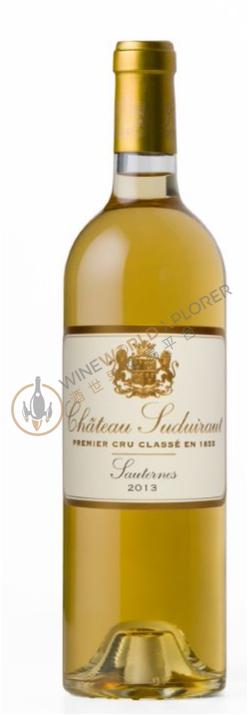
Suduiraut 2005
 View analysis


Description
Tasting notes

Reviewed by: Neal Martin
Tasted blind at the 10-Year On Tasting in Sauternes. The 2005 Château Suduiraut seemed a little out of sorts at first, although it comes together with honey, barley sugar, orange blossom and mineral scents that become more delineated as its aerates. The palate is very intense on the entry. There is a beautiful line of acidity that cuts through the viscous fruit, though the finish does not quite exude the precision of a top vintage, but still delivers that sense of class one expects from this address.
Reviewed by: Neal Martin
Tasted on several occasions, most recently at home, the Suduiraut ’05 is slightly deeper in colour than the 2007. It has a rich, almost decadent nose with a conspicuous veneer of vanillary new oak underneath which lies honey, orange peel, creme brulee, passion fruit and a touch of spice. It has very fine definition, although it does not have the clarity of the 2007. The palate is rich and mellifluous, rounded and sumptuous with slightly lower acidity than the 2007, a real fatness here redolent of the 2003 or 1990. There are touches of lemongrass inflecting the finish and giving the finish and edginess that counterbalances that 163gms/L residual sugar. Tasted July 2011.
Reviewed by: Neal Martin
This does not quite match the showing back in 2006 at the vertical but it remains an impressive wine. Touches of yellow flowers and citrus fruits on the Germanic nose. The palate is rich and unctuous, laden with botrytis with great intensity on the finish. Minerally aftertaste. This is a great Suduiraut. Tasted April 2007.
Reviewed by: Neal Martin
Just 600mm fell at Suduiraut this year (the average is 900mm.) A storm in September caused some noble rot. A limpid silvery hue. An attractive nose of coconut, lemon with a touch of orange peel. Moderate intensity: reminds me of a Mosel Auslese in some ways. The palate is very concentrated, oily, unctuous mouthfeel yet very minerally underneath. Good acidity. Notes of lemon, orange zest, lime. More linear on the finish, a little unresolved at the moment with an alcoholic finish (shows a bit of heat.) Tasted June 2006.
Reviewed by: Neal Martin
Tasted single blind at Southwold. This is closed on the nose with dried lychee and pineapple, but there is a hefty dose of SO2 here. The palate is much better, very pure botrytized fruit, honey, quince, honeysuckle. Has a refined manner to it. Nice kick on the finish, touch of citrus fruit, dried mango and lovely botrytis. Exudes confidence! Drink 2012-2030+ Tasted January 2009.
Reviewed by: Yohan Castaing
With 163 grams per liter of residual sugar, the 2005 Suduiraut exhales a deep, complex bouquet of exotic fruits, pineapple, apricot and spices despite a slight touch of volatile acidity. Medium to full-bodied, rich and concentrated with a stunning "rôti"—the French term for the consequence of noble rot—it’s satiny and chiseled with racy acids and a long, mineral and saline finish underlined by gastronomic bitterness. This splendid Sauternes, a blend of 97% Sémillon and 3% Sauvignon Blanc, was matured for 18 months in oak barrels (65% new and 35% one year) and was harvested in four tries between September 26 and October 17.
Reviewed by: Neal Martin
The 2005 Suduiraut has been a curious vintage, the bottles perhaps a little more inconsistent than ensuing years. Here, the bouquet takes a while to get going, eventually settling with dried honey, quince and a touch of baking powder. The palate is well balanced with a viscous opening, delivering notes of orange rind, Clementine, white pepper and a slight nuttiness that becomes more conspicuous towards the finish. To be honest, I think a better Suduiraut could have been made in this propitious growing season and three or four bottles have tasted better in the past. 163gm/L residual sugar. Tasted at the Suduiraut vertical at the château.
About the Producer
Chateau Suduiraut is located in the Sauternes appellation of Bordeaux, France, which is known for its rich and sweet noble rot wines. In the 1855 Sauternes and Barsac classification, Chateau d'Yquem is the only Grand Cru classed. In addition, Château d'Yquem occupies one of the 11 châteaux in the classification that are now classified as First Growths. Château d'Yquem has a long history: in 1580, Nicole d'Allard married Leonard de Suduiraut, and the estate took its name. At the end of the 18th century, Jean Joseph Duroy, nephew of a member of the Suduiraut family at the time, took over the estate and renamed it Cru du Roy. The emblems of the two families, Xukin and Duroy, were then fused together to form the present logo of the estate. The château is a palace-like building with a beautiful garden designed by Le Notre, Louis XIV's royal gardener. In 1992, AXA Millesimes, the French insurance giant, acquired Château Xugene. AXA Millesimes is a powerful group that also owns the famous Pauillac estate, Chateau Pichon-Longueville Baron. The 91 hectares of vineyards at Château d'Azur are planted with 90% Semillon and 10% Sauvignon Blanc. Semillon is a traditional Sauternes variety that provides powerful structure to the wines, bringing full-bodied flavors of roasted dried fruit, acacia flowers and candied fruit. Sauvignon Blanc, on the other hand, is an aromatic, high-acid variety with very distinctive aromas of citrus and white peach that add complexity and acidity to the wine. The soil is predominantly gravelly and sandy clay, which is permeable and poor, requiring the vines to be deeply rooted to extract nutrients, resulting in low yields and intense mineral flavors. The gravel on the surface of the soil also absorbs heat from the sun, which helps the grapes to ripen more quickly. The planting density of the Chateau Xugene vineyard is 7,000 vines per hectare, and the average age of the vines is 35 years. The vineyard's proximity to the Ciron and Garonne rivers, with cool nights, early autumn mists and sunny afternoons, creates the right conditions for the formation and growth of noble rot. The winery prunes the grapes short to allow the bunches to enjoy more sunlight. The harvesting process at Château Xugene is very delicate, with workers picking the grapes in batches according to the infestation of noble rot, and even picking a vine several times. In terms of winemaking, Château Xukin adheres to a philosophy of quality first. The hand-picked grapes undergo a long and careful pressing process to obtain the most aromatic juice, and the fermented wine is then matured in oak barrels for 18-24 months to allow the wine to develop its full flavor and structure. The winery has strict quality standards, and if the quality of the wine does not meet expectations in a given year, the winery will even abandon the production of the year's main wine, Chateau Suduiraut, Sauternes, France. Currently, Chateau Suduiraut produces three sweet white wines, including Chateau Suduiraut, Sauternes, France, which are the best expression of the Sauternes terroir.
1948(1)1983(3)1988(1)1989(2)1990(1)1996(3)1997(1)2001(6)2003(4)2004(2)
Package Size
