
 Wine Advisor



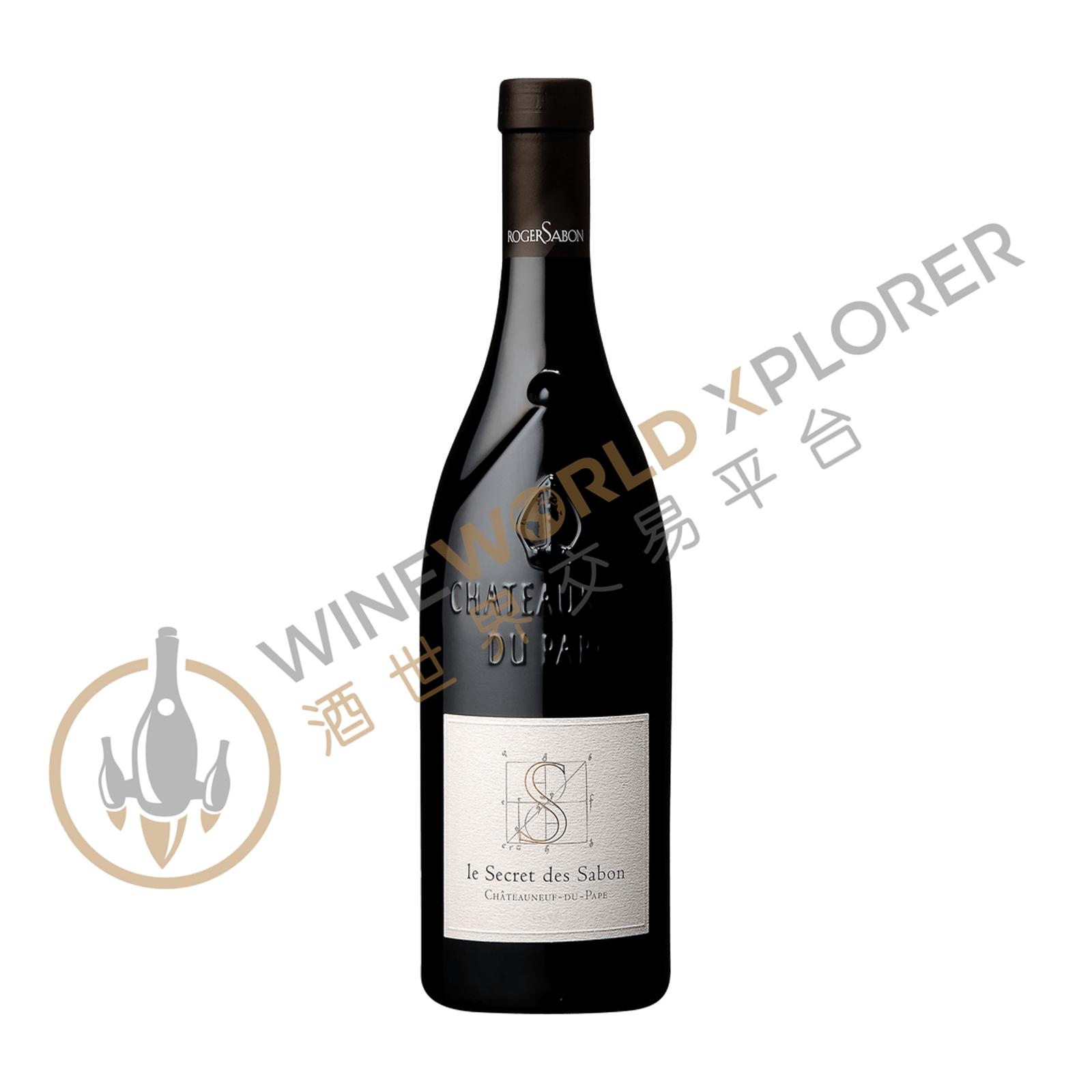
Roger Sabon, Chateauneuf du Pape Le Secret des Sabon 2009
 View analysis


Description
Tasting notes

Reviewed by: Josh Raynolds
Glass-staining ruby. A highly perfumed, seductive bouquet displays dark berry preserves, gingerbread, licorice and apricot, heightened by an assertive floral quality. Broad, palate-staining black raspberry and cassis flavors are lifted by a tangy mineral note and complicated by floral and Asian spice qualities. Benefits from aeration and offers an intriguing interplay of richness and vivacity. The long, sweet finish echoes the floral and spice notes and shows no rough edges. This is 100% grenache, from vines planted in the late 1800s and from a yield that was reportedly under 10 hl/ha.
Reviewed by: Joe Czerwinski
Tasted at the estate, the 2009 Chateauneuf du Pape le Secret de Sabon is going through a bit of a middle-aged awkwardness at the moment. It's still dark in color, with barely visible bricking, and exhibits a fair bit of lively black cherry fruit, but it has begun to develop notes of dried fig, roasted meat and dark chocolate. Full-bodied and rich, it's savory and long on the finish. Drink or hold, but not for too much longer.
Reviewed by: Jeb Dunnuck
Similar to the 2011, the 2009 Chateauneuf du Pape Le Secret du Sabon sports a big, full-bodied and mouthfilling profile to go with ripe blackberry, kirsch, flowers, licorice and earth-like aromas and flavors. Although showing incredibly well on release, and also at this tasting, I've had a few disappointing bottles of this from my cellar. Nevertheless, all of the wines have been fabulously concentrated and rich, so I suspect it just needs another year or two in the cellar. A brilliantly run estate, Domaine Roger Sabon covers close to 44 acres that are spread throughout the appellation, and the wines have been made by Didier Negron since 2001. This retrospective focused on their top cuvee, the Secret du Sabon, which is a field blend of roughly (the exact blend is a "secret") 90% Grenache with the balance other permitted varieties (from 100-year-old vines), that-s aged all in 600-liter barrels. While the first released vintage was 1998, they also bottled a small amount in 1990, 1995 (the only one I've tasted? superb) and 1996. Importer: Eric Solomon, European Cellars, Charlotte, NC: tel. (704) 358-1565
Reviewed by: Robert M. Parker, Jr.
I was surprised by the softness and silkiness of the 2009 Chateauneuf du Pape Le Secret des Sabon. Largely a field blend estimated to be about 90% Grenache and 10% unidentifiable varieties, it is the most accessible Secret des Sabon made to date. Its opaque purple color is followed by hints of coffee beans, new saddle leather and vanillin (the wine was aged in 1-2 year old 600-liter demi-muids), broad, powerful, concentrated flavors and tannins in the finish. Although it is not currently strutting its stuff as impressively as the Prestige, it should come close to equaling that wine in another 3-4 years, although it is drinkable already. This beauty of full-bodied power and great Provencal complexity should last for two decades. This estate has been at the top of its game for many years and any partisan of Rhone Valley wines (especially the southern Rhone) who has not yet tried a wine from Domaine Roger Sabon should make every effort to do so. They produce four separate Chateauneuf du Pape cuvees and have hit home runs in both 2009 and 2010, the finest back-to-back vintages I have ever tasted from this 42-acre estate run by the large Sabon family, in this case, Jean-Jacques, Julien, Gilbert and Denis. They own 15 parcels spread throughout the appellation, most of them concentrated in the western and eastern sectors north of the village. The brilliant 2009s are among the finest of the vintage. Importer: Eric Solomon, European Cellars, Charlotte, NC: tel. (704) 358-1565
Reviewed by: Robert M. Parker, Jr.
An extremely limited offering is the 2009 Chateauneuf du Pape Le Secret des Sabon. Representing the essence of Provence and Chateauneuf du Pape, it was produced from yields of 20 hectoliters per hectare and was aged in 600-liter demi-muids. The rich black/purple-hued 2009 boasts notes of smoke, tobacco leaf, creosote, black currants, black cherries, graphite and a scent that made me think of tea-soaked duck. Massive and rich in the mouth, this full-bodied powerhouse needs 3-4 years of cellaring and should last 25-30+ years. Sadly, it is almost impossible to find this extraordinary wine. (Not yet released) Domaine Roger Sabon has long been a reference point for classic Chateauneuf du Pape, and they have added a slight twist to their traditionally made cuvees with the Secret des Sabon, made from an ancient field blend (although over 90% is clearly Grenache), and aged in small barrels and demi-muids. A little new oak is used with the Cuvee Prestige, but these are primarily classic, old style Chateauneuf du Papes. There are many members of the Sabon family in this appellation and all of them have the Midas touch when it comes to making wine. Established in 1921, this estate has over 42 acres scattered among 15 separate parcels in Chateauneuf du Pape. As I reported last year, their 2008s are among the strongest wines of the vintage. Jean-Jacques Sabon and his son-in-law, Didier Negron (the oenologist here since 2001), hit pay dirt in 2009, a vintage that is not far off the pace of their spectacular 2007s. Importer: Eric Solomon, European Cellars, Charlotte, NC: tel. (704) 358-1565
About the Producer
Our family estate was founded in 1952 by Roger SABON. After several generations, the estate has reached a total surface of 50 hectares split up on both sides of the Rhône. 18 hectares belong to the Châteauneuf-du-Pape appellation, on the left bank of the River, and spread over 14 different plots. On the right bank, the vineyard includes 12 hectares in the Lirac appellation, 6 hectares of Côtes-du-Rhône and 14 hectares of Vin de France. This diversity allows us to develop and offer our customers a wide choice of wines with varied profiles White wines represent around 5% of the total production. Grapes are hand harvested, placed into boxes and undergo a light pneumatic pressing. The juices obtained are then protected from the oxidation phenomena in order to preserve the aromatic potential. Our “Vins de France” will then ferment in stainless steel vats, whereas our Châteauneuf-du-Pape blanc will ferment in 25 hl wooden tanks. The fermentation temperature is regulated around 16 ° C. Vinification of red wine is characterized, for our entire wine range, by a long period of maceration of the grapes in vats, associated with a relatively gentle extraction. Destemming – the removal of the vegetal part of the bunch- is required here in order to prevent any problem during maceration.
