
 Wine Advisor



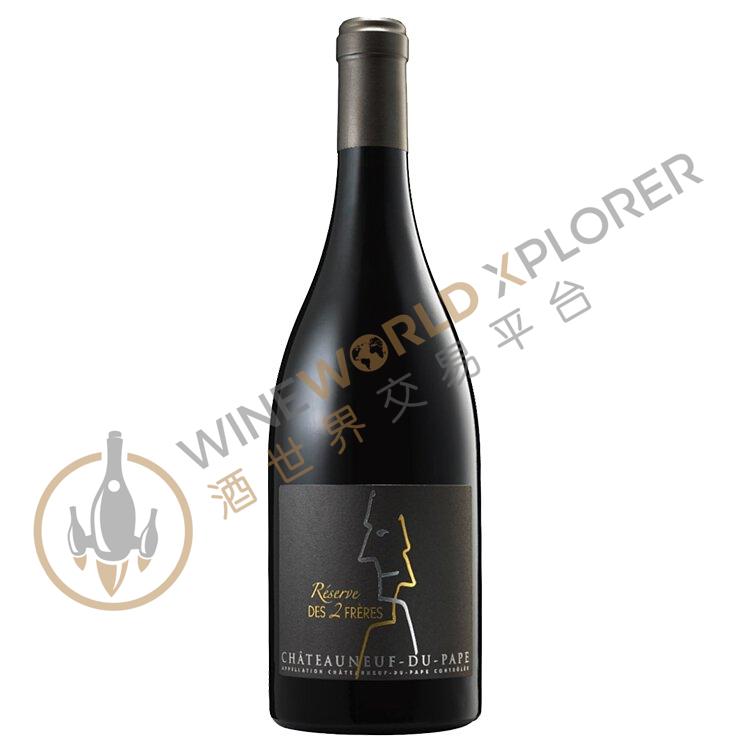
Pierre Usseglio, Chateauneuf Du Pape Reserve des Deux Freres 2010
 View analysis


Description
Tasting notes

Reviewed by: Robert M. Parker, Jr.
The 2010 Chateauneuf du Pape Reserve des Deux Freres is a completely different animal because of the major loss of Grenache crop due to poor flowering. This blend of 65% Grenache and 35% Syrah makes it an unusual Des Deux Freres, since this wine has usually been close to 100% Grenache. The high percentage of Syrah gives the wine a very black/purple color, more blackberry, cassis and acacia flowers, with some smoked meat and Peking duck notes. Rich, full-bodied, thick, and unctuously textured, it is a more modern-styled Chateauneuf du Pape, especially with so much Syrah in the final blend. Nevertheless, it is a brilliant wine that should drink well for 20-25 years given the freshness and good acids these 2010s possess. (Not yet released) One of the top estates in Chateauneuf du Pape is that of the two brothers Thierry and Jean-Pierre Usseglio. Their cellars are just north of the village, adjacent to the walls of the ruins of the pope’s palace. They have nearly 60 acres under vine, and make three cuvees of red wines in the top vintages. Their classic or traditional cuvee is made from a blend of mostly Grenache, with some Syrah, Cinsault and Mourvedre. Their mostly unoaked, tank-fermented and -aged Mon Aieul comes from very old vines (about 85 years of age) and tiny yields, while their cuvee Des Deux Freres leans in a slightly more modern direction for Chateauneuf du Pape, with 50% of it now aged in small barrels, 20% in tank, and 30% in 600-liter demi-muids. Importer: Alain Junguenet, Wines of France, Mountainside, NJ; tel. (908) 654-6173
Reviewed by: Robert M. Parker, Jr.
The 2010 Chateauneuf du Pape Reserve des Deux Freres is composed of 90% Grenache and 10% Syrah, and came in at 15.5% alcohol. In most vintages, this is basically the same cuvee as the Mon Aieul but with more press wine and the use of small new oak casks for aging the Syrah component. Approximately 30% stems were used in the fermentation. The 2010 is closed and nearly inaccessible at present. Full-bodied and massive with an inky/purple color, it reveals notes of smoked meats, blackberries, blueberries, flowers and subtle toast in the background. An enormous unctuosity and viscosity give the wine a palate gripping mouthfeel as the tannins are coated with glycerin. This brilliant wine needs at least 5-7 years of cellaring, and should keep for three decades thereafter. This branch of the Usseglio family left their home in Italy following the Great Depression in 1929 to make a new start producing wine in southern France. This estate has been on “fire” qualitatively since 1998. The cellars of brothers Jean-Pierre and Thierry Usseglio, who own approximately 60 acres of vines, are located adjacent to the ruins of a pope’s palace on the northeastern side of the village. In top vintages, such as 2010, 2009 and 2007, three Chateauneuf du Pape cuvees are produced. These include a traditional cuvee, the old vine, tank- and foudre-aged Mon Aieul and the more modern-styled Reserve des Deux Freres. Lirac is on the acquisition list of many Chateauneuf du Pape proprietors for a number of reasons: (1) they live close by; (2)the terroir is not dissimilar from that of Chateauneuf du Pape; and (3) the land is relatively cheap. The 2010 Chateauneuf du Papes are superb. Importer: Alain Junguenet, Wines of France, Mountainside, NJ; tel. (908) 654-6173
About the Producer
Château USSEGLIO is a family business. Its creation dates back to 1948, when grandfather Francis USSEGLIO left Italy to work as a wine worker at CHATEAUNEUF-DU-PAPE. 1949 saw his first harvest come out of the oven. Later, his son Pierre took over the estate and expanded Château Pierre Usseglio. Today it covers 39 hectares, 24 hectares of Châteauneuf-du-Pape red, 1 hectare of Châteauneuf-du-Pape white, 6 hectares of Lillac red, 6 hectares of Côtes du Rhône and 2 hectares of French wines developed by Pierre's two sons. Jean-Pierre and Thierry Usseglio. The estate produces the traditional Châteauneuf-du-Pape red wines. Half of the vines in the winery are over 65 years old and the other half are about 40 years old. The yields obtained are very low, around 20 to 25 hectolitres per hectare, depending on the vintage. Harvesting is always done by hand and sorting is selective. The grapes are destemmed and the winemaking process lasts 25 to 30 days, after which the wine is aged 50% in oak barrels for 12 days and 50% in concrete tanks. The result is a powerful, rounded wine with intense aromas of red fruit and spices. The wines of this estate are best consumed over a period of 5 to 10 years, depending on taste and vintage.
