
 Wine Advisor



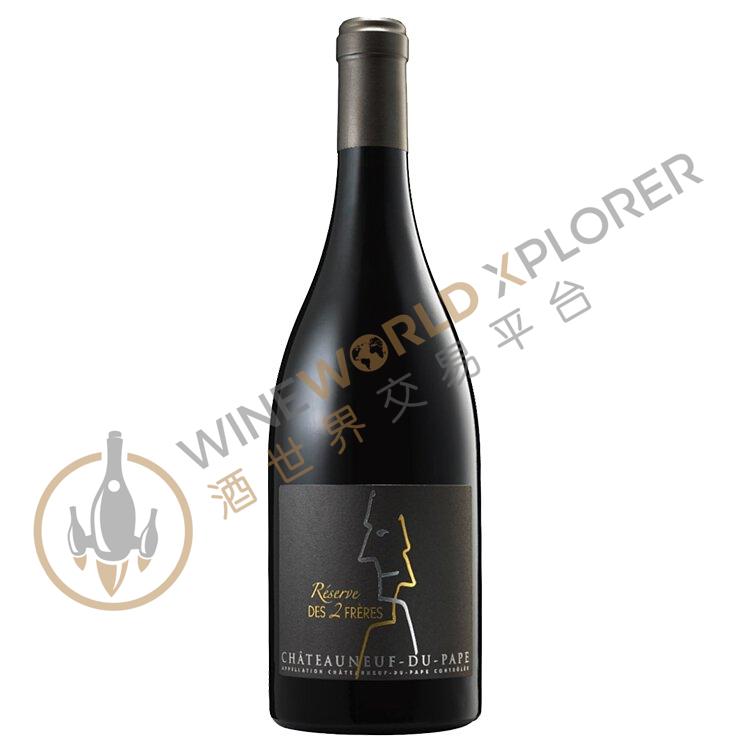
Pierre Usseglio, Chateauneuf Du Pape Reserve des Deux Freres 2003
 View analysis


Description
Tasting notes

Reviewed by: Robert M. Parker, Jr.
The Usseglio brothers make a selection of the finest lots of the Mon Aieul which becomes the limited production (4,000 bottles) cuvee of Chateauneuf du Pape Reserve des Deux Freres. Aged 40% in tank and 60% in 1, 2, and 3-year old barrels and demi-muids, it is Chateauneuf du Pape on steroids. The 2003 reminded me of the Cuvee da Capo from Domaine du Pegau. A wine of extraordinary concentration, amazing length, and awesome levels of fruit, glycerin, and alcohol (16.5%), it will last for 2-3 decades. In addition to the selection of the finest lots of Mon Aieul, they also add press wine to this bottling, which should ensure even greater longevity. It boasts an inky/purple color as well as an extraordinary perfume of smoke, scorched earth, roasted meats, blackberries, blueberries, and creme de cassis. Unctuously-textured and full, it is about as compelling as an old vine, low production wine can be. Given its low acidity, extraordinary glycerin, and amazing ripeness, it appears accessible, but I suspect it will firm up in the bottle. Anticipated maturity: 2007-2025+. One cannot say enough about the extraordinary qualitative revolution that has quietly taken place at this well-known domaine north of the village of Chateauneuf du Pape. While father Pierre is still on the premises, providing a wealth of historical information about the vineyards, his two sons, Jean-Pierre and Thierry, have introduced two extra-special cuvees, pushing this estate into the top echelon of Chateauneuf du Pape producers. This domaine is notorious for incredibly low yields (in 2003 yields were 25-28 hectoliters per hectare) as well as traditional winemaking. They now have a small, 1-hectare plot of vin de pays planted with Grenache, Cabernet Sauvignon, Alicante, and Merlot. Importer: Alain Junguenet, Wines of France, Mountainside, NJ; tel. (908) 654-6173
Reviewed by: Robert M. Parker, Jr.
The limited cuvee 2003 Chateauneuf du Pape Reserve des Deux Freres, which is aged 40% in tank and 60% in one-, two-, and three-year-old barrels as well as large demi-muids, is essentially the same as Mon Aieul, but additional press wine is added. This beefs the wine up to an even more extraordinarily concentrated character. This is another of the Chateauneuf du Papes of the vintage, a wine of remarkable length and prodigious levels of richness. It is no wimpy wine at 16.5% alcohol, but you would never know that from tasting it. Dense purple to the rim, with a huge nose of scorched earth, blackberry and blueberry liqueur, creme de cassis, roasted meat juices, and a hint of Provencal herbs interwoven with licorice and a touch of balsamic, it is voluptuously textured, with striking body, low acidity, and amazing concentration. This fabulous bottle of Chateauneuf du Pape should drink well for 20+ years. I asked the Usseglios what the most abundant years were over the last decade, and was told they were 2000, followed by 1999, 1998, 2001, 2003, and the smallest crop of all, 2004. Importer: Alain Junguenet, Wines of France, Mountainside, NJ; tel. (908) 654-6173
About the Producer
Château USSEGLIO is a family business. Its creation dates back to 1948, when grandfather Francis USSEGLIO left Italy to work as a wine worker at CHATEAUNEUF-DU-PAPE. 1949 saw his first harvest come out of the oven. Later, his son Pierre took over the estate and expanded Château Pierre Usseglio. Today it covers 39 hectares, 24 hectares of Châteauneuf-du-Pape red, 1 hectare of Châteauneuf-du-Pape white, 6 hectares of Lillac red, 6 hectares of Côtes du Rhône and 2 hectares of French wines developed by Pierre's two sons. Jean-Pierre and Thierry Usseglio. The estate produces the traditional Châteauneuf-du-Pape red wines. Half of the vines in the winery are over 65 years old and the other half are about 40 years old. The yields obtained are very low, around 20 to 25 hectolitres per hectare, depending on the vintage. Harvesting is always done by hand and sorting is selective. The grapes are destemmed and the winemaking process lasts 25 to 30 days, after which the wine is aged 50% in oak barrels for 12 days and 50% in concrete tanks. The result is a powerful, rounded wine with intense aromas of red fruit and spices. The wines of this estate are best consumed over a period of 5 to 10 years, depending on taste and vintage.
