
 Wine Advisor



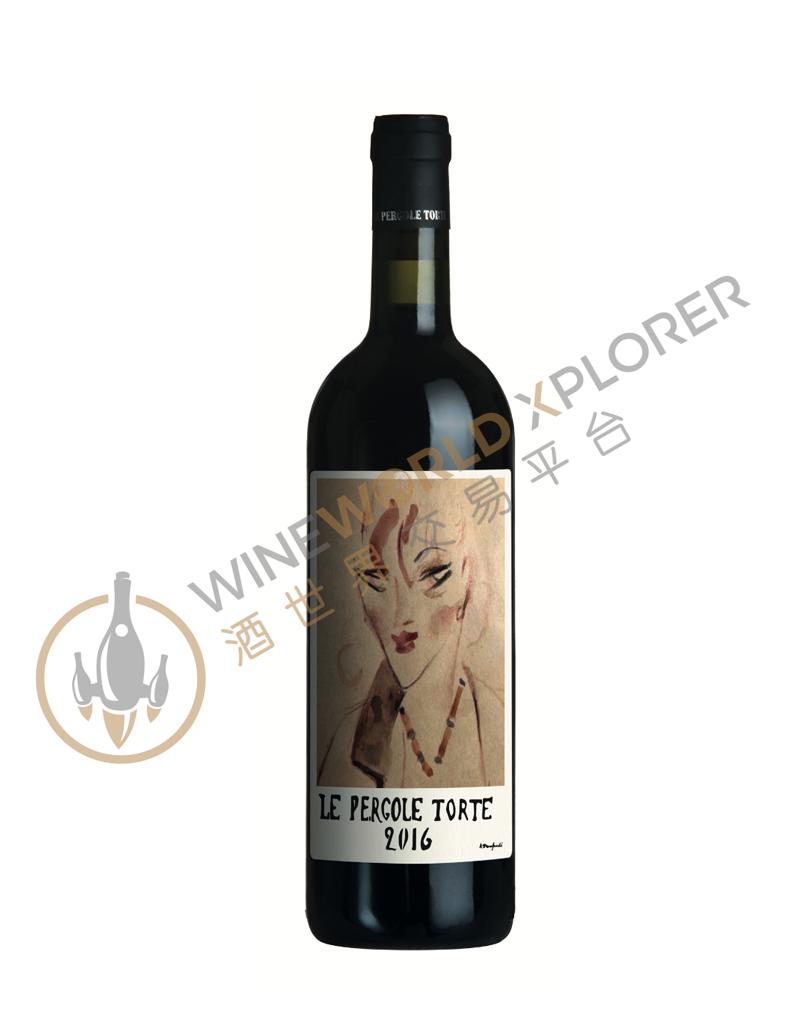
Montevertine, Le Pergole Torte 1996
 View analysis


Description
Tasting notes

Reviewed by: Antonio Galloni
The 1996 Le Pergole Torte is frankly hard to taste after the first four wines in this vertical. Today it is impossibly young. Firm tannins, beautifully delineated aromatics and refined layers of fruit are all present in the 1996, but the wine needs time. It is another classic, cool-vintage wine from Montevertine. There is considerable freshness and energy in the 1996, but this will always be a relatively linear Pergole Torte. Anticipated maturity: 2014-2036. In a week during which I tasted most of the reference point Sangioveses and Sangiovese-based reds, one wine stuck out - Le Pergole Torte. Quite honestly, I had a hard time getting to sleep the night I tasted these wines. They were that viscerally thrilling. Le Pergole Torte isn’t a great Tuscan or Italian wine. It is simply one of the world’s elite wines. Montevertine is located in Radda, one of the coolest, highest-altitude spots in Chianti Classico. When I visited last April, the vineyards were noticeably more backward in their development relative to what I had seen in the other parts of the region. Le Pergole Torte was a groundbreaking wine when it was first conceived by proprietor Sergio Manetti in the early 1970s. At the time, Chianti Classico regulations obligated producers to include white grapes in their wines. Manetti dreamt of something else, a wine that would explore the greatness of Sangiovese. Along with noted oenologist Giulio Gambelli, Manetti created Le Pergole Torte, one of the first 100% Sangioveses made in Chianti Classico. Because it was made outside of appellation laws, the wine carried the humblest of all designations, ‘Vino da Tavola’ But the wine itself was fabulous, and the public soon caught on. In 1990 Manetti bottled a wine that would become an icon, the 1990 Riserva, which was an absurdity on paper, given the inherent contradiction of the terms ‘Vino da Tavola’ and ‘Riserva.’ To add to the irony, years later the Chianti Classico laws were updated. The obligatory use of complimentary white and red grapes was abolished, which meant Le Pergole Torte could be a Chianti Classico, but Manetti never returned to the appellation that had snubbed him. One of the misconceptions about Le Pergole Torte is that it is a single-vineyard wine. That was true of the early years up to the late 1980s. By 1990 Pergole Torte had become a selection of the estate’s best fruit across several parcels, although it wasn’t until 2001 that the fruit was sourced from the same basic complement of vineyards that is used today. Sadly, Sergio Manetti passed away in 2000. Manetti’s son Martino took over and adds that he is fully responsible for every wine beginning with the 2001, where he personally made all the decisions. Le Pergole Torte is vinified in cement. The wine is aged for one year in French oak barrels followed by a second year in cask. Martino Manetti isn’t afraid to call them as he sees them. Manetti describes 1985 and 1997 – both heavily touted years – as overrated. For this tasting, Manetti pulled a selection of vintages from his cellar, all based on their personal significance to him. Montevertine Le Pergole Torte Key Points: 1. 100% Sangiovese from the estate’s best fruit across all of the estate’s vineyards 2. Traditional vinification in cement. Aging first in French oak barrels, then cask 3. A delicate, refined expression of Sangiovese 4. Aging potential: 30+ years
Reviewed by: Monica Larner
I started off loving the 1996 Le Pergole Torte, but I ended my evaluation on a less enthusiastic note. The bouquet opens slowly with dark fruit tones and spicy notes of cinnamon and clove. Dusty mineral tones also appear as subtle accents with licorice and balsam herb. Its aromatic presentation is less yielding and fluid overall. The wine offers complexity and depth, but in a more monolithic and one-directional manner. There is little polarity here. The wine ends on a sweetly pungent note with candied fruit, canned peach and honey. It finishes on a heavy note.
Reviewed by: Antonio Galloni
The 1996 Le Pergole Torte, from a cold, late-ripening vintage, is powerful and explosive, with a compelling interplay of ripeness, sweetness and structure. Cherry jam, wild flowers, mint, sweet spices, menthol and licorice meld together in the glass, while lavender, rose petal, quinine and a host of aromatic notes come alive on the finish. Although striking today, the 1996 will drink well for another 10-15 years, perhaps longer. Today, it is truly special. In 1996, the harvest began on October 21, exceedingly late, even for Montevertine.
Reviewed by: Antonio Galloni
I started off loving the 1996 Le Pergole Torte, but I ended my evaluation on a less enthusiastic note. The bouquet opens slowly with dark fruit tones and spicy notes of cinnamon and clove. Dusty mineral tones also appear as subtle accents with licorice and balsam herb. Its aromatic presentation is less yielding and fluid overall. The wine offers complexity and depth, but in a more monolithic and one-directional manner. There is little polarity here. The wine ends on a sweetly pungent note with candied fruit, canned peach and honey. It finishes on a heavy note.
Reviewed by: Antonio Galloni
The 1996 Le Pergole Torte is frankly hard to taste after the first four wines in this vertical. Today it is impossibly young. Firm tannins, beautifully delineated aromatics and refined layers of fruit are all present in the 1996, but the wine needs time. It is another classic, cool-vintage wine from Montevertine. There is considerable freshness and energy in the 1996, but this will always be a relatively linear Pergole Torte.
About the Producer
Montevertein is located in the heart of the Chianti hills, in the town of Lada, Chianti, at 425 meters above sea level. The winery grows only the indigenous grape varieties of the Chianti region: Sangiovese, Canajolo and Corolino. At Montevertine, simplicity, respect, extreme attention to detail and expertise are the guiding principles that inspire our daily work. The winery's winemaking methods are very traditional and have remained so since the first harvest. Hand-picked grapes are fermented in glassed concrete vats without temperature control, and pumping is done twice daily to keep the cap of the skins moist and thus more gently extract the tannins from the skins. After racking, malolactic fermentation begins in glassed concrete vats. Once fermentation is complete, the wine is left in barrels for approximately two years. The wines are aged in 5.5 to 18 hectoliter Slavonian and Ariel oak barrels and 225 liter Ariel oak barrels. The wines of the winery are never filtered, they are bottled by gravity.
1988(1)1990(1)1992(1)1993(3)1994(2)1995(1)
Package Size
