Wine Advisor



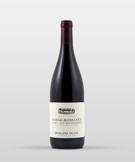
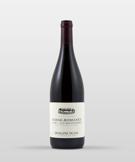
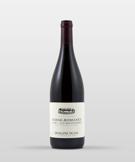
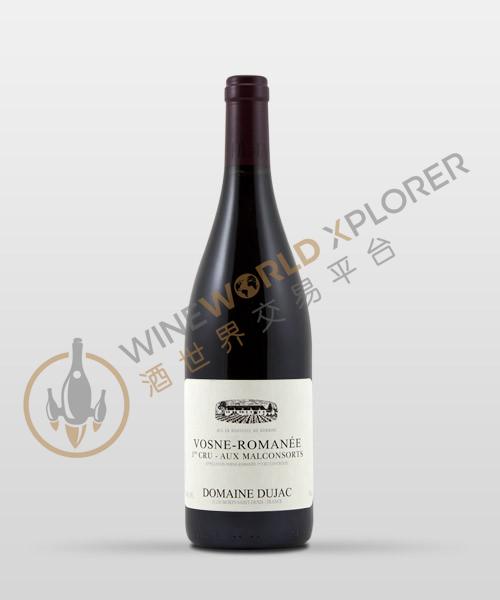
Domaine Dujac, Vosne Romanee 1er Cru Aux Malconsorts 2006
 View analysis


Description
Tasting notes

Reviewed by: David Schildknecht
The Dujac 2006 Vosne-Romanee Les Malconsorts – displays a more consistently sweet (cherry, plum, and blackberry) fruit and refined, creamier texture than the corresponding Beaux Monts. Black tea, star anise, honey, and brown spices along with a raw meat undertone add intrigue, and this finishes with polished, even soothing length. All in all, it struck me that Malconsorts and Beaux Monts were exhibiting a role reversal on this occasion. This is certainly grand cru in its complexity and length, and should I suspect merit following for the better part of a decade. Jeremy Seysses only destemmed a minority of his 2006 fruit, and in some appellations none. The results demonstrate that Dujac got things ripe – not to mention right – in a challenging vintage, with a collection that need not fear comparison with 2005 at this address. (Perhaps, if anything, 2005 ought to look to its laurels!) The team here started picking only on September 23, and then very meticulously and selectively. Clos de la Roche, for example, was picked in two passes nearly a week apart. The top wines came in at between 13 and 13.5% natural alcohol, with minimal chaptalization employed in some instances to extend fermentation. "Color and flavor extraction was easy," says Seysses, "and we did more punch-downs than in 2005, because we felt quite confident of our material. The fruit is fresh and crisp, but not green, and we had no jamminess. It was just right. There's very little to complain about." Indeed! Importer: The Sorting Table, Napa, CA; tel. (415) 491-4724
Reviewed by: Neal Martin
Tasted at the IMW horizontal at Vintners Hall. The nose seems rather closed but it has good definition: blackberry leaf, a touch of raspberry, limestone, apple-blossom and cold streams. The palate is medium-bodied, fine tannins, lovely poise and elegance here. Good acidity and clarity with light black fruit, blueberry and a touch of black plum and smoke towards the finish. Cohesive throughout, this is a very fine Malconsorts with nice persistency on the finish. Drink 2010-2025. Tasted March 2009.
Reviewed by: Antonio Galloni
The 2006 Vosne-Romanée Aux Malconsorts 1er Cru, the maiden vintage from Domaine Dujac after their acquisition from the break-up of Thomas Moillard, has a pale hue with some bricking on the rim. The bouquet is relatively light but well defined, slightly ferrous in style with an earthy tincture. The palate is well balanced with a fine bead of acidity, though it lacks the backbone one seeks from a Malconsorts. A slightly bitter edge marks the leathery finish. It is acceptable considering it is already 12 years old and their second vintage, but clearly the Seysses family were destined to produce superior wines from this vineyard. Tasted at Flint Wines's Domaine Dujac tasting in London.
About the Producer
Domaine Dujac is managed by the Seysses family. It was founded in 1967 by Jacque Seyesses. At the beginning, Château Dujac had only 4.5 hectares of vineyards in Morey-Saint-Denis. The vineyards were expanded with the purchase of Echezeaux, Bonnes MaresChambertin, Romanee St Vivant and Vosene-Romanee. The estate also owns 1.95 hectares of vineyards in the Clos de la Roche, where the vines are on average 45 to 50 years old. The estate also has 1.45 hectares of vineyards in Clos Saint-Denis, with vines of an average age of 45 to 50 years. In 2005, Château Dujac, together with Chateau de Puligny-Montrachet, acquired Domaine Charles Thomas, acquiring Charles Thomas' shares in the vineyards of Chambertin, Vosne- Romanee and other vineyards. However, the estate sold some of its vineyards after the purchase in order to finance the purchase. However, this acquisition allowed the estate to expand to around 15.5 hectares. Under Jacques' leadership, Château Dujac has developed very well. The grapes were pressed whole and the must was fermented in new oak barrels, and in 1999, when Jacques handed over the running of the estate to his son, the way the estate was made changed dramatically: the grapes were sometimes destemmed and the barrels used for fermentation were probably only 25% new oak. However, the estate's Grand Cru wines are still matured in new oak barrels, while the Grand Cru wines are matured in 60% to 80% new oak barrels. Bottling usually takes place in February or March of the following year. The estate produces around 4,650 bottles/hectare of wine.