Wine Advisor



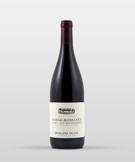
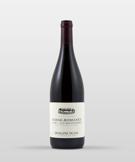
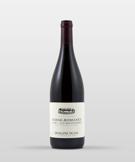
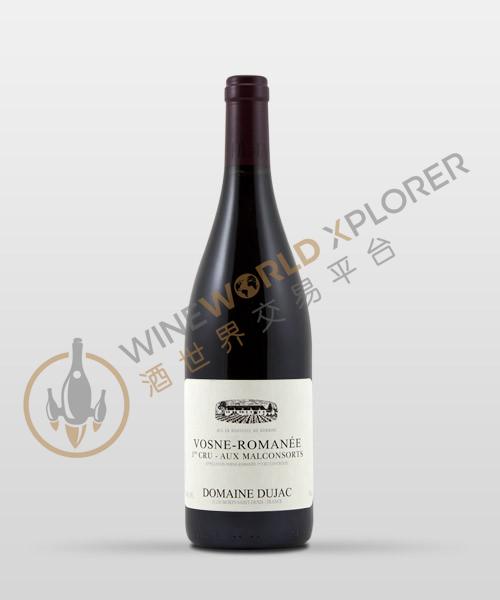
Domaine Dujac, Vosne Romanee 1er Cru Aux Malconsorts 2008
 View analysis


Description
Tasting notes

Reviewed by: Antonio Galloni
The 2008 Vosne-Romanee Aux Malconsorts blossoms with endless layers of dark fruit. This is a totally sensual, enveloping wine graced with finesse, class and elegance. The Malconsorts is a pretty open 2008, but it will be even better in another few years’ time. Anticipated maturity: 2016-2028. This is a beautiful set of wines from Dujac. The harvest started on September 10 and ended on the 17th. Jeremy Seysses told me he wanted to pick on the early side in order to preserve freshness. In a similar vein, Seysses kept the fermentations short and gentle to avoid over-extracting. I also tasted a handful of 2008s, which are beautiful wines that are true to type and site. In 2008 the estate finished its conversion to fully organic farming originally started in 2001. Dujac fans have a lot to look forward to in these two vintages. Importers: The Sorting Table, Napa, CA; tel. (415) 491-4724; Martin Scott Wines, Little Neck, NY; tel. (516) 327-0808; Chambers & Chambers, San Francisco, CA; tel. (415) 642-5500
Reviewed by: Neal Martin
Tasted at Flint Wine’s 2008 horizontal in London. This has a lovely, leafy bouquet with touches of Earl Grey and dried herbs interlacing the cranberry leaf and raspberry fruit. The palate is medium-bodied with fine tannins, very good weight and cohesion with an assertive yet refined kirsch-tinged finish. There is great terroir showing here and an effortless quality. Tasted February 2011.
Reviewed by: Neal Martin
Tasted out of barrel at the Domaine. There is still some SO2 loitering around on the nose, but the palate is vibrant, racy and minerally, more powerful than the Beaumonts, complex red-berried fruit (raspberry, wild strawberry and cranberry) leading to a very pure, kirsch tinged finish that delights the senses. Great persistency. Excellent. Drink now-2025. Tasted November 2009.
Reviewed by: David Schildknecht
The Dujac 2008 Vosne-Romanee Les Malconsorts – which I tasted right after bottling – mingles Latakia tobacco, peat, black tea, resin, smoked meat, and dark berries in a strikingly pungent as well as (for its vintage) impressively ripe nose. Noteworthy, too, is its sheer viscosity and density of raw material; the oily cling of blackberry, cassis, and brown spices; as well as more of the aforementioned pungency in the finish. This really sets my mouth to vibrating and my imagination to burning with a desire to revisit in 4-6 years. I’m confident it will be worth following through at least its twelfth birthday. What a contrast this makes to the relative delicacy of the corresponding 2007! The Dujac 2008s were not racked until last December, and bottling took place January through March. “The malic acid numbers were high-ish, but not significantly higher than in, say, 2006 or 2001,” says Jeremy Seysses in an effort to explain what he admitted were “for us, excessively late malos. I have a feeling it was a lack of nutrients that were wash out,” he continues, since, after all, “it rained a lot in 2008” with, he adds, “poor fruit set proving to be the vintage’s saving grace. I think we would actually have had less to harvest (i.e. worth keeping) if we had had a better fruit set. There was rot, but can you find it in any of the wines? That’s a credit to how far Burgundy has come along in terms of sorting” (which Dujac does exclusively in the vineyard, not on sorting tables – the name of their U.S. importer ironically notwithstanding). “I didn’t love my lack of options in 2007,” says Seysses of the preceding season, “so we picked early – earlier even than in 2003.” In vinification “we decided not to force too much, and just to keep it charming,” which is exactly how I thought the wines turned out. “At Domaine Dujac, we’re never been that attached to deep color, so we’re quite tolerant (in that regard), and the least thing we wanted to do was make hard wines. I de-stemmed more (than usual, or than in 2008). The fruit felt fragile, so in barrel I kept the wines under a bit more free sulfur than usual, which reinforced their lightness.” Seysses opines that 2007 was not a year in which old selections displayed their overall superiority to clones, because “if yo(‘re Pinots) were riper earlier, you were ripe while it was raining,” whereas in 2008 you could scarcely get too much ripeness. Importer: The Sorting Table, Napa, CA; tel. (415) 491-4724
Reviewed by: Antonio Galloni
The 2008 Vosne-Romanée Aux Malconsorts 1er Cru has a more backward, more fruit-driven bouquet when compared directly to the 2006 and 2007 with high-toned Morello cherry and raspberry confit scents, just a touch feistier than I expect. The palate is juicier and displays more body than the first two vintages. There is more presence and a little more grip, although still falling short of what I would expect from this vineyard. However, its initially understated opening, discretely builds in the mouth and leads to an edgy, ferrous finish with touches of brown spice and orange rind lingering on the aftertaste. This is a very competent Aux Malconsorts, though the following two vintages are clearly better. Tasted at Flint Wines Malconsort vertical.
About the Producer
Domaine Dujac is managed by the Seysses family. It was founded in 1967 by Jacque Seyesses. At the beginning, Château Dujac had only 4.5 hectares of vineyards in Morey-Saint-Denis. The vineyards were expanded with the purchase of Echezeaux, Bonnes MaresChambertin, Romanee St Vivant and Vosene-Romanee. The estate also owns 1.95 hectares of vineyards in the Clos de la Roche, where the vines are on average 45 to 50 years old. The estate also has 1.45 hectares of vineyards in Clos Saint-Denis, with vines of an average age of 45 to 50 years. In 2005, Château Dujac, together with Chateau de Puligny-Montrachet, acquired Domaine Charles Thomas, acquiring Charles Thomas' shares in the vineyards of Chambertin, Vosne- Romanee and other vineyards. However, the estate sold some of its vineyards after the purchase in order to finance the purchase. However, this acquisition allowed the estate to expand to around 15.5 hectares. Under Jacques' leadership, Château Dujac has developed very well. The grapes were pressed whole and the must was fermented in new oak barrels, and in 1999, when Jacques handed over the running of the estate to his son, the way the estate was made changed dramatically: the grapes were sometimes destemmed and the barrels used for fermentation were probably only 25% new oak. However, the estate's Grand Cru wines are still matured in new oak barrels, while the Grand Cru wines are matured in 60% to 80% new oak barrels. Bottling usually takes place in February or March of the following year. The estate produces around 4,650 bottles/hectare of wine.