Wine Advisor



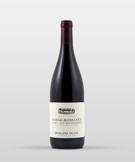
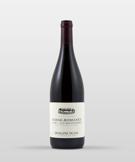
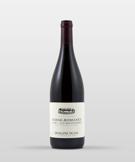
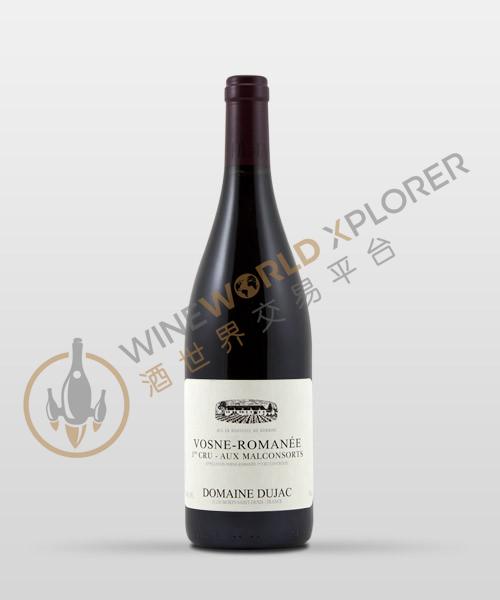
Domaine Dujac, Vosne Romanee 1er Cru Aux Malconsorts 2005
 View analysis


Description
Tasting notes

Reviewed by: Neal Martin
A recent acquisition after the purchase of Domaine Thomas Moillard’s holdings, their plot is in the upper part of Malconsorts close to Sylvain Cathiard’s. It has a wonderful, minerally nose of wild strawberry, granite and a touch of vine tomatoes. Superb delineation. The palate is harmonious, but much more backward than the Beaumonts but with great length. Touch of brown sugar lingers on the finish with that sorbet like character coming through. Huge potential. Drinking 2010-2018. Tasted January 2007.
Reviewed by: David Schildknecht
From one of their many celebrated new acquisitions, the Dujac 2005 Vosne-Romanee Les Malconsorts offers smoky, tea-like, floral, and spicy aromas. It comes to the palate relatively firm though texturally refined and strikingly clear, full of deep, smoke-licked meaty flavors, ripe though slightly tart raspberry, flowers, tea and spices. Palpably dense, this nevertheless avoids any sense of heaviness or opacity, but instead displays lift and liveliness. The amazingly long finish really builds momentum, confirming how much is held in reserve for the long haul, and that this is about meats, stones, flowers, herbs and spices – in short very much about Pinot’s mysteries, but very little about fruits or berries. The already rich array of crus at Domaine Dujac has recently been augmented on two fronts. The purchase (along with de Montille) of the Societe Civile du Clos de Thorey (Thomas-Moillard) has brought them a raft of choice parcels including three new grand cru holdings (for a staggering total of eight). Meanwhile, they have expanded their negociant arm (with control over harvest and green harvest a prerequisite) to supplement in particular their volumes of village-level wine. (Those wines – labeled “Dujac Fils & Pere” – are signified in the above listing with “FP”. In fact, due to a legal technicality, the 2005 vintage wines from the properties newly acquired by the domaine – but not subsequent vintages – will also read “Fils & Pere” rather than “Domaine”.) Even with California-trained oenologist Diana Seysses (nee Snowden) joining her husband Jeremy and in-laws Jacques and Alec, and with a new winery (though at the old address) I wonder at how they are able to keep up with the magnitude of their responsibilities. Yet despite so many parcels and vines new to them this year, the results are consistently outstanding and at times astounding. Much of the vinification – increasingly as one goes up the hierarchy of crus – was of whole clusters. Malos finished (finally) by November and the wines were bottle in December and January. Importer: The Sorting Table, Napa, CA; tel.(415) 491 4724
About the Producer
Domaine Dujac is managed by the Seysses family. It was founded in 1967 by Jacque Seyesses. At the beginning, Château Dujac had only 4.5 hectares of vineyards in Morey-Saint-Denis. The vineyards were expanded with the purchase of Echezeaux, Bonnes MaresChambertin, Romanee St Vivant and Vosene-Romanee. The estate also owns 1.95 hectares of vineyards in the Clos de la Roche, where the vines are on average 45 to 50 years old. The estate also has 1.45 hectares of vineyards in Clos Saint-Denis, with vines of an average age of 45 to 50 years. In 2005, Château Dujac, together with Chateau de Puligny-Montrachet, acquired Domaine Charles Thomas, acquiring Charles Thomas' shares in the vineyards of Chambertin, Vosne- Romanee and other vineyards. However, the estate sold some of its vineyards after the purchase in order to finance the purchase. However, this acquisition allowed the estate to expand to around 15.5 hectares. Under Jacques' leadership, Château Dujac has developed very well. The grapes were pressed whole and the must was fermented in new oak barrels, and in 1999, when Jacques handed over the running of the estate to his son, the way the estate was made changed dramatically: the grapes were sometimes destemmed and the barrels used for fermentation were probably only 25% new oak. However, the estate's Grand Cru wines are still matured in new oak barrels, while the Grand Cru wines are matured in 60% to 80% new oak barrels. Bottling usually takes place in February or March of the following year. The estate produces around 4,650 bottles/hectare of wine.