Wine Advisor



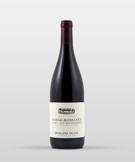
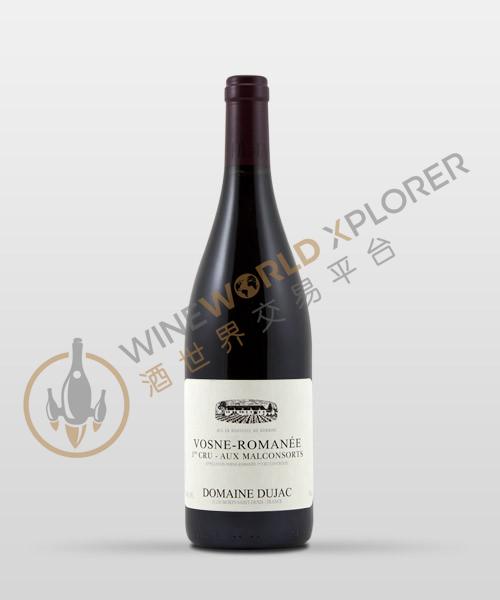
Domaine Dujac, Vosne Romanee 1er Cru Aux Malconsorts 2013
 View analysis


Description
Tasting notes

Reviewed by: Neal Martin
The 2013 Vosne-Romanée 1er Cru les Malconsorts has a touch more fruit on the nose than the Beaux Monts '13 at this point, the aromatics possessing more volume. The palate is well balanced and very harmonious with lacy tannins that belie that depth of fruit underneath. This has more breeding than the Beaux Monts at this stage and certainly more persistency in the mouth.
Reviewed by: Antonio Galloni
The 2013 Vosne-Romanée Aux Malconsorts is a gorgeous wine for so many reasons, but especially in the way it constantly changes in the glass. At times, it is the wine's dark, spiced fruit that is pushed forward, while at other times, the bright, citrus-inflected notes typical of the year are more prominent. An exquisite, beautifully layered Burgundy, the 2013 Malconsorts is going to provide fabulous drinking for several decades. Next to the Beaux Monts, the Malconsorts its quite a bit more reserved. Jeremy Seysses notes that yields here were lower than in 2012.
Reviewed by: Neal Martin
The 2013 Vosne-Romanée Aux Malconsorts 1er Cru is actually more immediate and pleasurable than its 2012 counterpart at the moment: vigorous red berry fruit intermingled with orange pith and crushed stone. It is not as complex as say, the 2010, but it conveys a feeling of just wanting to give pleasure. The palate is medium-bodied with succulent ripe tannin intertwined with a fine thread of acidity. There is a mixture of red and black fruit, a hint of spice and sous-bois that segue into a very harmonious finish. The 2013 is endowed with more weight and concentration than I was expecting. Could it be the dark horse of the Aux Malconsorts thus far? Very impressive. Tasted at Flint Wines's Domaine Dujac tasting in London.
Reviewed by: Stephen Tanzer
Healthy dark red. Pure, soil-driven aromas of raspberry, red licorice, flint and cumin. Sexy, silky and superconcentrated, showing a mineral pungency to the red and darker berry and spice flavors. This has near-grand cru volume and weight. Finishes plush and fine-grained, with serious tannins arriving late to provide firm grip. The rising finish leaves behind an exhilarating suggestion of exotic fruits.
Reviewed by: Stephen Tanzer
(85% vendange entier): Bright, deep red. Much less expressive on the nose today than the Beaux Monts, with a strong element of stony minerality dominating. Densely packed and sweet but youthfully reserved, showing less obvious fruit today than the Beaumonts. But this savory, classically dry wine spreads out horizontally to coat the palate on the very long, slowly mounting back end. This fruit was picked at 11.9% potential alcohol.
Reviewed by: Antonio Galloni
The 2013 Vosne-Romanée Aux Malconsorts 1er Cru is actually more immediate and pleasurable than its 2012 counterpart at the moment: vigorous red berry fruit intermingled with orange pith and crushed stone. It is not as complex as say, the 2010, but it conveys a feeling of just wanting to give pleasure. The palate is medium-bodied with succulent ripe tannin intertwined with a fine thread of acidity. There is a mixture of red and black fruit, a hint of spice and sous-bois that segue into a very harmonious finish. The 2013 is endowed with more weight and concentration than I was expecting. Could it be the dark horse of the Aux Malconsorts thus far? Very impressive. Tasted at Flint Wines's Domaine Dujac tasting in London.
About the Producer
Domaine Dujac is managed by the Seysses family. It was founded in 1967 by Jacque Seyesses. At the beginning, Château Dujac had only 4.5 hectares of vineyards in Morey-Saint-Denis. The vineyards were expanded with the purchase of Echezeaux, Bonnes MaresChambertin, Romanee St Vivant and Vosene-Romanee. The estate also owns 1.95 hectares of vineyards in the Clos de la Roche, where the vines are on average 45 to 50 years old. The estate also has 1.45 hectares of vineyards in Clos Saint-Denis, with vines of an average age of 45 to 50 years. In 2005, Château Dujac, together with Chateau de Puligny-Montrachet, acquired Domaine Charles Thomas, acquiring Charles Thomas' shares in the vineyards of Chambertin, Vosne- Romanee and other vineyards. However, the estate sold some of its vineyards after the purchase in order to finance the purchase. However, this acquisition allowed the estate to expand to around 15.5 hectares. Under Jacques' leadership, Château Dujac has developed very well. The grapes were pressed whole and the must was fermented in new oak barrels, and in 1999, when Jacques handed over the running of the estate to his son, the way the estate was made changed dramatically: the grapes were sometimes destemmed and the barrels used for fermentation were probably only 25% new oak. However, the estate's Grand Cru wines are still matured in new oak barrels, while the Grand Cru wines are matured in 60% to 80% new oak barrels. Bottling usually takes place in February or March of the following year. The estate produces around 4,650 bottles/hectare of wine.