
 Wine Advisor



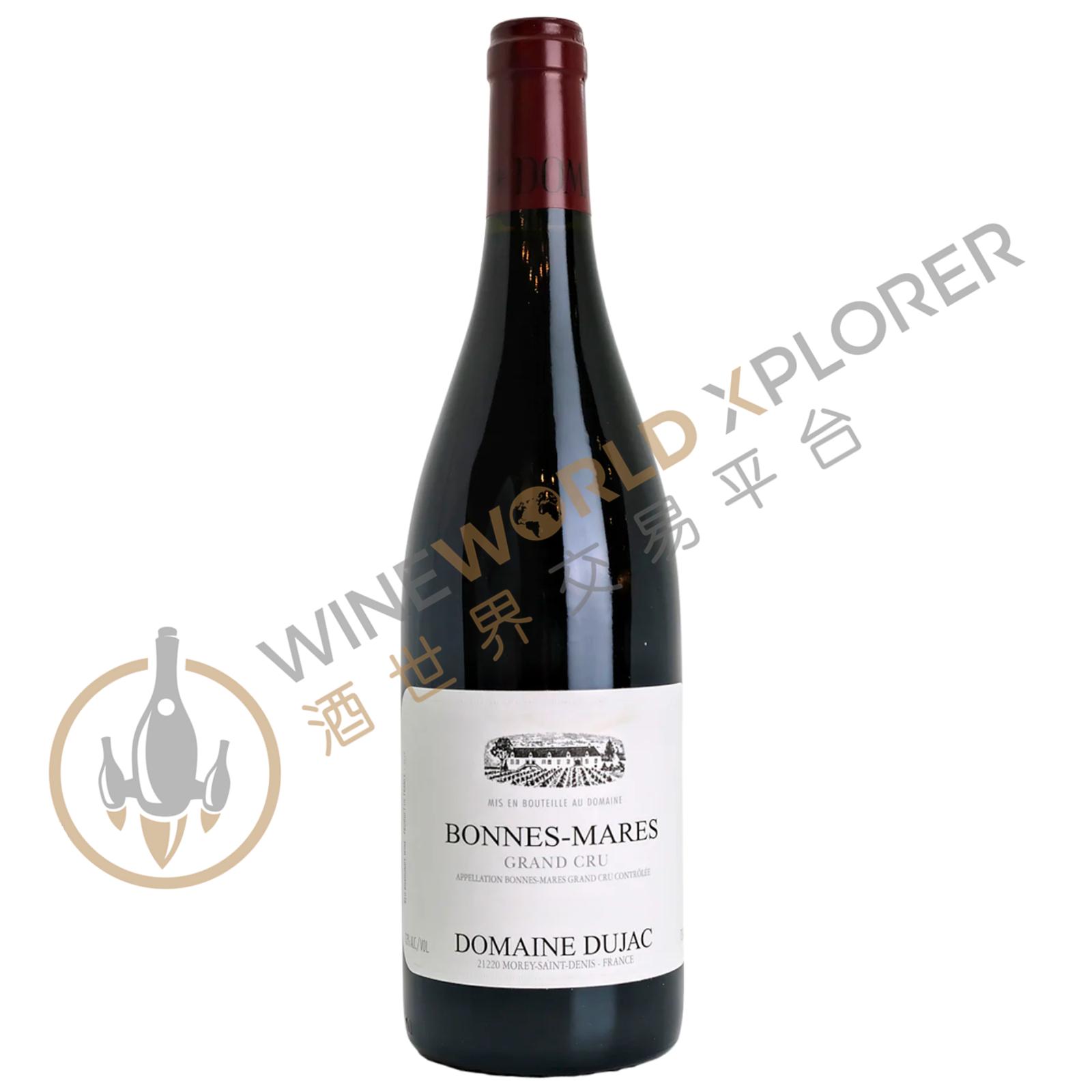
Domaine Dujac, Bonnes Mares Grand Cru 2022
 View analysis


Description
Tasting notes

Reviewed by: Neal Martin
The 2022 Bonnes-Mares Grand Cru probably has more of a favorable bouquet at this prenatal stage of all of Dujac's wines: raspberry and wild strawberry, crushed limestone, touches of rose petal - it just blossoms in the glass and conveys a sense of grandeur. The palate is medium-bodied with a velvety smooth texture, a perfectly judged line of acidity counterbalancing the density. There is a sense of completeness to this Bonnes-Maress that ranks amongst the best of this vintage. Regal.
Reviewed by: William Kelley
The 2022 Bonnes-Mares Grand Cru is brilliant, unwinding in the glass with notes of raspberries, cherries, blood orange, exotic spices, vine smoke and rose petals. Full-bodied, seamless and concentrated, with a deep and multidimensional core, sweet tannins and lively acids, it concludes with a long, mineral finish.
About the Producer
Domaine Dujac is managed by the Seysses family. It was founded in 1967 by Jacque Seyesses. At the beginning, Château Dujac had only 4.5 hectares of vineyards in Morey-Saint-Denis. The vineyards were expanded with the purchase of Echezeaux, Bonnes MaresChambertin, Romanee St Vivant and Vosene-Romanee. The estate also owns 1.95 hectares of vineyards in the Clos de la Roche, where the vines are on average 45 to 50 years old. The estate also has 1.45 hectares of vineyards in Clos Saint-Denis, with vines of an average age of 45 to 50 years. In 2005, Château Dujac, together with Chateau de Puligny-Montrachet, acquired Domaine Charles Thomas, acquiring Charles Thomas' shares in the vineyards of Chambertin, Vosne- Romanee and other vineyards. However, the estate sold some of its vineyards after the purchase in order to finance the purchase. However, this acquisition allowed the estate to expand to around 15.5 hectares. Under Jacques' leadership, Château Dujac has developed very well. The grapes were pressed whole and the must was fermented in new oak barrels, and in 1999, when Jacques handed over the running of the estate to his son, the way the estate was made changed dramatically: the grapes were sometimes destemmed and the barrels used for fermentation were probably only 25% new oak. However, the estate's Grand Cru wines are still matured in new oak barrels, while the Grand Cru wines are matured in 60% to 80% new oak barrels. Bottling usually takes place in February or March of the following year. The estate produces around 4,650 bottles/hectare of wine.
