
 Wine Advisor



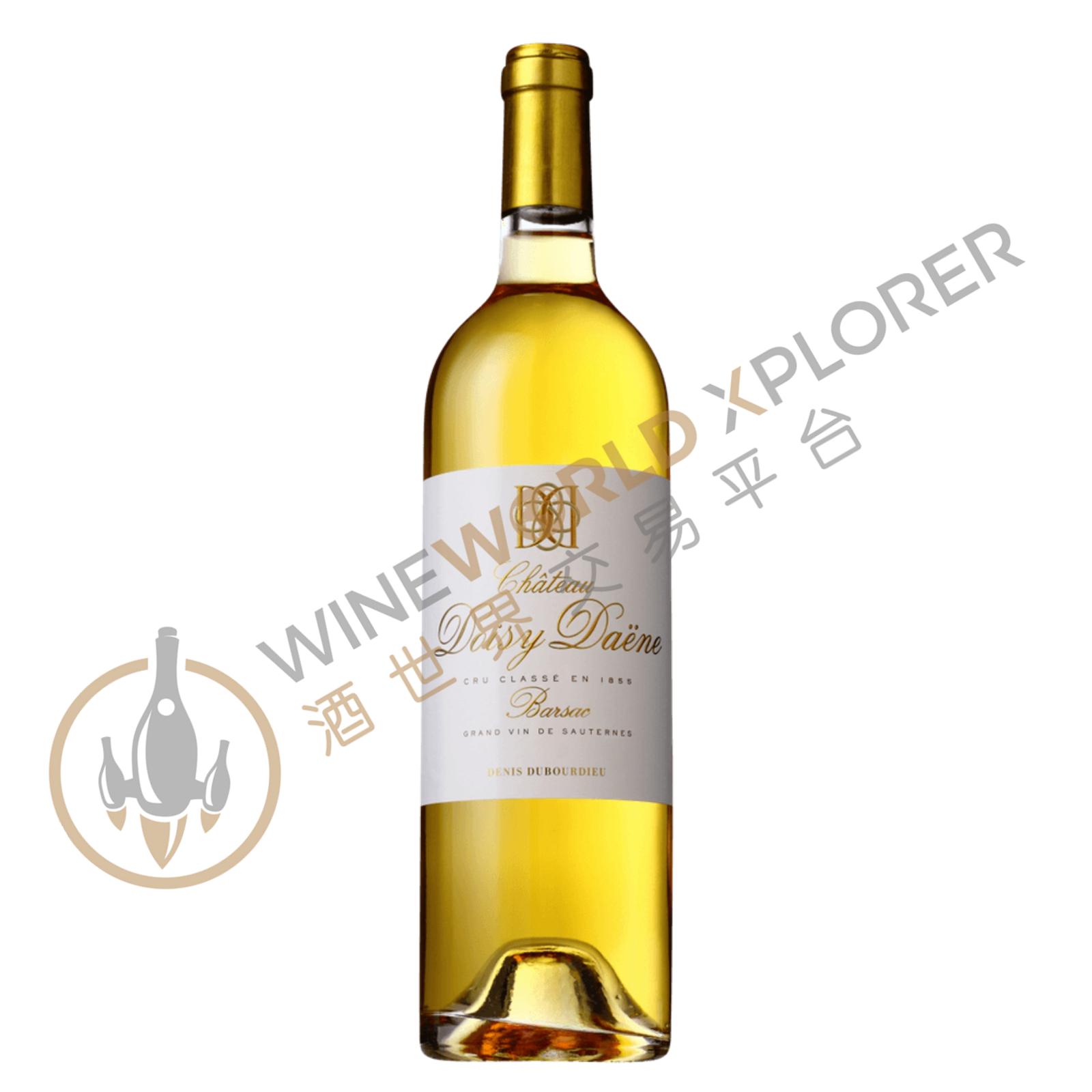
Doisy Daene 2016
 View analysis


Description
Tasting notes

Reviewed by: Lisa Perrotti-Brown
Pale lemon colored, the 2016 Doisy Daëne is a little closed, opening out to reveal lime blossoms, Mandarin peel, candied lemon peel and peach blossoms scents with hints of spice cake and crème brûlée. The palate offers an incredible array of citrus and spice layers with fantastic freshness and length.
Reviewed by: Neal Martin
The 2016 Doisy Daene has a generous bouquet with lovely scents of yellow flower and peach infusing the honeyed aromas. The palate is fresh on the entry with tangy orange peel and peachy notes, very harmonious and viscous in texture, leading to a detailed and persistent finish that is one of the most delicious I can remember from this Barsac estate. This wine will always be tinged with sadness, since it coincides with the passing of Denis Dubourdieu. But his legacy will live on in his wines, including this one, which is magnificent.
Reviewed by: Lisa Perrotti-Brown
Pale lemon in color, the 2016 Doisy Daëne leaps from the glass with flamboyant tropical fruit notions of warm pineapple, guava and passion fruit plus hints of lime cordial, fungi, musk perfume and chalk dust. The palate has loads of earthy/savory layers with great concentration and depth, finishing long and lively.
Reviewed by: Antonio Galloni
The 2016 Doisy-Daëne is all subtlety and finesse. White flowers, mint, orchard fruit, lemon confit and a kiss of new French oak add to an impression of elegance. Beautifully layered and open-knit, the 2016 exudes class from start to finish. The mid-weight structure and sense of freshness are incredibly appealing. I can't think of too many other Sauternes I would rather reach for than Doisy-Daëne.
About the Producer
Château Doisy Daëne is Bordeaux wine producer located in the commune of Barsac. Its sweet white wine ranked as Second Cru Classé (French, “Second Growth”) in the original Bordeaux Wine Official Classification of 1855. It belongs to the Sauternes appellation in Gironde, in the region of Graves. The three Doisy wine estates, Château Doisy Daëne, Château Doisy-Védrines, Château Doisy-Dubroca, originate from one single estate, the early history and division of which is not very well documented. The earliest documented mention of the Doisy wine cru is in André Julliens book Topographie de tous les vignobles connus in 1832. The Daëne part of the name comes from Jean Jacques Emmanuel Daëne, who was the vineyard owner and a wine merchant in Bordeaux, and who at some stage bought one of three portions of the estate. J.J.E. Daëne's three sons inherited the wine estate in 1875, and in the same year they sold a portion of it the Dubroca brothers of Doisy-Dubroca. In 1878 Doisy-Daëne was sold to Jean Paul Billot, and his daughter Pauline inherited it in 1884, and sold it to the Debans brothers in 1889. From 1924 Château Doisy Daëne has been owned by the Dubourdieu family. Georges Dubourdieu acquired it from the Debans heirs in 1924. Georges stayed in control until 1949, when his son Pierre Dubourdieu took over. One of Pierre Dubourdieu's innovations, in the early 1950s, was to start also making a dry white wine, the first in the Sauternes area. In 2000, Pierre's son Denis Dubourdieu took over the control estate. In 1990 and as a result of an experiment, Denis had introduced l'Extravagant de Doisy-Daëne, a concentrated wine of higher sweetness than usual Sauternes, produced from highly botrytised grapes. Doisy Daëne has 18.2 hectares (45 acres) of vineyards, planted with 86% Sémillon and 14% Sauvignon blanc. Until the 2008 vintage, there was also a small amount of Muscadelle in the vineyards. Doisy-Daëne produces three wines: Château Doisy Daëne, its sweet Sauternes wine, in composition close to the average of the estate's vineyards; Grand Vin Sec du Château Doisy-Daëne, a dry Bordeaux Blanc from 100% Sauvignon blanc and aged 8 months in oak barrels of which 20% new oak; L'Extravagant de Doisy-Daëne, an extra sweet Sauternes produced in some vintages. 45% to 80% Sémillon and 20% to 55% Sauvignon blanc depending on the vintage.
1975(1)2001(1)2005(1)2007(1)2009(4)2010(1)2011(4)2012(2)2013(1)2015(1)
Package Size
