
 Wine Advisor



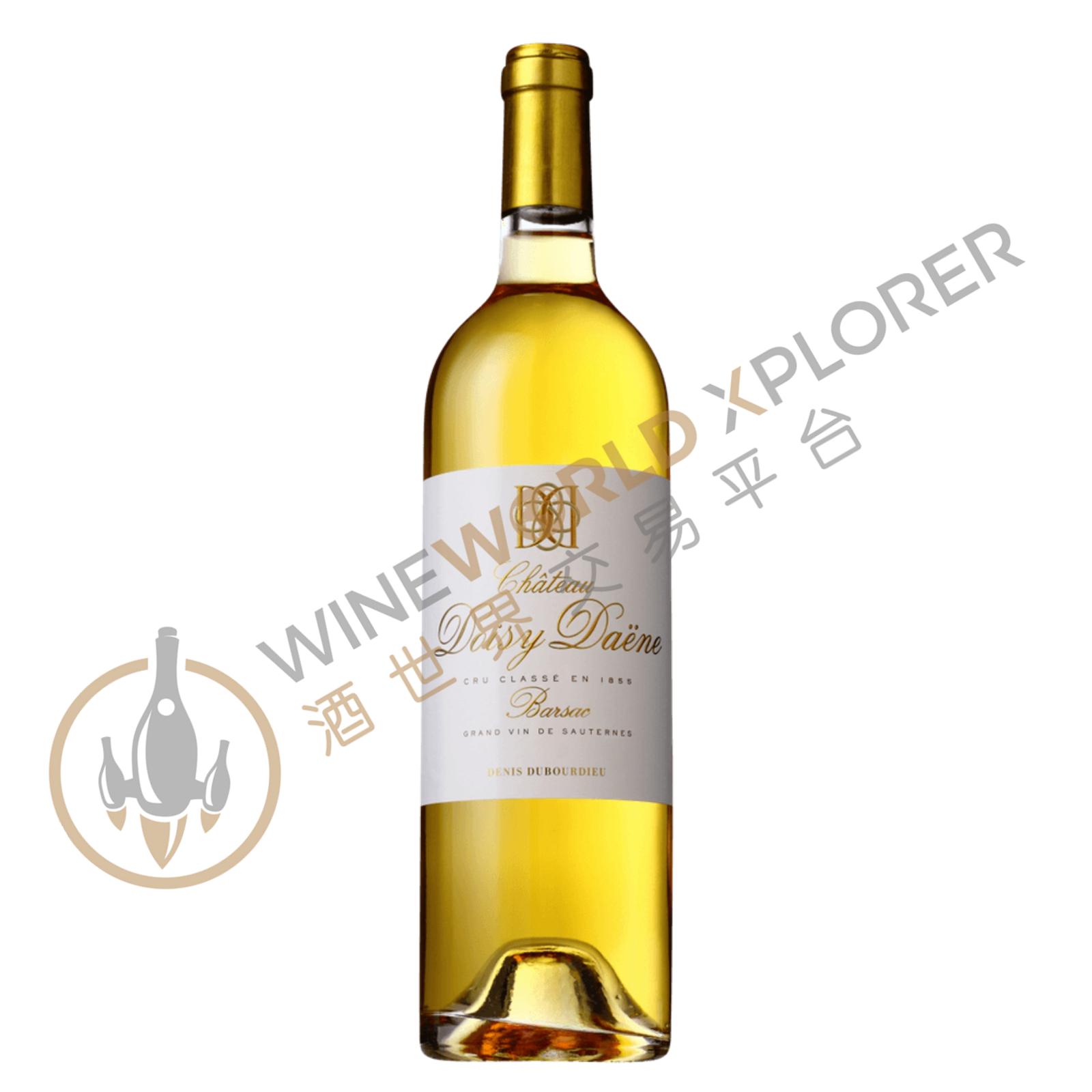
Doisy Daene 2007
 View analysis


Description
Tasting notes

Reviewed by: Neal Martin
Tasted single blind against its peers. Denis Dubourdieu conjured a wonderful Barsac in 2007. Here there is an initial lightness on the nose that builds with each swirl of the glass. It exhibits fine minerality with apple, dried honey and a touch of wet stone. The palate is very harmonious with good acidity, very focused and succinct with great precision towards the poised finish. This has barely starting motoring, but it possesses an unbridled sense of nonchalance. Tasted January 2011.
Reviewed by: Neal Martin
Denis Dubourdieu conjured one of the best 2007 Barsac wines with the 2007 Doisy-Daene, even though it showed a little subdued on the nose and demanded a great deal of coaxing. Touches of lemon curd, mango, white flowers and crushed stone. The palate is very tense on the entry, excellent acidity here and beautifully balanced. There is a sense of “urgency” to this Doisy-Daene: coiled up energy that explodes on the finish with lemongrass, apricot, clear honey and white peach. Superb length and chutzpah. This is a wonderful wine. Drink 2012-2030+
Reviewed by: Neal Martin
The 2007 Doisy-Daene has an intense nose with heavily botrytized fruit with notes of peach, honeydew melon, apple-blossom and a touch of mango. The palate is medium-bodied, very well balanced with a fantastic sense of tension and nervosité. Notes of honey, peach, minerals, citrus lemon with a wonderfully focused finish that goes on and on. A really wonderful Barsac. Drink 2012-2040. Tasted April 2008.
Reviewed by: Neal Martin
The 2007 Doisy-Daëne feels more mature on the nose compared to some older vintages, quite Aszú-like in style, dried quince and barley sugar, hints of saffron and star anis. The palate is supremely well balanced with a fine bead of acidity, a tad drier and more linear than the 2009, but it is armed with great salinity on the finish that offers orange rind and marmalade notes on the aftertaste. I would actually afford this longer in bottle. Tasted at the vertical at Doisy-Daëne.
About the Producer
Château Doisy Daëne is Bordeaux wine producer located in the commune of Barsac. Its sweet white wine ranked as Second Cru Classé (French, “Second Growth”) in the original Bordeaux Wine Official Classification of 1855. It belongs to the Sauternes appellation in Gironde, in the region of Graves. The three Doisy wine estates, Château Doisy Daëne, Château Doisy-Védrines, Château Doisy-Dubroca, originate from one single estate, the early history and division of which is not very well documented. The earliest documented mention of the Doisy wine cru is in André Julliens book Topographie de tous les vignobles connus in 1832. The Daëne part of the name comes from Jean Jacques Emmanuel Daëne, who was the vineyard owner and a wine merchant in Bordeaux, and who at some stage bought one of three portions of the estate. J.J.E. Daëne's three sons inherited the wine estate in 1875, and in the same year they sold a portion of it the Dubroca brothers of Doisy-Dubroca. In 1878 Doisy-Daëne was sold to Jean Paul Billot, and his daughter Pauline inherited it in 1884, and sold it to the Debans brothers in 1889. From 1924 Château Doisy Daëne has been owned by the Dubourdieu family. Georges Dubourdieu acquired it from the Debans heirs in 1924. Georges stayed in control until 1949, when his son Pierre Dubourdieu took over. One of Pierre Dubourdieu's innovations, in the early 1950s, was to start also making a dry white wine, the first in the Sauternes area. In 2000, Pierre's son Denis Dubourdieu took over the control estate. In 1990 and as a result of an experiment, Denis had introduced l'Extravagant de Doisy-Daëne, a concentrated wine of higher sweetness than usual Sauternes, produced from highly botrytised grapes. Doisy Daëne has 18.2 hectares (45 acres) of vineyards, planted with 86% Sémillon and 14% Sauvignon blanc. Until the 2008 vintage, there was also a small amount of Muscadelle in the vineyards. Doisy-Daëne produces three wines: Château Doisy Daëne, its sweet Sauternes wine, in composition close to the average of the estate's vineyards; Grand Vin Sec du Château Doisy-Daëne, a dry Bordeaux Blanc from 100% Sauvignon blanc and aged 8 months in oak barrels of which 20% new oak; L'Extravagant de Doisy-Daëne, an extra sweet Sauternes produced in some vintages. 45% to 80% Sémillon and 20% to 55% Sauvignon blanc depending on the vintage.
