
 Wine Advisor



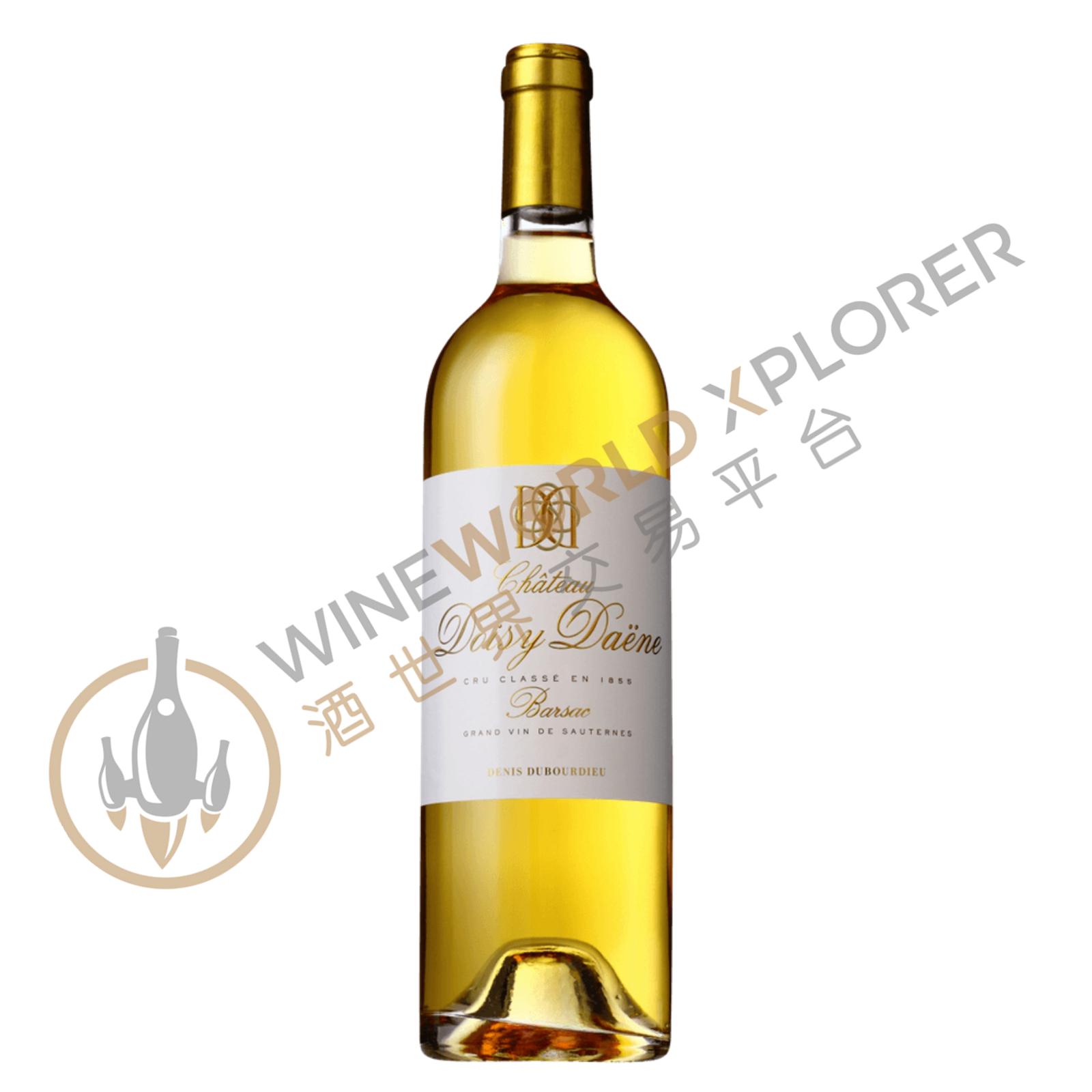
Doisy Daene 2011
 View analysis


Description
Tasting notes

Reviewed by: Ian d'Agata
Bright gold. Pure aromas of kiwi, gooseberry and mandarin orange lifted by fresh white flowers. Juicy, lively and intense, delivering bracing flavors of floral apple, pear and sweet spices. This fruit-driven Sauternes finishes silky and long, with palate-cleansing acidity. It's less opulent than I remembered it, but I love this wine's high-acid personality and aromatic purity. Not surprisingly for a Denis Dubourdieu wine, it's very sauvignon blanc.
Reviewed by: Ian d'Agata
(3.5 pH; 180 g/l residual sugar): Deep golden yellow with some amber. Fruit salad and floral aromas along with spicy, honeyed orange on the perfumed nose. Opulent and concentrated, with lovely inner-mouth aromatic quality and bright acidity framing the sweet fruit salad and pure mineral flavors. The very long finish offers a restrained sweetness and a fresh lemon sorbet quality.
Reviewed by: Neal Martin
The 2011 Doisy-Daëne has a tightly wound nose at first, unfurling to reveal pure honey, saffron and Mirabelle aromas. The palate is well balanced with a harmonious texture, fine acidity, very pure with an almost caressing honeyed, lemongrass-tinged finish. There is something almost tender about this Sauternes. Tasted blind at the annual 10-Year-On tasting.
Reviewed by: Neal Martin
The 2011 Doisy-Daëne has one of the highest residual sugar levels at 168g/L. "Denis was not happy with that," remarked his son Jean-Jacques Dubourdieu. "We finished the harvest at the end of September, so it was super quick." It is quite floral on the nose, yellow flowers and wild honey, orange blossom and a touch of pralines emerging with time. The palate is well balanced with crisp acidity, fresh and vibrant, a little spicier than I recall with fine tension towards the finish. Enticing apricot and white peach notes intermingle with white chocolate and lemongrass, completing a wonderful Barsac. Tasted at the vertical at Doisy-Daëne.
Reviewed by: Neal Martin
Tasted blind at the Sauternes 2011 horizontal tasting. The Château Doisy-Daëne 2011 builds upon its outstanding performance from barrel. It has a powerful bouquet with seductive scents of wild honey, yellow flowers and orange blossom that are well defined, perhaps a little more extravagant then Denis Dubourdieu's wines of yore. The palate is mellifluous on the entry with well-judged acidity, sensual and harmonious, poised on the entry and then fanning out gloriously with Clementine and honeyed notes that shimmer. This is an irresistible Barsac.
Reviewed by: Neal Martin
The aromatics on the Doisy-Daene comes racing out of the blocks like a March hare, soaring from the glass with honey, quince and lychee aromas with a sorbet like freshness and vivacity. The palate is supremely well balanced with a heightened level of tension and purity, offering delectable but subtle notes of white peach and apricot towards the beautifully composed, mineral-rich finish. Curiously, it reminds me of a top-flight Mosel Auslese, but what a fabulous Barsac from Denis Dubourdieu!
Reviewed by: Neal Martin
The 2011 Doisy-Daëne has one of the highest residual sugar levels at 168g/L. "Denis was not happy with that," remarked his son Jean-Jacques Dubourdieu. "We finished the harvest at the end of September, so it was super quick." It is quite floral on the nose, yellow flowers and wild honey, orange blossom and a touch of pralines emerging with time. The palate is well balanced with crisp acidity, fresh and vibrant, a little spicier than I recall with fine tension towards the finish. Enticing apricot and white peach notes intermingle with white chocolate and lemongrass, completing a wonderful Barsac. Tasted at the vertical at Doisy-Daëne.
About the Producer
Château Doisy Daëne is Bordeaux wine producer located in the commune of Barsac. Its sweet white wine ranked as Second Cru Classé (French, “Second Growth”) in the original Bordeaux Wine Official Classification of 1855. It belongs to the Sauternes appellation in Gironde, in the region of Graves. The three Doisy wine estates, Château Doisy Daëne, Château Doisy-Védrines, Château Doisy-Dubroca, originate from one single estate, the early history and division of which is not very well documented. The earliest documented mention of the Doisy wine cru is in André Julliens book Topographie de tous les vignobles connus in 1832. The Daëne part of the name comes from Jean Jacques Emmanuel Daëne, who was the vineyard owner and a wine merchant in Bordeaux, and who at some stage bought one of three portions of the estate. J.J.E. Daëne's three sons inherited the wine estate in 1875, and in the same year they sold a portion of it the Dubroca brothers of Doisy-Dubroca. In 1878 Doisy-Daëne was sold to Jean Paul Billot, and his daughter Pauline inherited it in 1884, and sold it to the Debans brothers in 1889. From 1924 Château Doisy Daëne has been owned by the Dubourdieu family. Georges Dubourdieu acquired it from the Debans heirs in 1924. Georges stayed in control until 1949, when his son Pierre Dubourdieu took over. One of Pierre Dubourdieu's innovations, in the early 1950s, was to start also making a dry white wine, the first in the Sauternes area. In 2000, Pierre's son Denis Dubourdieu took over the control estate. In 1990 and as a result of an experiment, Denis had introduced l'Extravagant de Doisy-Daëne, a concentrated wine of higher sweetness than usual Sauternes, produced from highly botrytised grapes. Doisy Daëne has 18.2 hectares (45 acres) of vineyards, planted with 86% Sémillon and 14% Sauvignon blanc. Until the 2008 vintage, there was also a small amount of Muscadelle in the vineyards. Doisy-Daëne produces three wines: Château Doisy Daëne, its sweet Sauternes wine, in composition close to the average of the estate's vineyards; Grand Vin Sec du Château Doisy-Daëne, a dry Bordeaux Blanc from 100% Sauvignon blanc and aged 8 months in oak barrels of which 20% new oak; L'Extravagant de Doisy-Daëne, an extra sweet Sauternes produced in some vintages. 45% to 80% Sémillon and 20% to 55% Sauvignon blanc depending on the vintage.
