
 Wine Advisor



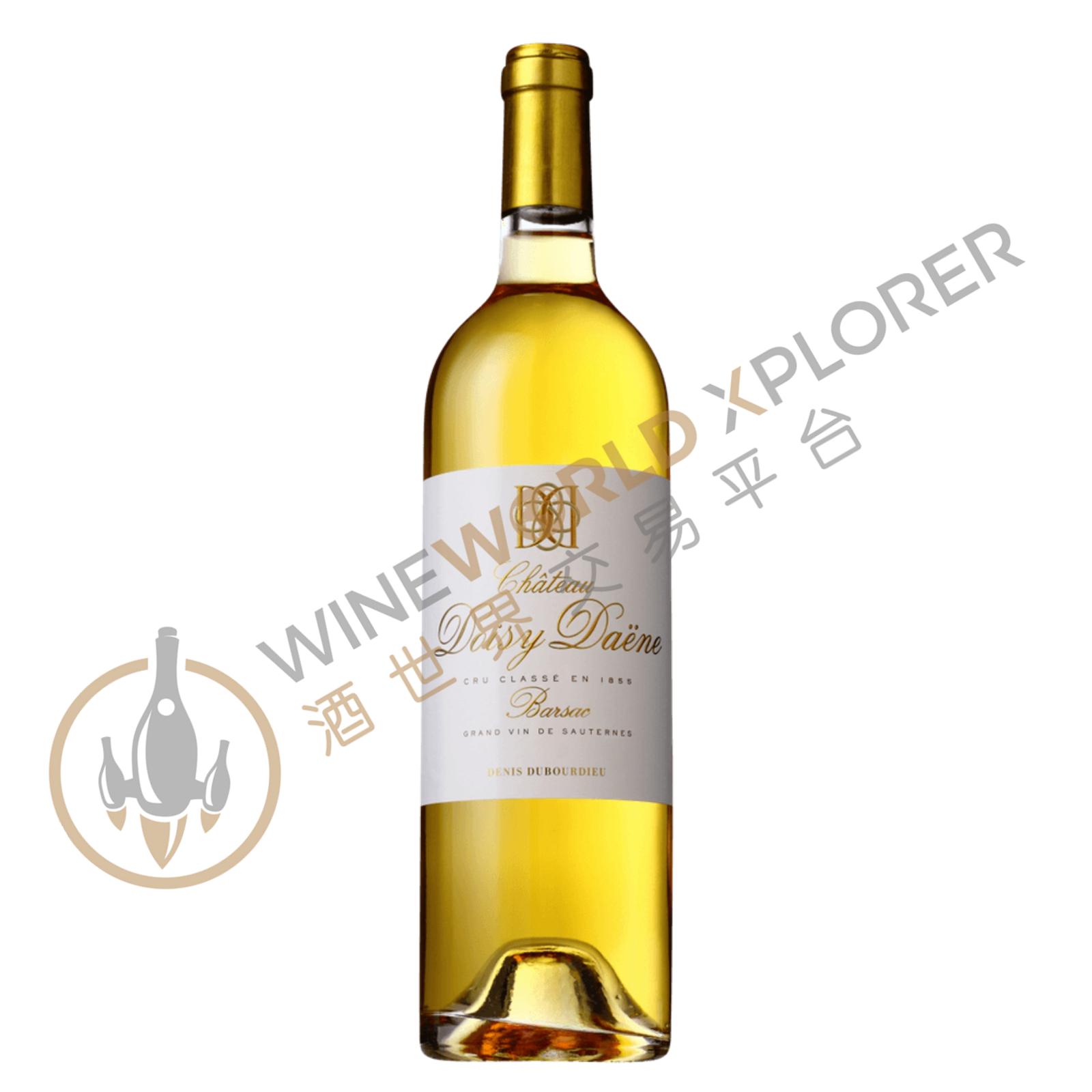
Doisy Daene 2001
 View analysis


Description
Tasting notes

Reviewed by: Neal Martin
The Doisy Daene 2001 is still quite backward on the nose compared to its peers and as a consequence, demands more coaxing from the glass: beeswax, honeycomb and a touch of lanolin. The palate is well balanced with a vibrant, citrus-fresh entry. This Barsac is struck through with engaging, lovely orange peel and citrus lemon notes here that segue into a refined and tensile finish that leaves you wanting any sip.
Reviewed by: Robert M. Parker, Jr.
A greenish light gold color is followed by a richly fruity wine with loads of peach, pear, honey, and vanilla notes, an elegant, medium-bodied palate, good acidity, and plenty of botrytis. Although not one of the sweetest 2001s, it will no doubt be flexible with food. Anticipated maturity: 2004-2015.
Reviewed by: Neal Martin
Tasted blind at Bordeaux Index’s 10-Year On horizontal. This is simple on the nose, lacking the botrytis of its peers with a simple grapefruit, lime flower and honey nose that needs more vigour. The palate is better with touches of tangerine on the entry, nicely balanced but lacking real complexity towards the finish. I think Denis Dubourdieu could have made a better Doisy in this favourable growing season. Tasted March 2011.
Reviewed by: Robert M. Parker, Jr.
A light medium gold color and closed aromatics are found in the extravagantly rich, unctuous 2001. With terrific acidity, abundant botrytis, and a long, full-throttle finish, this spectacular effort will drink well between 2007-2020. It is unquestionably one of the finest Doisy-Daenes I have ever tasted.
Reviewed by: Neal Martin
Disjointed nose of honey and apples. Green fruits. Moderate acidity but the palate is pinched at the moment. Needs time - must retaste next year. I expected more from this great year and from Doisy-Daene so I will endeavour to retaste this. Tasted May 2002.
Reviewed by: Robert M. Parker, Jr.
Disjointed nose of honey and apples. Green fruits. Moderate acidity but the palate is pinched at the moment. Needs time - must retaste next year. I expected more from this great year and from Doisy-Daene so I will endeavour to retaste this. Tasted May 2002. (No tasting note was provided in Issue 140. We have instead included the text of the tasting note from the 2002 Neal Martin’s Wine Journal)
About the Producer
Château Doisy Daëne is Bordeaux wine producer located in the commune of Barsac. Its sweet white wine ranked as Second Cru Classé (French, “Second Growth”) in the original Bordeaux Wine Official Classification of 1855. It belongs to the Sauternes appellation in Gironde, in the region of Graves. The three Doisy wine estates, Château Doisy Daëne, Château Doisy-Védrines, Château Doisy-Dubroca, originate from one single estate, the early history and division of which is not very well documented. The earliest documented mention of the Doisy wine cru is in André Julliens book Topographie de tous les vignobles connus in 1832. The Daëne part of the name comes from Jean Jacques Emmanuel Daëne, who was the vineyard owner and a wine merchant in Bordeaux, and who at some stage bought one of three portions of the estate. J.J.E. Daëne's three sons inherited the wine estate in 1875, and in the same year they sold a portion of it the Dubroca brothers of Doisy-Dubroca. In 1878 Doisy-Daëne was sold to Jean Paul Billot, and his daughter Pauline inherited it in 1884, and sold it to the Debans brothers in 1889. From 1924 Château Doisy Daëne has been owned by the Dubourdieu family. Georges Dubourdieu acquired it from the Debans heirs in 1924. Georges stayed in control until 1949, when his son Pierre Dubourdieu took over. One of Pierre Dubourdieu's innovations, in the early 1950s, was to start also making a dry white wine, the first in the Sauternes area. In 2000, Pierre's son Denis Dubourdieu took over the control estate. In 1990 and as a result of an experiment, Denis had introduced l'Extravagant de Doisy-Daëne, a concentrated wine of higher sweetness than usual Sauternes, produced from highly botrytised grapes. Doisy Daëne has 18.2 hectares (45 acres) of vineyards, planted with 86% Sémillon and 14% Sauvignon blanc. Until the 2008 vintage, there was also a small amount of Muscadelle in the vineyards. Doisy-Daëne produces three wines: Château Doisy Daëne, its sweet Sauternes wine, in composition close to the average of the estate's vineyards; Grand Vin Sec du Château Doisy-Daëne, a dry Bordeaux Blanc from 100% Sauvignon blanc and aged 8 months in oak barrels of which 20% new oak; L'Extravagant de Doisy-Daëne, an extra sweet Sauternes produced in some vintages. 45% to 80% Sémillon and 20% to 55% Sauvignon blanc depending on the vintage.
