Wine Advisor



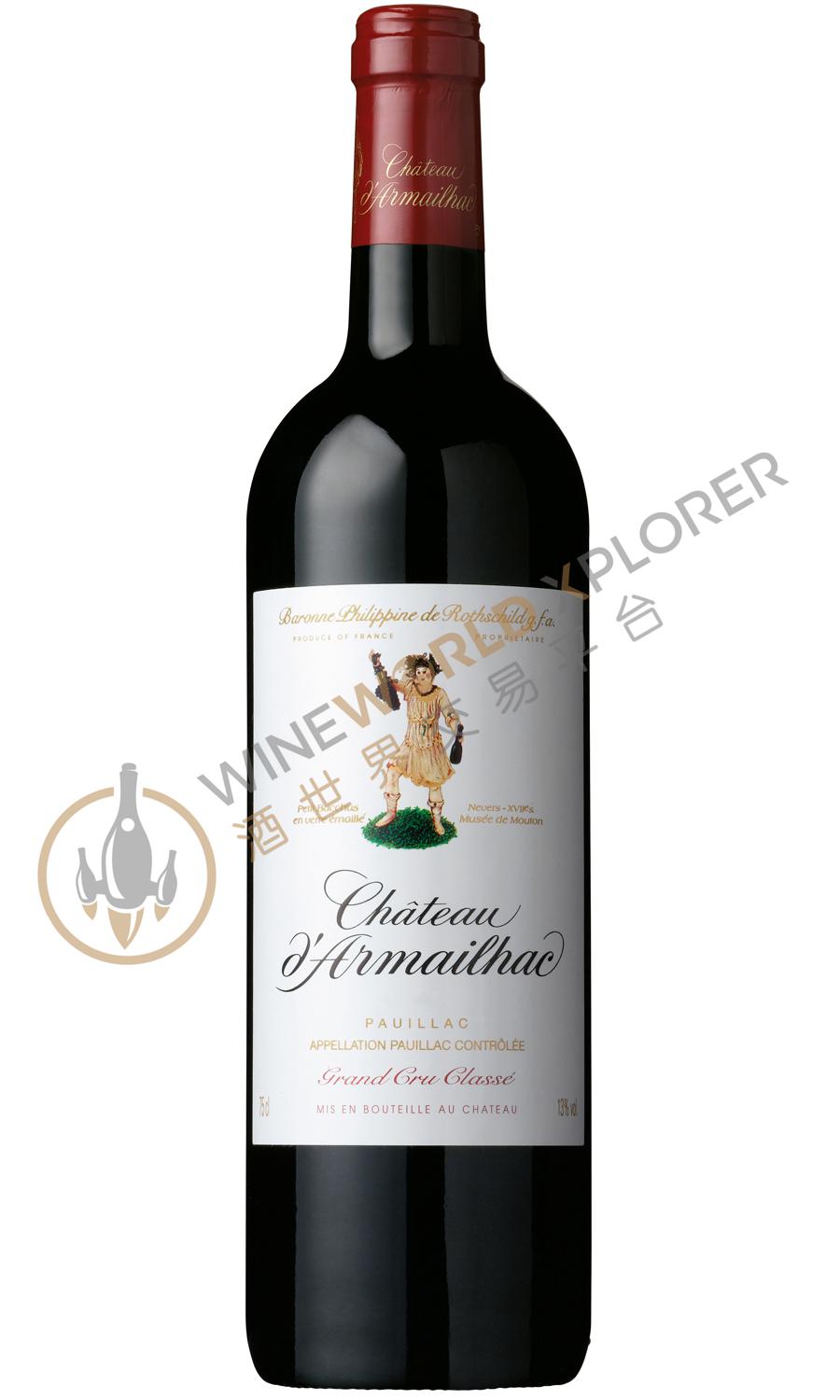
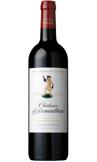
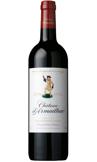
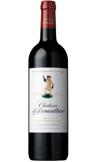
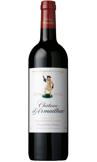
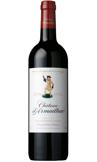
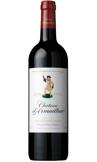
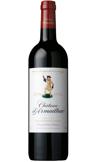
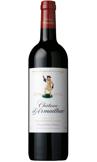
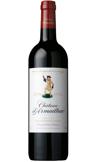
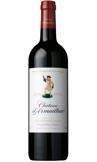
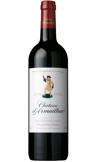
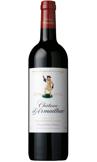
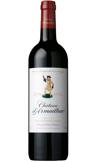
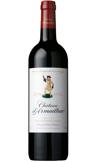
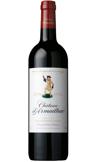
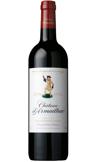
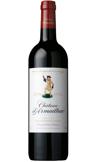
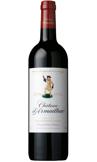
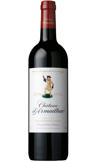
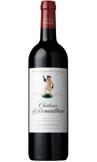
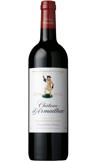
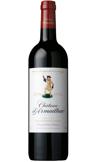
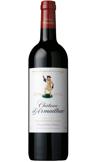
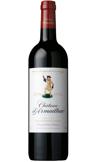
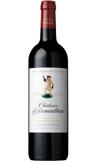
D'Armailhac 2009
 View analysis


Description
Tasting notes

Reviewed by: Robert M. Parker, Jr.
The finest d’Armailhac I have tasted to date, the 2009 is largely Cabernet Sauvignon (60%) blended with a big wallop of Merlot (25%) and the rest Cabernet Franc and Petit Verdot. Its dense purple color is followed by a big, sweet kiss of asphalt, black currants, mocha, barbecue smoke, cedar and spice. This medium to full-bodied, well-made, impressively endowed Pauillac should drink well for 20+ years.
Reviewed by: Neal Martin
Tasted at Chateau Mouton-Rothschild and at a negociant. A blend of 60% Cabernet Sauvignon, 24% Merlot, 14% Cabernet Franc and 2% Petit Verdot. This has a fragrant, perfumed nose with a Margaux-like personality. Taut blackberry and bilberry fruit, good definition, coiled up aromatics, becoming stonier with aeration, good minerality coming through, perhaps stricter than recent vintages of d’Armailhac. The palate has a very smooth entry, supple tannins, citric acidity, very pure and generous, lovely sense of refinement towards the tannic, blackberry, stony finish. Perhaps a little more conservative at this stage, the oak is bound to buff it up by time of bottling. Tasted March 2010.
Reviewed by: Robert M. Parker, Jr.
This may be the finest d’Armailhac I have ever tasted. Made in a textured, full-bodied, sumptuous style, it is a blend of 60% Cabernet Sauvignon, 25% Merlot, and the balance primarily Cabernet Franc with a tiny dosage of Petit Verdot. It exhibits a deep ruby/purple hue along with floral, red and black currant, cedar, and spice characteristics. Deep, medium to full-bodied, and impressively pure as well as long, it should drink well for 25 years. (Tasted three times.)
Reviewed by: Neal Martin
The 2009 Château d'Armailhac has a lovely nose, the Cabernet Sauvignon component more expressive compared to my previous encounter, graphite infusing the generous black fruit that is in keeping with the style. The palate is medium-bodied with touches of cherry liqueur and spice on the entry, the Merlot in the driving seat with good acidity and a lively, spicy finish with tobacco, hickory and black pepper on the aftertaste. It is a delicious d'Armailhac that is just about ready to rock 'n roll. Tasted August 2016.
Reviewed by: Neal Martin
Tasted at Chateau Mouton-Rothschild. The d’Armailhac 2009 has a gorgeous, voluptuous bouquet with black cherries, cassis and a touch of oyster shell. The palate is medium-bodied with rounded, firm tannins, gentle but insistent grip with touches of graphite and sous-bois towards the composed, minerally finish. There is a little more linearity compared to previous vintages – but very stylish and a little more “classic” in style. Tasted November 2011.
Reviewed by: Neal Martin
Served blind at the Southwold 2009 tasting. The d'Armailhac '09 has a very refined bouquet with kirsch, fresh date and blackberry - all very refined and delineated. The palate is medium-bodied with dense, slightly oppressive tannins. There is impressive fruit intensity with layers of dusky blackcurrant and dark plum. I was initially mean with my score but it certainly improved in the glass. Tasted January 2013.
Reviewed by: Ian d'Agata
(a blend of 60% cabernet sauvignon, 24% merlot, 14% cabernet franc and 2% petit verdot; pH 3.78; 13.2% alcohol) Deep red with purple highlights. The pretty, spicy, perfumed aromas of blackcurrants and raspberries leap from the glass. Light and fragrant on the palate, with excellent balance between the lively acids and the pretty red fruit and mineral flavors. This smoothly tannic midweight improves considerably with air, gaining in complexity and finishing with intense, very pure red and black cherry flavors. To my mind, the best Armailhac ever, and one that shows a very recognizable and pristine cabernet franc presence. Readers who enjoy classically styled Bordeaux may want to think about this gloriously restrained and refined wine, which is less obviously ripe than many other '09s and should age spectacularly well.
Reviewed by: Neal Martin
The 2009 d’Armailhac has a lovely bouquet with ample blackberry, boysenberry, graphite and light mint aromas - very Pauillac and very well focused. The palate is medium-bodied with succulent tannin, moderate acidity, good depth and very grippy. It is not the most complex Pauillac in this group but there is fine persistence with pure black cherry and hints of cassis towards the finish. Fine. Tasted blind at Farr Vintners’ 2009 Bordeaux tasting.
Reviewed by: Stephen Tanzer
Moderately saturated dark red. Expressive nose offers redcurrant, tobacco leaf, licorice and cedar. A spicy, energetic midweight with enticing sweetness to its juicy raspberry, redcurrant and tree bark flavors. Finishes with serious dusty tannins and lovely lingering red berry flavor.
Reviewed by: Lisa Perrotti-Brown
The 2009 D'Armailhac has a medium to deep garnet color, and vibrant red and black fruit preserves, incense, earth and dried herbs all spring from the glass with a faint undercurrent of beef drippings. Medium-bodied, firm and chewy in the mouth, it has just enough maturing, savory fruit to fill the palate, with a lively line of freshness and an herbal lift on the finish.
Reviewed by: James Suckling
Wonderful aromas of blackberries, blueberries and bramble berries. Full-bodied, with ripe tannins and wonderful fruit. There is really a gourmand style to it. So delicious. Fruity and velvety. So much flavor. Why wait? But will improve for years.
Reviewed by: James Suckling
Plenty of ripe cassis and chocolate with a hint of smoke on the nose lead you into a ripe and velvety Pauillac that now gives a lot of pleasure thanks to the excellent harmony and good length. Drink or hold. (Horizontal Tasting, London, 2019)
About the Producer
The existence of Château d’Armailhac dates back to the late 17th century, as evidenced in a land register from 1680 which mentions the brothers Dominique and Guilhem Armailhacq, owners of parcels of land in Pauillac. Another land register from 1750 notes that their descendants have “planted with vines” the family estate, covering 15 to 16 hectares (37-39 acres). By the end of the 18th century the estate has grown to 52 hectares (128 acres) but the brokers of the time describe its wine as “disappointingly thin”. Throughout the following century, Mouton d’Armailhacq’s owners work unceasingly to improve its quality, using techniques such as topping-up, running-off, barrel disinfection and fining. Their efforts are rewarded in 1831, when the wines of Mouton d’Armailhacq sell for twice as much as their more highly reputed neighbours. The ultimate recompense, Château Mouton d’Armailhacq is given Fifth Growth status in the 1855 Classification – the same one which made Château Mouton Rothschild “First of the Seconds”. The “first wine”, the only one authorised to bear the growth’s name, is distinguished from the “second wine”, less rich and sold for consumption in local taverns. In 1931, the young Baron Philippe de Rothschild became a minority shareholder of the Société Anonyme du Domaine de Mouton d’Armailhacq, then in 1933 acquired all the shares from the Comte de Ferrand in return for a life annuity. A year later, on the Comte de Ferrand’s death, he became the effective owner of the estate. The Mouton d’Armailhacq portfolio included the Société Vinicole de Pauillac, forerunner of what is now Baron Philippe de Rothschild SA. Inseparable from Château Mouton Rothschild, Château Mouton d’Armailhacq houses all the technical and agricultural equipment for the two estates in its extensive outbuildings. From 1956 to 1988, the wine was called Mouton Baron Philippe, then Mouton Baronne Philippe. A Fifth Growth of acknowledged quality, its original identity as Château d’Armailhac was patly restored in 1989.
1964(2)1973(1)1978(1)1986(1)1987(1)1989(1)1995(2)1996(2)2000(4)2001(5)2002(1)2003(3)2004(2)2005(5)2006(2)2007(2)2008(5)
Package Size