
 Wine Advisor



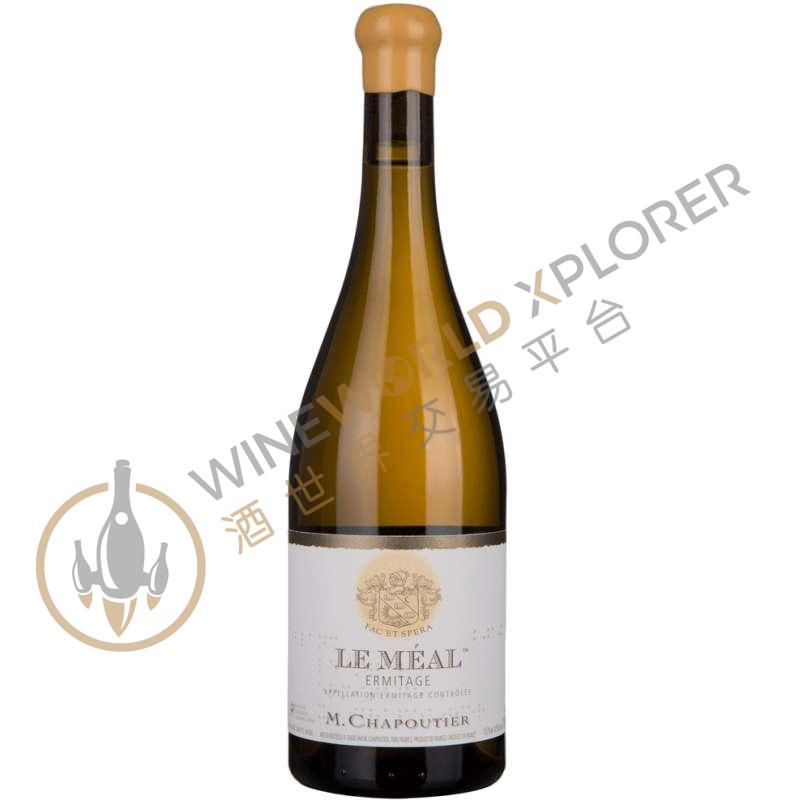
M. Chapoutier, Ermitage Le Meal Blanc 2011
 View analysis


Description
Tasting notes

Reviewed by: Robert M. Parker, Jr.
The more flamboyant, California-styled 2011 Ermitage Le Meal Blanc is from a warmer site with a more southerly exposure. It offers up notes of wet rocks, tangerines, peaches and a striking scent reminiscent of the famous New Orleans dish, bananas Foster. I know that sounds weird, but that’s what it smelled like when I first put my nose in the glass. This exuberant, exotic, ostentatious white Hermitage may be controversial, but for me, it was over-the-top perfection. In November of this year, Michel Chapoutier finally made the cover of The Wine Spectator. The accompanying article said essentially the same things I had written about over twenty years ago. More importantly, I am thrilled that Chapoutier received this attention because it has long been deserved. History will record that Michel Chapoutier is a revolutionary. He is also a highly emotional man whose infectious love of primitive art, historic books, classical music and, of course, terroir and winemaking are seemingly impossible to harness. Michel Chapoutier was among the first in France to embrace the radical biodynamic agricultural teachings, for which he was initially criticized, but is now praised. He was also the first to print all his labels in Braille, something that cynics considered to be a gimmick, but ask the National Association for the Blind what they think. Coming from a famous family, but moving in a direction unlike any of its previous members, Michel Chapoutier is self-taught. What he has accomplished over the last two decades or more is one of the great wine stories of the modern era. With all his outgoing, boisterous, machine-gun-speed prose that can sometimes sound shockingly cocky, and at other times reminiscent of the famous Lebanese poet Khalil Gibran, there is never a dull moment around Chapoutier., who makes comments such as “Filtering wine is like making love with a condom,” and “Acidifying wine is like putting a suit of armor on the vineyard’s terroir, vintage character and the cepage.” Don’t blame him if his brilliant intellect and shocking vocabulary put his visitors on the defensive. Michel Chapoutier has proven through his genius, the faith of his convictions and backbreaking attention to detail in his vineyards and in the winery that a once moribund negociant (yet with significant vineyard holdings) could become a beacon of inspiration and quality for the entire world. In short, every wine consumer in the world should admire his accomplishments. All of Chapoutier’s lower level 2010 whites and basic reds have long been sold out, so to keep the tasting somewhat limited during my visit, we focused on the more recently released 2010 white and red selections parcellaires and nearly all the 2011s. As for the 2010 selection parcellaire whites, they are spectacular. Le Pavillon, once called Rochefine and owned by Jaboulet-Verchere, consists of 10 acres of pure granite in the famed Les Bessards, which is considered by many to be the single greatest terroir of Hermitage. The Ermitage Le Pavillon, which is meant to age for 50+ years, is Michel Chapoutier’s legacy, and he is confident that history will support his belief in this extraordinary wine. Michel Chapoutier is not alone in believing the 2011s may resemble a more modern day version of 1991. That vintage was largely underrated by just about everybody (except yours truly) because all the accolades and hyperbole were largely bestowed on both 1989 and 1990 (deservedly), but in the Northern Rhone 1991 turned out to be a strikingly superb vintage for Cote Rotie, Hermitage, Cornas and Condrieu. In the Southern Rhone, the vintage was largely a disaster. Following is an overview of what to expect with the inexpensive 2011 whites and reds. Most of these wines do not have the weight, power or tannic structure of the 2010s, but they are by no means diluted or wimpish wines. They tend to be charming, fruit-forward and seductive, and thus may be preferred by consumers looking for immediate gratification. Although the first few wines reviewed are Southern Rhones, they need to be covered because they are in bottle, and I did not review them in issue 203. Along with several other producers, Michel Chapoutier has helped increase the world’s attention to the long-forgotten, microscopic appellation of St.-Peray. Chapoutier produces a bevy of St.-Perays under his own name as well as in partnership with two three-star chefs, Sophie Pic, of the Restaurant Pic in Valence (as well as several culinary branches in Paris and Lausanne, Switzerland), and Yannick Alleno, the brilliant chef at the Hotel Le Meurice’s in Paris. I did not review the two rose offerings from the Southern Rhone in issue 203, but both are excellent. Rose drinking season in the Mid-Atlantic and northeast regions is largely shut down until warm weather returns next spring. People in other, warmer climates of our country can still enjoy these wines. The red 2011 selections parcellaires are already fruit-forward and seductive. Readers should love them as they are much more evolved than the more structured, powerful, dense, tannic 2010s. Importer: Terlato Wines International, Lake Bluff, IL; tel. (847) 604-8900
Reviewed by: Jeb Dunnuck
In the same league and from one of the warmest terroirs on Hermitage hill, the 2011 Ermitage Le Meal Blanc is a massive effort that has overflowing amounts of tropical fruits, white flowers, creme brulee, buttered peaches, licorice and striking, liquid rock-like minerality. Full-bodied, voluptuous and awesome any way you look at it, it too can be enjoyed any time over the coming 3-4 decades. This was an incredible tasting with Michel Chapoutier and his second hand man, Pierre-Henri Morel. Certainly one of the success stories in wine, which Robert Parker does a fabulous job of detailing in Issue 204, this estate goes from strength to strength in just about every appellation in the Rhone Valley. Looking specifically at Hermitage, Chapoutier owns a massive 64 acres, mostly on the famed Bessards lieu-dit, yet also with significant portions on Le Meal, L’Ermite and Les Greffieux, with smaller portions in the Beaume and Murets lieux-dits. From this he fashions five reds (Monier De La Sizeranne, Les Greffieux, Le Meal, Le Pavillon and L’Ermite) and four whites (Chante Alouette, Cuvee de l’Oree, Le Meal Blanc and L’Ermite Blanc), all of which are brilliant wines, with the best ranking up alongside the top wines in the world. In addition, his Saint Josephs (Les Granits and Le Clos) are some of the leading wines of the appellation (along with Guigal’s Vignes de l’Hospice and a few others), and his Cote Rotie La Mordoree, which comes from his 12 acres (split between the roughly defined Cote Blonde and Cote Brune regions), is always a classic example of the appellation. I was also able to taste through a full lineup of his Languedoc and Roussillon releases, all of which were impressive. I’ll review those wines in my 2014 coverage on those regions. Looking at the 2011 whites, these were all tasted by Robert Parker last year, but since I tasted through the lineup, I opted to include reviews here as well. Importer: Terlato Wines International, Lake Bluff, IL; tel. (847) 604-8900
Reviewed by: Josh Raynolds
Vivid gold. Heady orchard and pit fruit aromas are complicated by anise, buttered toast and iodine, with a sexy floral nuance emerging with aeration. Fleshy and deeply pitched, offering wonderfully concentrated pear, nectarine and melon flavors and a zesty jolt of orange pith on the back half. Closes with superb energy and a very persistent honeydew note. I'd love to try this superb wine alongside some heavy-hitters from the Cote d'Or.
Reviewed by: Josh Raynolds
Bright gold. Mineral-accented peach, pear and Meyer lemon aromas are deepened by notes of toasty lees and vanilla. Juicy citrus, quince and peach pit flavors give way to riper melon with air but show excellent nerve. Really clings to the palate, finishing broad, bright and impressively long. Rich and energetic.
Reviewed by: Jeb Dunnuck
Surprisingly, I preferred the 2011 Ermitage le Meal Blanc over the 2012 on this occasion and it showed a more flamboyant, sexy style in its caramelized pineapple, tropical, honeyed and floral personality. Big, rich and decadent, with fabulous fruit intensity and length, this rock star flirts with perfection and will keep for another 3-4 decades.
About the Producer
Founded in 1808, M. Chapoutier owns 175 hectares of vines in five appellations in the Rhone Valley and is now run by the energetic and brilliant Michel Chapoutier. Since Michel started running the estate, the quality of the winemaking has improved very quickly and the philosophy of winemaking has changed considerably. Michel Chapoutier's achievements caused an instant sensation in the winemaking world and he completely changed the way Chapoutier wines were made and the winemaking process, eventually making wines to rival those made by Marcel Guigal, one of the best winemakers in the Rhone Valley. The vineyards of Château Sapoutier range from the Rhone Valley to Châteauneuf-du-Pape, with a number of quality vineyards planted with Syrah, Grenache, Marsanne, Roussanne and other major grape varieties. The winery is "mono-varietal" (i.e. making wines from a single variety), for example, all Syrah for the Châteauneuf-du-Rotie wines, all Marsanne for the Hermitage whites and all Chateauneuf-du-Pape wines. The wines of Chateauneuf-du-Pape are all Grenache. Château Sapoutier has worked tirelessly to improve the quality of its wines, even though each single vineyard produces far more than the 500 cases of fine wine. Since 1989, Château Sapoutier has been using biodynamic farming and winemaking methods with the aim of producing wines that are the purest and closest to the natural terroir. Every decision, every step of the viticultural and winemaking process is designed to add to the terroir, varietal character and vintage identity of the wines. Only wild yeasts are used for fermentation and the wines are made in small oak barrels. The best red and white wines are not clarified or filtered before bottling.
