
 Wine Advisor



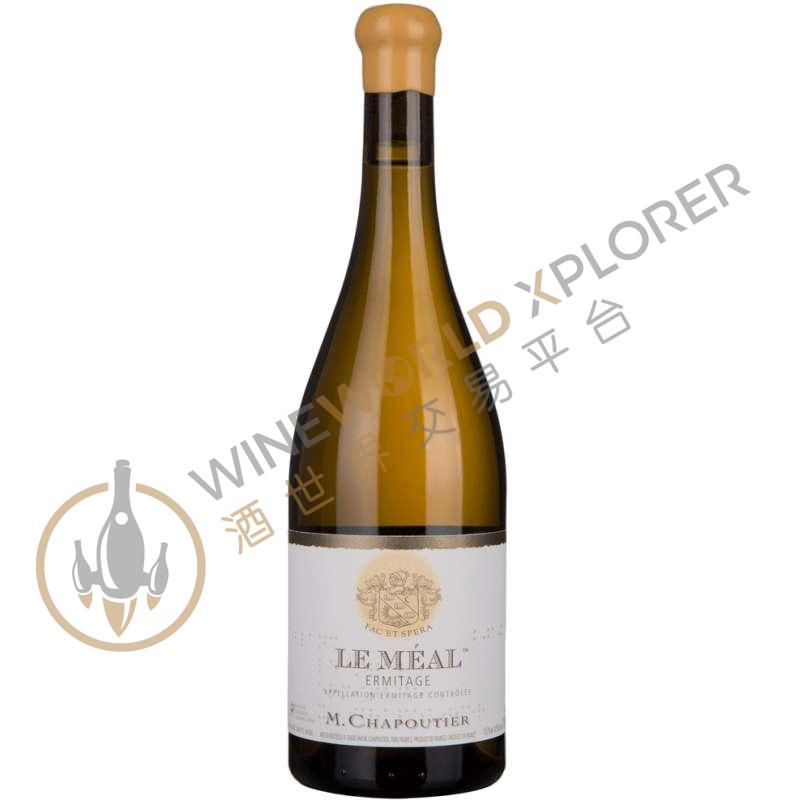
M. Chapoutier, Ermitage Le Meal Blanc 2005
 View analysis


Description
Tasting notes

Reviewed by: Robert M. Parker, Jr.
The most flamboyant of these 100% old-vine Marsanne cuvees of Ermitage is the 2005 Ermitage Le Meal blanc. In-your-face honey along with marmalade, citrus oil, white flowers, and sweet peach are flamboyant, even ostentatious. Decadent, luxuriously rich, with huge body, amazing viscosity and richness, this enormous dry white has an underpinning of acidity and tannin, and alcohol just short of 16% (remarkably well-hidden beneath a cascade of glycerin, fruit, and extract). Just amazing! Drink it in its first 5 years of life, or hold it for 30+ years. Importer: Terlato Wines International, Lake Bluff, IL; tel. (847) 604-8900
Reviewed by: Robert M. Parker, Jr.
The warmest terroir for the white Ermitage cuvees is Le Meal, an upper mid-slope terroir with a great exposition.The most flamboyant of these wines, the 2005 Ermitage Le Meal blanc, exhibits notes of buttered citrus, copious tropical fruit, crushed rocks, white currants, and an amazing amount of honeysuckle allied with good acidity and enormous body. With twenty vintages under his belt, Michel Chapoutier and his impressive winemaking staff go from strength to strength. These are among the world’s greatest wines, especially the single vineyard wines, many of which will last 50 or more years. Chapoutier thinks 2006 is one of the very finest vintages in the northern Rhone for white wines (and I don’t see any reason to disagree). The naturally high acidity and a summer season with no brutal heat waves allowed the wines to maintain their acidity while at the same time gaining flavor intensity. I have always had the feeling that despite his prodigious ability to make profound red wines, Michel Chapoutier gets a greater thrill from his white wine portfolio than from his impressive reds. . The single vineyard wines from Chapoutier are wines of super concentration, and are made from what are historically tiny yields. Along with Chaves’ white Hermitage and a handful of other Rhone whites, these are potentially the longest-lived and most profound whites being produced there. From the granite hillsides of St.-Joseph, Michel Chapoutier makes by far the appellation’s finest white, and one might argue, red as well. Importer: Terlato Wines International, Lake Bluff, IL; tel. (847) 604-8900
Reviewed by: Jeb Dunnuck
More over the top and decadent than the Cuvee de l’Orée, the 2005 Ermitage le Meal Blanc has overflowing notes of celery seed, sautéed peaches, honeycomb and underlying minerality that literally come soaring from the glass. Full-bodied, thick, unctuous and hedonistic to the max, it lacks a touch of the precision found in the Cuvee de l’Orée, yet makes up for it in sheer hedonistic pleasure and exuberance. It has the concentration to continue drinking nicely for another two decades or more.
Reviewed by: Neal Martin
A similar colour to the l'Oree. The nose is quite intense, more expressive with scents of granite, minerals, a touch of cut grass and vegetal (Michel himself describes it as celery.) A very cohesive palate, harmonious and beautifully balanced. There is a nice prickle on the palate with a slightly more unctuous texture than the other Ermitages. Very long length. This has great potential. Tasted October 2006. Drinking 2008-2020
About the Producer
Founded in 1808, M. Chapoutier owns 175 hectares of vines in five appellations in the Rhone Valley and is now run by the energetic and brilliant Michel Chapoutier. Since Michel started running the estate, the quality of the winemaking has improved very quickly and the philosophy of winemaking has changed considerably. Michel Chapoutier's achievements caused an instant sensation in the winemaking world and he completely changed the way Chapoutier wines were made and the winemaking process, eventually making wines to rival those made by Marcel Guigal, one of the best winemakers in the Rhone Valley. The vineyards of Château Sapoutier range from the Rhone Valley to Châteauneuf-du-Pape, with a number of quality vineyards planted with Syrah, Grenache, Marsanne, Roussanne and other major grape varieties. The winery is "mono-varietal" (i.e. making wines from a single variety), for example, all Syrah for the Châteauneuf-du-Rotie wines, all Marsanne for the Hermitage whites and all Chateauneuf-du-Pape wines. The wines of Chateauneuf-du-Pape are all Grenache. Château Sapoutier has worked tirelessly to improve the quality of its wines, even though each single vineyard produces far more than the 500 cases of fine wine. Since 1989, Château Sapoutier has been using biodynamic farming and winemaking methods with the aim of producing wines that are the purest and closest to the natural terroir. Every decision, every step of the viticultural and winemaking process is designed to add to the terroir, varietal character and vintage identity of the wines. Only wild yeasts are used for fermentation and the wines are made in small oak barrels. The best red and white wines are not clarified or filtered before bottling.
