
 Wine Advisor



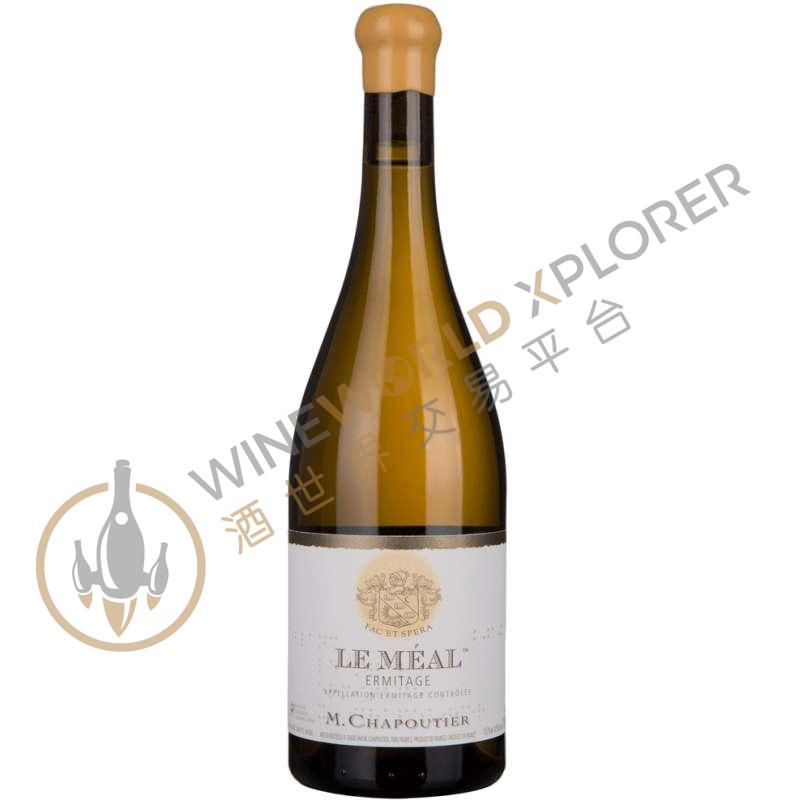
M. Chapoutier, Ermitage Le Meal Blanc 2007
 View analysis


Description
Tasting notes

Reviewed by: Josh Raynolds
Pale greenish gold. Orange, pear, hazelnut, sweet butter, truffle and minerals on the nose, with a slow-building floral quality; like a serious Chassagne-Montrachet. Palate-staining sweet citrus and orchard fruit flavors are underscored by smoky minerals and talc. The minerality seems to gain power on the finish, which is strikingly pure, focused and persistent. More energetic than the l'Oree, and in need of more patience.
Reviewed by: Neal Martin
A slightly deeper colour than the de L-Oree but the nose lacks the same degree of delineation. Scents of acacia, honeysuckle and a touch of dried orange peel. The palate is more neutral than the de L-Oree, more viscous and honeyed with a stoic, dry finish. Very backward and giving little away at the moment. Tasted March 2008.
Reviewed by: Robert M. Parker, Jr.
The fattest, most exuberant cuvee, with off the charts concentration and density (almost overbearing in its intensity, but the acids are there), is the 2007 Ermitage Le Meal blanc. An extraordinary expression of a single vineyard white Hermitage, this is an elixir with shocking levels of concentration. It goes almost beyond what dry wine is, and that’s what makes it so special. (Not yet released) While Michel Chapoutier produces some of the world’s greatest wines from single parcels of old vines spread throughout the northern and southern Rhone (see my ecstatic reviews of his 2007 and 2006 Chateauneuf du Papes in issue #179), he also has an impressive portfolio of value-priced wines that are often over-looked when this impressive producer is discussed. Following are some top-notch picks that all sell for exceptionally fair prices. Chapoutier has not achieved as great as success in Cornas as he has in the other northern Rhone appellations, although his Cornas wines get better with each vintage. There are four extraordinary single vineyard white wines, all of which are among the greatest dry white wines of the world. While all of them can be drunk young, they are meant for extended cellaring. Made from very small yields, they represent the essence of a varietal as well as a vineyard site. As the following notes demonstrate, 2006 was one of the greatest vintages for white wines at Chapoutier. The single vineyard selection parcellaire red wines range in production from 500 to nearly 1,000 cases. 2007 is a very good vintage for these selections, but 2006 has an edge. It is reminiscent of 1996 because of the wines’ freshness and acid levels, but Chapoutier’s 2006s are even more concentrated than his 1996s. Chapoutier’s four 2006 cuvees of single vineyard Hermitage are exquisite. Most of the yields were between 10 and 20 hectoliters per hectare, and the wines are extravagantly rich. The 2006 and 2007 luxury cuvees of Chateauneuf du Pape Croix des Bois and Chateauneuf du Pape Barbe Rac were reviewed in issue #179. They are all astounding wines, especially in 2007 Importer: Terlato Wines International, Lake Bluff, IL; tel. (847) 604-8900
Reviewed by: Jeb Dunnuck
I was shocked by the 2007 Ermitage le Meal Blanc and from a vintage that yielded mostly forward, supple and approachable efforts, it has stunning concentration, density, depth and texture. Still light/medium gold in color, it offers classic crushed-rock-like minerality, licorice, charcoal and sautéed peach characteristics to go with a lively, fresh, yet full-bore and decadent profile on the palate. It has the concentration and purity to evolve for decades, but is mind-blowing stuff today.
About the Producer
Founded in 1808, M. Chapoutier owns 175 hectares of vines in five appellations in the Rhone Valley and is now run by the energetic and brilliant Michel Chapoutier. Since Michel started running the estate, the quality of the winemaking has improved very quickly and the philosophy of winemaking has changed considerably. Michel Chapoutier's achievements caused an instant sensation in the winemaking world and he completely changed the way Chapoutier wines were made and the winemaking process, eventually making wines to rival those made by Marcel Guigal, one of the best winemakers in the Rhone Valley. The vineyards of Château Sapoutier range from the Rhone Valley to Châteauneuf-du-Pape, with a number of quality vineyards planted with Syrah, Grenache, Marsanne, Roussanne and other major grape varieties. The winery is "mono-varietal" (i.e. making wines from a single variety), for example, all Syrah for the Châteauneuf-du-Rotie wines, all Marsanne for the Hermitage whites and all Chateauneuf-du-Pape wines. The wines of Chateauneuf-du-Pape are all Grenache. Château Sapoutier has worked tirelessly to improve the quality of its wines, even though each single vineyard produces far more than the 500 cases of fine wine. Since 1989, Château Sapoutier has been using biodynamic farming and winemaking methods with the aim of producing wines that are the purest and closest to the natural terroir. Every decision, every step of the viticultural and winemaking process is designed to add to the terroir, varietal character and vintage identity of the wines. Only wild yeasts are used for fermentation and the wines are made in small oak barrels. The best red and white wines are not clarified or filtered before bottling.
2000(3)2002(2)2005(2)
Package Size
