
 Wine Advisor



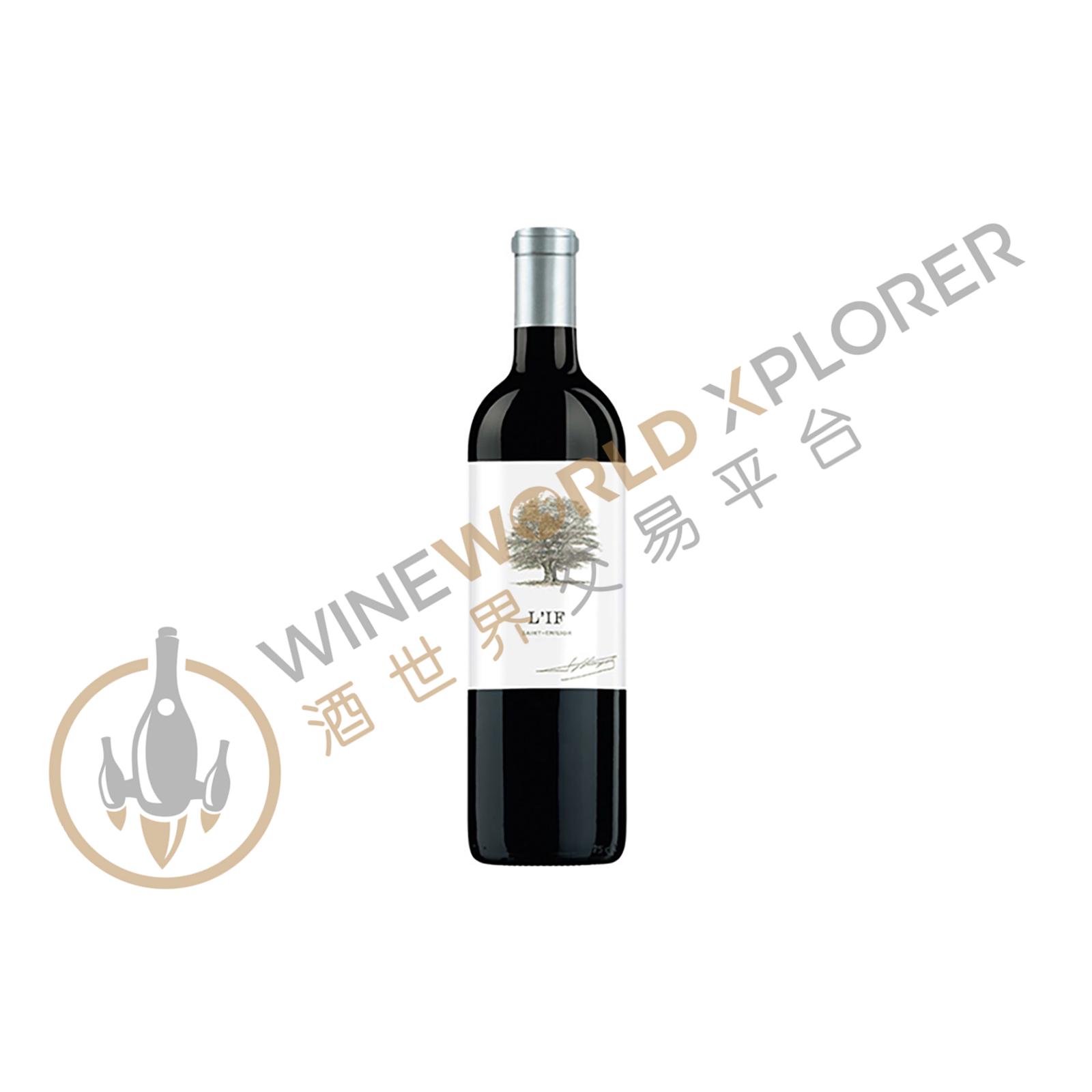
L'If 2012
 View analysis


Description
Tasting notes

Reviewed by: Neal Martin
Tasted blind at the Southwold Bordeaux tasting. The 2012 Château L'If from Jacques Thienpont and Fiona Morrison has a broody, introspective bouquet that needs encouragement from the glass. Although it is tightly coiled, it feels well defined and the oak is nicely embedded into the fruit. The palate is medium-bodied with grippy dark plum and blackberry fruit laced with graphite and tobacco. Masculine compared to its peers, this is another wine that will require long-term ageing. There is a lot to admire considering that the couple had only recently taken over the running of the property. Tasted January 2016.
Reviewed by: Neal Martin
The L’If is a blend of 85% Merlot and 15% Cabernet Franc from Jacques Thienpont, who bought the estate in 2010. Matured in 30% new oak (decreased from the first vintage under Jacques) it has a lovely candied ripe, racy bouquet with bright red and black fruit intermingled, fine minerality showing through with aeration. The palate is medium-bodied with a tensile entry, crisp acidity, good structure and a savoury notes just towards the finish. This has great potential. Tasted April 2013.
Reviewed by: Neal Martin
The 2012 L'If has a finely-tuned, simple but focused bouquet with red cherries, raspberry coulis, marmalade and light minty aromas. The palate is medium-bodied with slightly coarse tannins on the entry, not deep or powerful, and there is some attenuation towards the bitter finish. I would broach this over the next three or four years. Tasted blind at the Southwold Ten-Year On tasting.
Reviewed by: Neal Martin
The 2012 L'If has a finely-tuned, simple but focused bouquet with red cherries, raspberry coulis, marmalade and light minty aromas. The palate is medium-bodied with slightly coarse tannins on the entry, not deep or powerful, and there is some attenuation towards the bitter finish. I would broach this over the next three or four years. Tasted blind at the Southwold Ten-Year On tasting.
About the Producer
It should perhaps come as no surprise then that Jacques, assured in his success at Le Pin, should look around for a new challenge. It may have been that he would have liked to expand his little vineyard in Pomerol, and indeed he has purchased a few rows of vines over the years. But suitable plots are hard to come by, not every parcel he purchases makes the grade anyway (especially parcels acquired on a “well, if you want that vineyard, you have to buy this one too” basis). And of course these days, this is even more expensive than it was back in the 1970s; land now changes hands at a much greater price than the ‘mere’ million francs he once paid. There is an obvious solution of course; look elsewhere in Bordeaux, where parcels of land come up for sale more often than once in a blue moon, and when they do the price tag is less eye-watering. Normally on the right bank this means Castillon, or one of the satellite appellations. To Jacques, it meant St Emilion. It was in 2010 that Jacques Thienpont decided to look beyond the borders of Pomerol for a new vineyard venture, and it was not long before he came across Château Le Haut-Plantey, a small property for sale on the plateau of St Emilion, in the Mondot secteur. Having looked through older editions of Cocks et Féret back as far as the first edition, in 1850, I can find no trace of this estate, or indeed of Château La Bouygue as it was also once known. What I have discovered, however, is that the property enjoys an enviable location, sitting just beneath the gardens of Château Troplong-Mondot, a short distance down the road from Château Bellisle-Mondotte. Jacques clearly thought the position to be good as a deal was done, and he soon found himself the proprietor of a vineyard of a decent size, complete with a few tired-looking but perfectly functional buildings. He named the new estate L’If, if being French for yew (there’s a tree theme here, as pin is French for pine), although I don’t believe there is a yew tree on the domaine (perhaps one will arrive soon). That was the easy part though. He had a lot of work on his hands if the estate was to produce something of the level of quality Jacques was hoping for. (6/8/15, updated 11/12/16)
