Wine Advisor



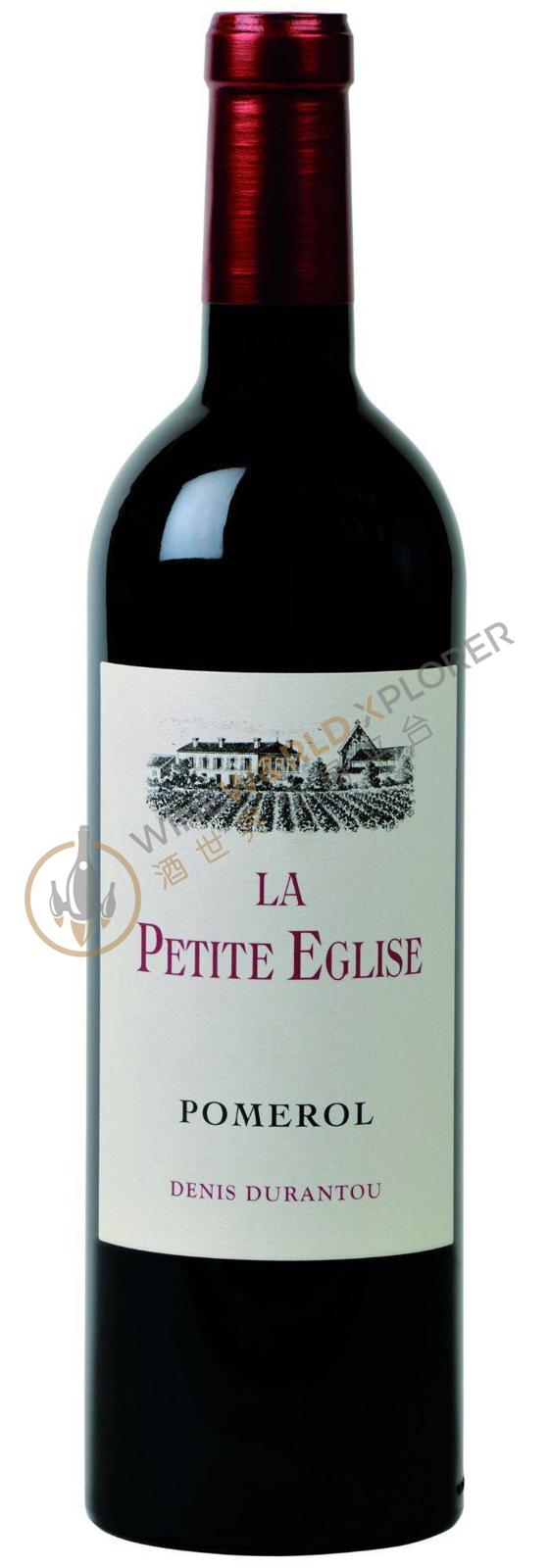
L'Eglise Clinet, La Petite Eglise 2017
 View analysis


Description
Petite Eglise, Pomerol, Bordeaux, France, Still, Red, 2010
Tasting notes

Reviewed by: Antonio Galloni
The 2017 La Petite Eglise is poweful and rich in the glass. Dark purplish berry fruit, charcoal, licorice, clove and lavender are some of the many nuances that infuse the 2017 with its distinctly somber personality. Unctuous and racy in feel, with superb density, the 2017 is a decidedly extroverted Pomerol. Tasting it from bottle, I have the same impression I did en primeur: it is easily better than many top bottlings.
Reviewed by: Antonio Galloni
The 2017 La Petite Eglise is wonderfully aromatic and dense. Charcoal embers, game, smoke, licorice and raspberry jam all develop in the glass, but it is the wine's structural feel that stands out most. The 2017 is silky, nuanced and exceptionally beautiful. La Petite Eglise is of course the second wine of L'Eglise Clinet, but if it were taken out of that context, it would compete quite favorably with many Grand Vins.
Reviewed by: Neal Martin
The 2017 La Petite Eglise was picked from 12 to 22 September and matured in 50% new oak. It has a floral bouquet with touches of incense and lavender infusing the black fruit, nicely defined and surprisingly open for the vintage. The palate is very smooth on the entry with blood orange and a tang of marmalade infusing the black fruit. It threatens to become exotic, but then it becomes more linear towards the finish with touches of graphite on the aftertaste.
Reviewed by: Neal Martin
The 2017 La Petite Eglise was picked from 12 to 22 September at 41hl/ha and is matured in 50% new oak. Just one small parcel near the Barbanne tributary was touched by frost but nothing on the plateau. It has a straightforward bouquet with more red fruit than black, hints of freshly tilled soil and pencil shavings. The palate is medium-bodied with fine tannin, a touch more compact than previous vintages but beautifully focused and silky smooth towards the sustained finish. Excellent.
Reviewed by: Lisa Perrotti-Brown
Medium to deep garnet-purple colored, the 2017 La Petite Eglise delivers expressive notions of baked plums, warm black cherries and mulberries with hints of forest floor and garrigue plus a waft of smoked meats. Medium-bodied, the palate has a great core of plummy flavors with soft tannins and a refreshing finish.
Reviewed by: Lisa Perrotti-Brown
100% Merlot, the deep garnet-purple colored 2017 La Petite Eglise comes charging out of the glass with exuberant notes of crushed wild blueberries, vibrant cassis and violets with touches of fertile loam, garrigue and bay leaves. Medium-bodied with a wonderful energy of perfumed black fruits, it has a racy line and firm, fine-grained tannins, finishing long and fragrant.
Reviewed by: Neal Martin
The 2017 La Petite Eglise is poweful and rich in the glass. Dark purplish berry fruit, charcoal, licorice, clove and lavender are some of the many nuances that infuse the 2017 with its distinctly somber personality. Unctuous and racy in feel, with superb density, the 2017 is a decidedly extroverted Pomerol. Tasting it from bottle, I have the same impression I did en primeur: it is easily better than many top bottlings.
Reviewed by: James Suckling
An elegant second wine of L’Eglise Clinet with dark berries, spices and stones. Medium body and silky and polished tannins.
Reviewed by: James Suckling
White pepper and dried flowers with blackberries, orange peel and a smoky undertone. Medium to full body. Chili, spice and blue fruit on the palate. Hint of lemon rind. Very long finish. Needs at least three or four years to come around. Drink after 2023.
About the Producer
Château l'Eglise-Clinet is located in the Pomerol appellation on the right bank of Bordeaux, France, and is one of the most famous wineries in the Pomerol region. Château Clinet Chapel has a long history, dating back to the late 19th century. The Rouchut family, who ran Chateau Clos l'Eglise at the time, and the Constant family, who ran Chateau Clinet, decided to make wine together. Until 1950, the Bordeaux wines produced by these two families were sold under the name Château Claregelis. It was only after 1950 that their wines were given their current name, Château Clignet. Later, the Durantou family acquired Château Clignet. However, the owner was not keen on wine at the time and left everything to Pierre Lasserre, the owner of another Pomerol estate. Pierre Lasserre only had to give him half of the estate's income each year. This partnership has continued for 40 years. Today, Denis Durantou, a descendant of the Durantou family, is in charge of the estate. At present, Château Clignet has 5.5 hectares of vineyards. The soils are mainly gravel and clay, some of which are rich in iron. The vineyards of Château Clignet were spared from the 1956 frosts and the vines are on average 45 years old. The vineyard is planted with 85% Merlot and 15% Cabernet Franc at a density of 6,500 vines per hectare. The vineyard is fertilised with an organic fertiliser mix every 5 years. The grapes are hand-picked when they are ripe at Château Clignet. After careful selection and crushing, the grapes are fermented in concrete and stainless steel containers for 15-21 days. After about October, the fermented wine is aged in new oak barrels for a period of 18 months. The main wine of Château Clinet is the Château l'Eglise-Clinet, Pomerol, France. The wines are concentrated and rich, full-bodied, with pure fruit and exotic spice notes, particularly fresh and wonderful, making them unique among Bordeaux wines. In recent years, as the price of the wine has soared, so has the quality. Today, it is in the top tier of Pomerol.
1995(1)1996(2)1998(1)1999(1)2000(1)2004(1)2005(4)2006(2)2010(4)2011(2)2012(4)2013(1)2014(4)2015(4)2016(1)
Package Size
3 x 3L