Wine Advisor



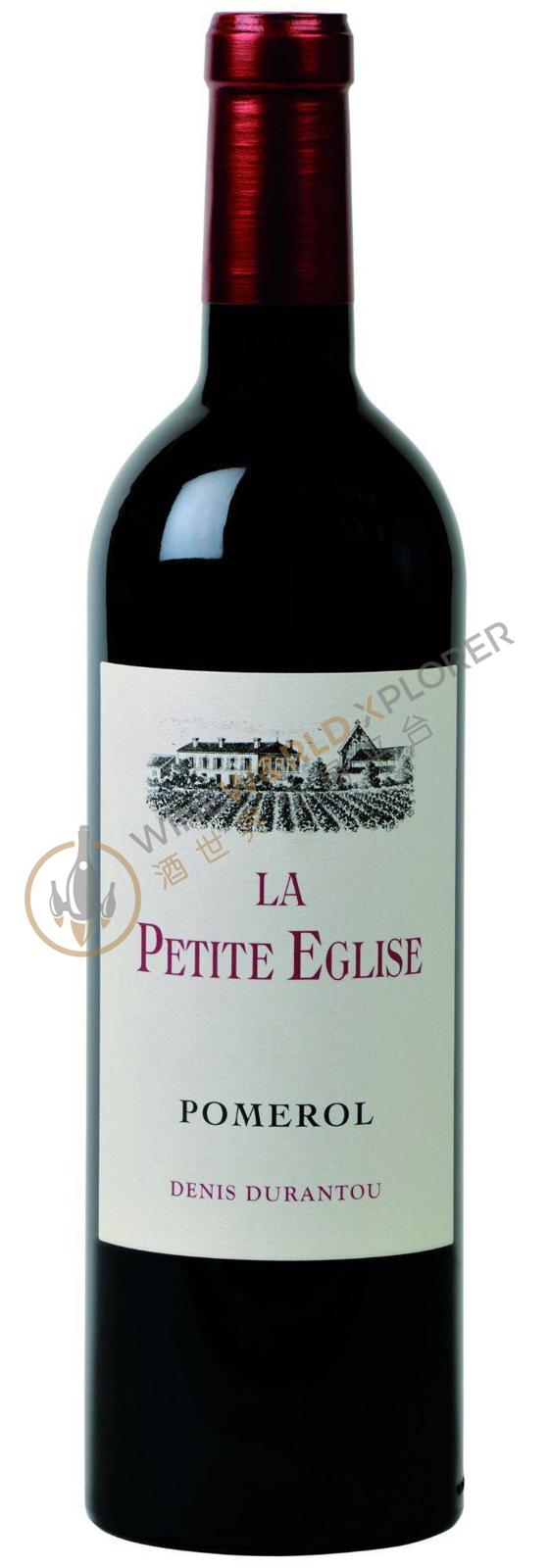
L'Eglise Clinet, La Petite Eglise 2019
 View analysis


Description
Petite Eglise, Pomerol, Bordeaux, France, Still, Red, 2010
Tasting notes

Reviewed by: Lisa Perrotti-Brown
The 2019 La Petite Eglise is a blend of 90% Merlot and 10% Cabernet Franc. Deep garnet-purple in color, the nose starts off slightly reduced, but with a little swirling, it comes sailing out of the glass with bright, pristine notes of kirsch, black raspberries and blackberry preserves, followed by suggestions of garrigue, tilled soil, wild mushrooms and bouquet garni with a waft of cloves. The medium-bodied palate has vibrant, impactful black and red fruit layers with a very fine-grained texture and tons of freshness, finishing long and earthy. This year, this sincerely is a “Petite” L’Eglise Clinet!
Reviewed by: William Kelley
The 2019 La Petite Eglise has turned out brilliantly in bottle, wafting from the glass with aromas of raspberries, sweet spices, rose petals, black truffle, orange rind and loamy soil. Medium to full-bodied, velvety and concentrated, it's supple and enveloping, with lively acids, powdery tannins and a long, penetrating finish. These days, this isn't really a "second wine" per se, as it combines some younger vine fruit with two dedicated parcels, one located next to Pomerol's church, the other by the château of La Fleur-Pétrus.
Reviewed by: Antonio Galloni
The 2019 La Petite Eglise has blossomed into a rich, heady wine. Readers will have to be patient here too, as the Petite Eglise is far from an easygoing second wine. Blackberry, plum, leather, graphite, tobacco and licorice all build in a Pomerol endowed with tremendous class and nuance. There's real breadth and substance here. Floral notes from the Franc add a gorgeous touch as the wine starts to open. Hints of blood orange and spice linger on the exotic finish. This is the third vintage in which La Petite Eglise includes Franc, previously it was all Merlot.
Reviewed by: Antonio Galloni
The 2019 La Petite Eglise is a wine of pure and total sophistication. Silky tannins, sweet, lifted aromatics and pliant fruit give the 2019 its elegant, sleek personality. All the elements simply fall into place. Noble and alluring, the 2019 is absolutely delicious. This is the second year La Petite Eglise has some Cabernet Franc, and that really comes through in the wine's aromatic lift and structural feel, especially over time. The Merlot was harvested from September 18 to 25, while the Franc came in on the 26th.Denis Durantou's 2019s are absolutely brilliant across the board. My tasting was obviously bittersweet, as Durantou lost his battle with illness just a few weeks prior. Denis Durantou was one of the most intriguing characters in Bordeaux. I can't say I knew him well, but I always enjoyed tasting with him, as he was a person that spoke more with his eyes than with words. Things were implied rather than overtly stated. So, I tasted the 2019s with daughters Constance and Noémie over Zoom, in typical 2020 fashion. The Durantou sisters describe 2019 as a year with an early flowering and homogenous ripening that led to small, concentrated berries and higher pHs than normal. Temperatures were kept cool in the cellar, where both alcoholic and malolactic fermentations took place over cuvaison of 21 days (for all wines), in a reductive environment with little oxygen. From top to bottom, the Durantou 2019s are positively stellar. Don't miss them!
Reviewed by: Neal Martin
The 2019 La Petite Eglise has a perfumed and pure bouquet, one of the most floral in this flight, touches of iris flower and peony dovetailing into the lifted black fruit. The palate is medium-bodied with supple tannins, cohesive and fleshy, the intensity counterbalanced by the acidity with a nicely proportioned finish. Bon vin. Tasted blind at the Southwold annual tasting.
Reviewed by: Neal Martin
The 2019 La Petite Eglise is razor-sharp on the nose of almost pixelated black cherry and raspberry fruit, quite mineral-driven, focused and vibrant. The palate is medium-bodied, powerful and a little more dense than the Montlandrie, with ripe tannins and a grippy finish. This will require three or four years in bottle, but it may well merit a higher score down the line.
Reviewed by: Neal Martin
The 2019 La Petite Eglise was picked 18-25 September apropos the Merlot and 26 September for the Cabernet Franc, matured in 35% new oak. It is vivacious on the nose with vivid raspberry, maraschino cherry, desiccated orange peel and subtle white pepper scents. The palate is silky smooth with fine grain tannins. Harmonious from start to finish, this is a sensual, seductive La Petite Eglise with spicy notes furnishing the finish. Another superb testament to the late Denis Durantou.
Reviewed by: Neal Martin
The 2019 La Petite Eglise is a wine of pure and total sophistication. Silky tannins, sweet, lifted aromatics and pliant fruit give the 2019 its elegant, sleek personality. All the elements simply fall into place. Noble and alluring, the 2019 is absolutely delicious. This is the second year La Petite Eglise has some Cabernet Franc, and that really comes through in the wine's aromatic lift and structural feel, especially over time. The Merlot was harvested from September 18 to 25, while the Franc came in on the 26th. Denis Durantou's 2019s are absolutely brilliant across the board. My tasting was obviously bittersweet, as Durantou lost his battle with illness just a few weeks prior. Denis Durantou was one of the most intriguing characters in Bordeaux. I can't say I knew him well, but I always enjoyed tasting with him, as he was a person that spoke more with his eyes than with words. Things were implied rather than overtly stated. So, I tasted the 2019s with daughters Constance and Noémie over Zoom, in typical 2020 fashion. The Durantou sisters describe 2019 as a year with an early flowering and homogenous ripening that led to small, concentrated berries and higher pHs than normal. Temperatures were kept cool in the cellar, where both alcoholic and malolactic fermentations took place over cuvaison of 21 days (for all wines), in a reductive environment with little oxygen. From top to bottom, the Durantou 2019s are positively stellar. Don't miss them!
Reviewed by: James Suckling
A really refined red with blue fruit, subtle chocolate and sandalwood. It’s full-bodied, yet tight and refined. Very pure. It goes on and on. One of the best I remember.
Reviewed by: James Suckling
This is so perfumed with violets and blackberries, even some black truffles. Full-bodied with wonderfully polished tannins that melt into the wine. Reserved at the finish. Extremely racy and long. The 20% cabernet franc in the blend gives this depth and complexity. One of the best I remember. Try after 2026.
About the Producer
Château l'Eglise-Clinet is located in the Pomerol appellation on the right bank of Bordeaux, France, and is one of the most famous wineries in the Pomerol region. Château Clinet Chapel has a long history, dating back to the late 19th century. The Rouchut family, who ran Chateau Clos l'Eglise at the time, and the Constant family, who ran Chateau Clinet, decided to make wine together. Until 1950, the Bordeaux wines produced by these two families were sold under the name Château Claregelis. It was only after 1950 that their wines were given their current name, Château Clignet. Later, the Durantou family acquired Château Clignet. However, the owner was not keen on wine at the time and left everything to Pierre Lasserre, the owner of another Pomerol estate. Pierre Lasserre only had to give him half of the estate's income each year. This partnership has continued for 40 years. Today, Denis Durantou, a descendant of the Durantou family, is in charge of the estate. At present, Château Clignet has 5.5 hectares of vineyards. The soils are mainly gravel and clay, some of which are rich in iron. The vineyards of Château Clignet were spared from the 1956 frosts and the vines are on average 45 years old. The vineyard is planted with 85% Merlot and 15% Cabernet Franc at a density of 6,500 vines per hectare. The vineyard is fertilised with an organic fertiliser mix every 5 years. The grapes are hand-picked when they are ripe at Château Clignet. After careful selection and crushing, the grapes are fermented in concrete and stainless steel containers for 15-21 days. After about October, the fermented wine is aged in new oak barrels for a period of 18 months. The main wine of Château Clinet is the Château l'Eglise-Clinet, Pomerol, France. The wines are concentrated and rich, full-bodied, with pure fruit and exotic spice notes, particularly fresh and wonderful, making them unique among Bordeaux wines. In recent years, as the price of the wine has soared, so has the quality. Today, it is in the top tier of Pomerol.