
 Wine Advisor



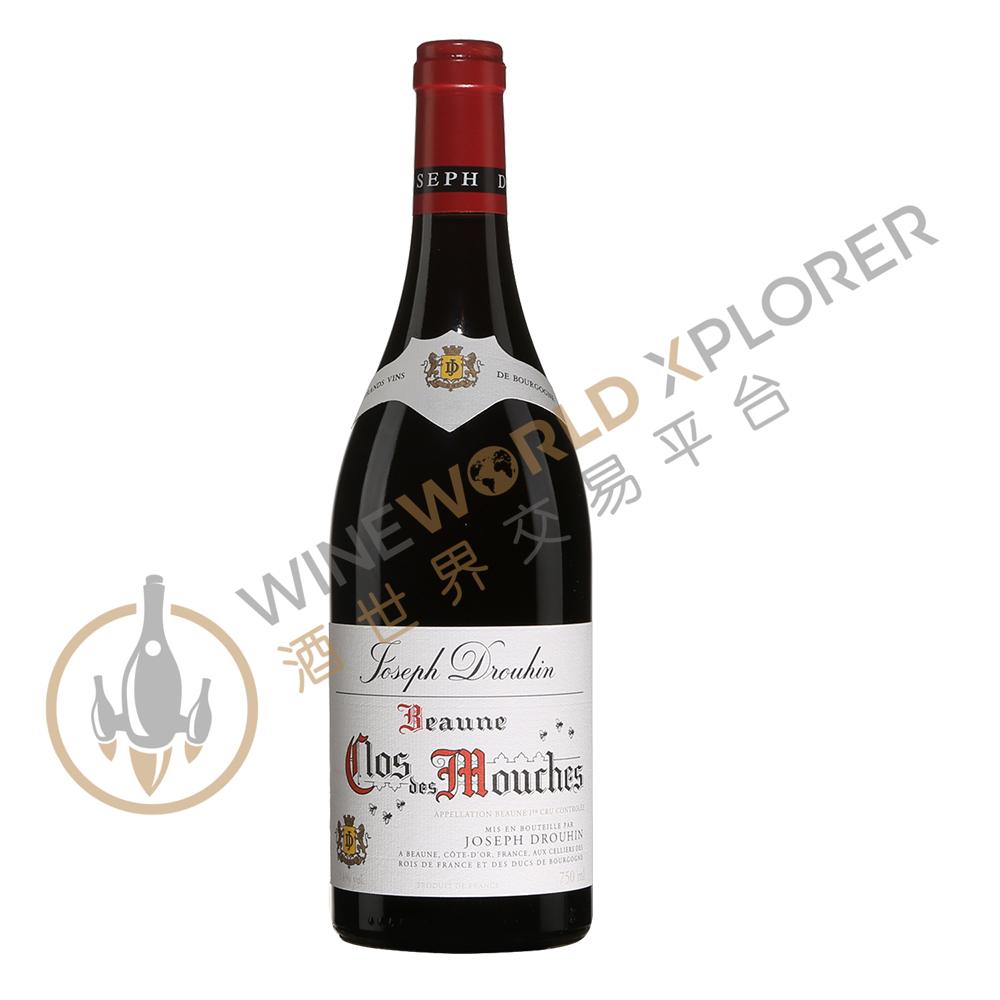
Joseph Drouhin, Beaune 1er Cru Clos des Mouches Rouge 2012
 View analysis


Description
Tasting notes

Reviewed by: Antonio Galloni
The 2012 Beaune Clos des Mouches is rich, deep and explosive in the glass. Smoke, dark cherries, incense, tobacco and licorice are some of the many notes that resonate off the palate in the 2012. I wouldn't dream of touching a bottle before its tenth birthday, and that may ultimately prove to be optimistic. In 2012, yields were a minuscule 6-8 hectoliters per hectare.
Reviewed by: Stephen Tanzer
(production here was just eight hectoliters per hectare, mostly due to hail, according to Frédéric Drouhin): Good medium red. Aromas of cherry, leather and musky underbrush. Very ripe, fat and full, showing a pronounced truffley underbrush character but little in the way of a hail taste. Strong dry extract and saline minerality nicely support the wine's alcohol. Dusty tannins call for some aging. Not a high-pitched, fruity style but very concentrated.
Reviewed by: Stephen Tanzer
(harvested over eight days; four separate cuvees were vinified, vs. a normal seven or eight, with the hailed-on fruit destemmed): Good medium red. Aromas of red fruits and damp earth are complicated by mocha and chocolate. At once sweet and savory, with sexy red fruit flavors accented by minerals. Relatively low in acidity but with plenty of tannins to give it structure and shape. Finishes ripe and persistent. This wine has gained in barrel since the start, noted Frederic Drouhin, who told me that careful selection was carried out at harvest time to eliminate the dried berries.
Reviewed by: Neal Martin
The 2012 Beaune 1er Cru Clos des Mouches (red) was picked between September 20 and 28 and underwent a 20- to 25-day skin maceration. Refulgent garnet in color, it has a dense, raspberry and blackcurrant bouquet with touches of undergrowth and what feels like “stemminess” coming through (even though it was completely de-stemmed!) The palate is medium-bodied with a tannic, quite masculine entry. It feels a little brutish at the moment, although I am sure it will mellow by the time of bottling. The matriarch of Maison Joseph Drouhin, Veronique Drouhin, escorted a group of writers and scribes through her 2012s in London, except for the Grands Echezeaux that happened to not be showing well. Hers were the only 2012s tasted outside Burgundy for this report, in respect of the miniscule quantities. Less for us critics: more for punters, even if it is a drop. The omnipresent story of depleted crops was the same here. In fact, 2012 is their smallest vintage for 50 years. “Everything that you think could happen, did happen,” rued Veronique in her fluent English. “We had frost, hail, storms and even sunburn.” There was some redemption though, a vital one too. “The only thing we did not get was botrytis and so the fruit was healthy. There had been a poor fruit set and a lot of coulure and millerandage. This meant the berries were small and not clustered close together, allowing good air flow between the berries and therefore inhibiting grey rot.” However, the unpredictable growing season proved challenging in the vineyard. “We are 100% organic, so we had to go over and over in the vines. We had to use natural responses to natural problems.” The 2012 vintage also demanded prudent approaches in the winery that could enhance the wines. “One of the most surprising things we found was that it took five to seven days for the fermentation to start. During this period you could extract some interesting things (color, polyphenols etc). Also, we found that the fruit had a long post-fermentation period of up to two weeks, which also benefited the complexity of the fruit. We also had a different approach to the vin de press. When we pressed the white grapes, we separated the end pressings. Using whole clusters means that the stems tend to increase the pH and the acidity goes much lower, which can dilute the cuvee. We had to separate the vin de presse and work each one differently. But in 2012 we did not include much of the vin de presse.” The vinification of such a small quantities springs its own set of problems; after all, you cannot fill all your barrels with marbles to keep them topped up. Fortunately, there was plenty of time to prepare because the February frost had burnt the buds. Poor flowering and fruit set early in the growing season meant that there was plenty of time to place orders for appropriately-sized barrels. “We used 500-liter barrels, which were very useful and similarly sized stainless tell vessels for the wines,” Veronique explained. “We hired a person who specializes in bottling small quantities. Jerome likes them (500-liter barrels) very much. They do not extract much, but they can make very elegant wines.” Perhaps one silver lining is that it has given producers such as Drouhin experience of using alternatively sized vessels that may be used in the future when vintages are more bountiful. At the end of the day, Drouhin have overseen another impressive set of Burgundy wines. While they do not possess the structure of the 2010s, the acidity levels are not dissimilar, although they seem to have more sweetness on the finishes. I concur with Veronique that two appellations that prospered in this vintage are Chassagne in the Cotes de Beaune and Chambolle in the Cotes de Nuits. In particular, the latter is very strong chez Drouhin in 2012, right down to the village cru. She also opined that Rully exceeded expectations, perhaps because the vines were so affected by hail in 2011 and strove to compensate in the following year. Here both the white and red come highly recommended and will probably represent good value. Prices are expected to rise, possibly 10-15% for the village and premier crus, 20% for the grand crus, although nothing had been set at time of writing. Importer: Dreyfus Ashby & Co., New York, NY; tel. (212) 818-0770 and through several importers in the UK via Pol Roger UK Ltd.
About the Producer
DEDICATION TO THE DIVERSITY OF BURGUNDY With close to 90 different appellations, Joseph Drouhin offers a fascinating array of Burgundy terroirs in all their authenticity and subtle variations. A FAMILY HERITAGE For the last 140 years, Maison Joseph Drouhin has been in the hands of the Drouhin family. Today, the fourth generation is at the helm, animated by the same passion that inspired the founder of the company. LISTENING TO NATURE Joseph Drouhin has adopted the biological and biodynamic approach. Only natural products are used in the vineyards and all procedures show the utmost respect for the soil, the vine and the environment. AN IDEAL OF PERFECTION AND ELEGANCE The style of Joseph Drouhin is an alliance between character, balance and harmony. Wines meant to be drunk young are fresh and subtle; wines meant for keeping acquire with age a luscious complexity. SHARING WITH THE WORLD The wines of Joseph Drouhin are found on the finest tables. Joseph Drouhin is proud to bring the best of Burgundy to the whole world.
